

Reviewed · TICKETS
Santiago: 1-Day Hop-On Hop-Off Bus and Cable Car Ticket
Santiago’s best feature on this tour is the Cerro San Cristóbal combination: ride the cable car up, use the historic funicular, and add panoramic buses inside Metropolitan Park. You get city views that a street-level bus simply cannot provide. I also like the freedom to leave the bus for Plaza de Armas, Santa Lucía Hill, or a shopping center, then continue when you are ready.
I like the clear 10-stop route and the recorded commentary, which gives you useful context while you watch the city pass by. The main catch is timing. One day is enough for an overview, but not enough to explore every stop at a relaxed pace, and several bus stops are poorly marked.
Key points to know before you go
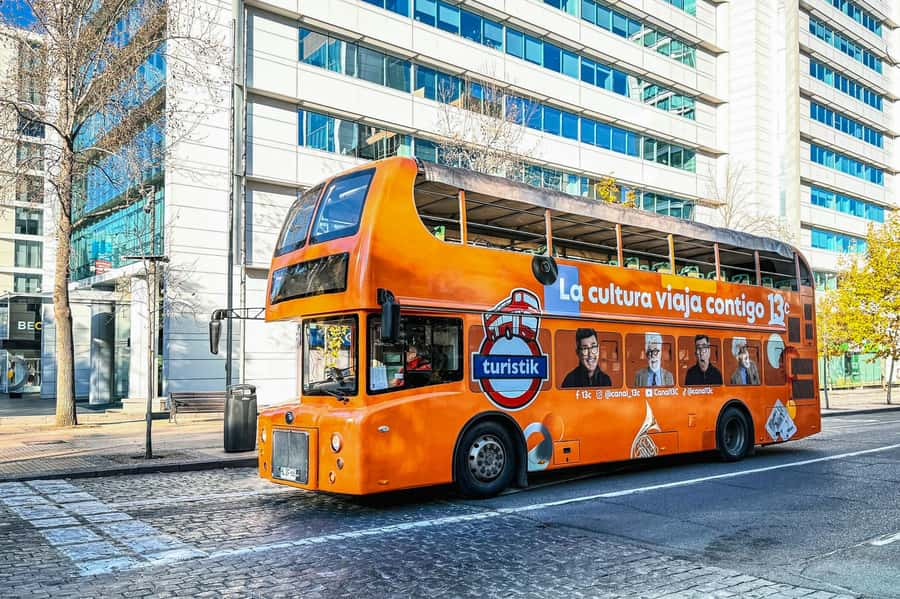
- Cable car, funicular, and park buses are included, giving you several ways to reach Cerro San Cristóbal.
- Ten stops cover very different parts of Santiago, from Parque Arauco and El Golf to the historic center and Bellavista.
- The bus comes about every 30 minutes, according to the operating information provided for the tour.
- Start early if you want to get off several times, and catch the last full circuit before 4:00 PM.
- Monday is a restricted day, since the Teleférico, Funicular, and panoramic buses at Cerro San Cristóbal do not operate.
- The Turistik app is worth downloading for stop information, route planning, and real-time bus location.
What this Santiago tour really gives you

At $60 per person, this is not the cheapest way to move around Santiago. You are paying for a sightseeing route, audio commentary, unlimited bus rides for one day, and the cable car and funicular combination. If you use the hill attractions and make several stops, the price becomes easier to justify.
I see this as a good first-day orientation tour rather than a complete substitute for Santiago’s public transport. You can sit above traffic, get a feel for the city’s different districts, and decide where you want to return later. The route links modern shopping areas, leafy parks, business districts, Bellavista, and the old center, so you get a useful sense of Santiago’s shape.
The bus is a classic London-style double-decker. The upper deck should give you the best views and photos, though the information provided does not promise a specific seat or roof arrangement. The recorded guide is available in English, Spanish, Portuguese, German, French, and Chinese. Staff and greeters speak Spanish, English, and Portuguese.
Plan around the clock. You can hop on and off as many times as you like, but a relaxed visit to every stop is not realistic in one day. The bus route, cable car, funicular, and walking time between stops all compete for your hours.
More Day Trips in Santiago
- Santiago: Portillo and Laguna del Inca Day Trip with Picnic
★ 4.5 · 572 reviews - Santiago: Valle Nevado and Farellones Ski-Center Day Trip
★ 4.2 · 110 reviews - Private Day Trip to Cajón del Maipo & El Yeso Dam from Santiago.
★ 5.0 · 103 reviews
Starting at Parque Arauco and the eastern districts
The official meeting point is beside Parque Arauco at Avenida Presidente Kennedy Lateral 5059, Las Condes. Look for the red information kiosk in front of the Ripley department store, and arrive 15 minutes before departure.
Parque Arauco is a practical first stop if you want shopping, electronics, fashion, souvenirs, or a meal. The mall has international brands and an open-air dining area. I would not spend much of your sightseeing day here unless shopping is one of your priorities, but it can be useful for a break or for picking up something you need.
Next comes Bicentenario Park at the corner of Isabel Montt and Avenida Bicentenario in Vitacura. This is one of the better stops for a walk, photographs, and a change of pace from the road. Lagoons and wildlife give the park a calmer feel than the commercial parts of the route.
The drawback is simple: a park stop takes time. If you want to ride the full loop and also visit Cerro San Cristóbal, you may need to choose between a long walk here and another central stop. Use the app to check the next bus rather than guessing.
Reaching Santiago Cable Car from the bus stop
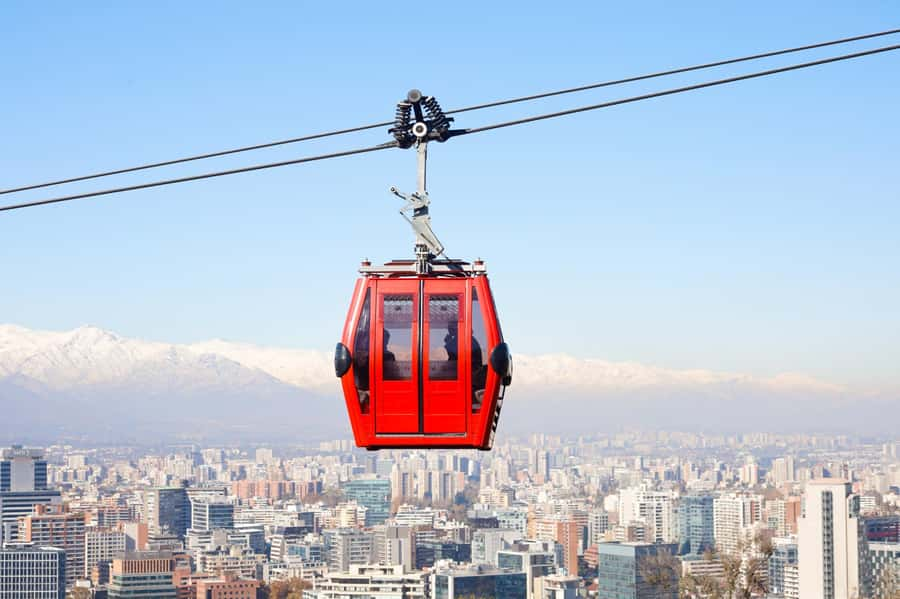
The Santiago Cable Car stop is at Los Conquistadores and Pedro de Valdivia Norte. From there, the cable car entrance is about a five-minute walk. Follow directions carefully because the route from the bus stop is not perfectly obvious, and the signs along the residential street can be limited.
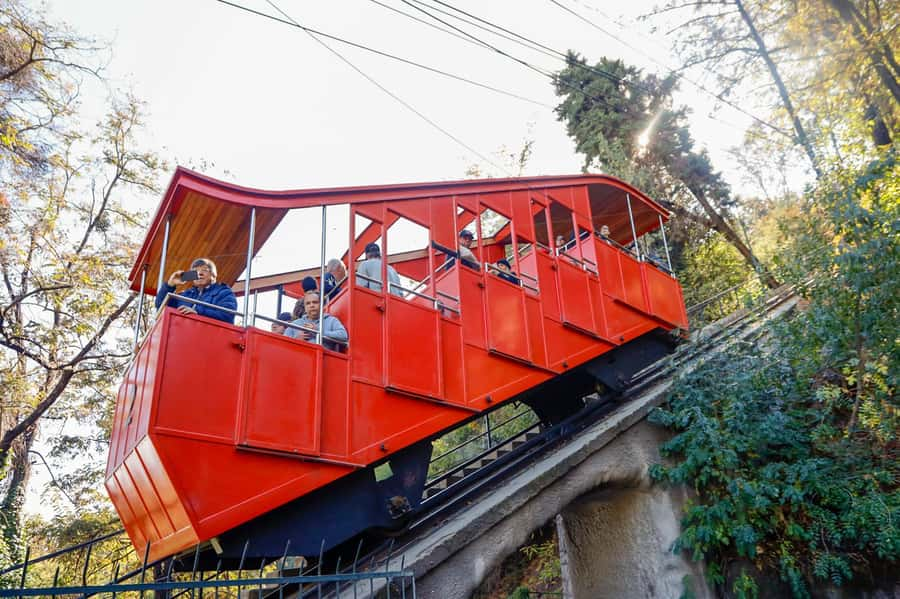
This is the highlight for many people, and I understand why. The cable car gives you a high view over Santiago and the chance to see the city from a completely different angle. The ticket includes a one-day cable car pass for the first day, along with access connected to San Cristóbal Hill.
You should allow more time here than the five-minute walk suggests. Boarding, riding, taking photographs, and continuing through the park all take time. The hill visit is not just another quick photo stop. It is the part of the day that makes this experience more than a standard city bus loop.
The tour also includes unlimited use of panoramic buses inside Metropolitan Park. That gives you another way to move around the Cerro San Cristóbal area once you arrive. The exact pace will depend on operating times and how long you stay at each viewpoint, so do not leave the hill until the end of the day.
Using the funicular and exploring Bellavista
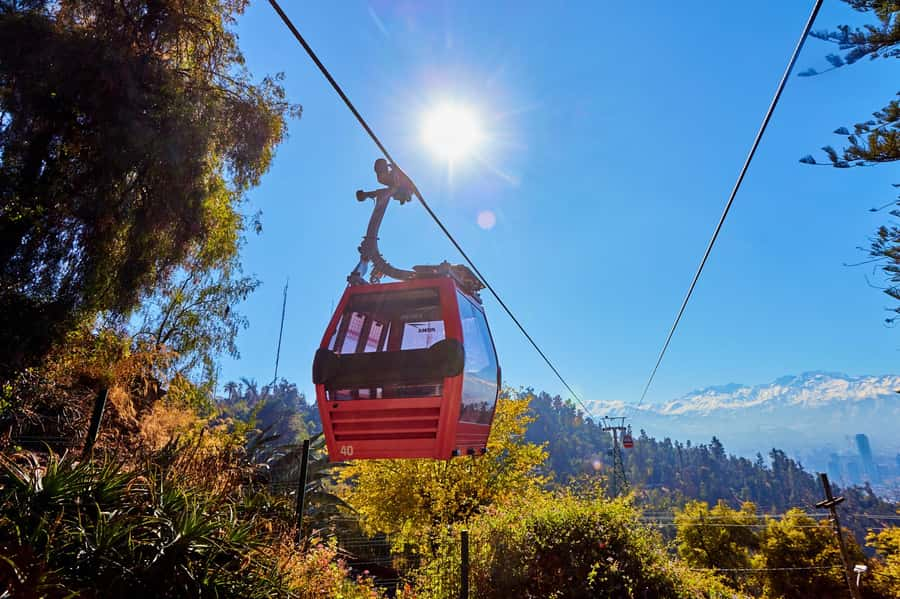
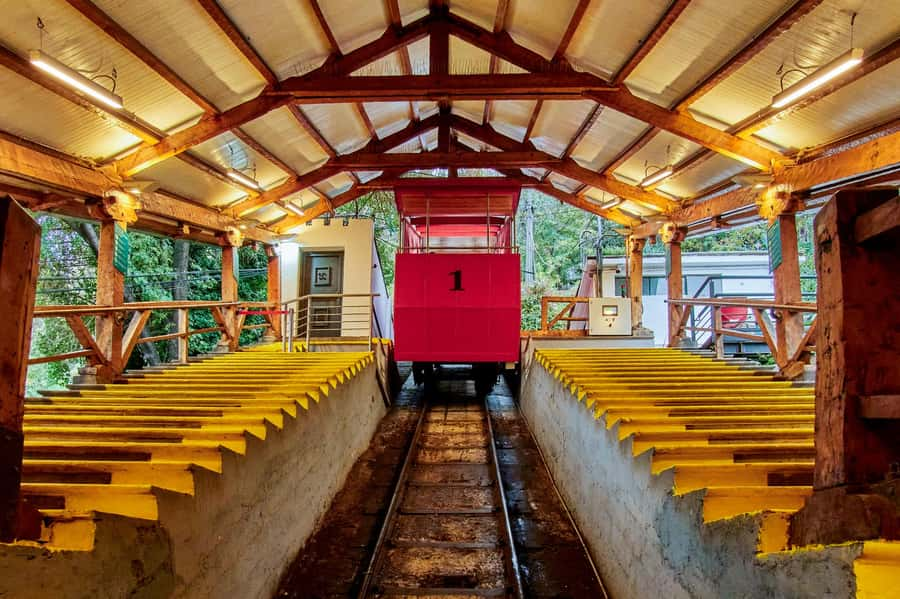
The Santiago Funicular stop is at Pío Nono 445, near Bellavista. The funicular is a historic way to connect the Bellavista area with Cerro San Cristóbal. Combined with the cable car, it gives you a more varied hill experience than simply riding one vehicle up and down.
Bellavista is useful for a stop before or after the hill. It has a different character from the business districts and the historic center, and it is a good place to break up the sightseeing ride. You can use the funicular ticket for the first day, but remember that Cerro San Cristóbal attractions do not operate on Mondays.
I would plan the hill and Bellavista together rather than treating them as separate stops. That saves time and avoids unnecessary backtracking. The route is flexible, but the best flexibility comes from grouping nearby stops intelligently.
Same corner of Chile, a completely different day out:
- Santiago: Cajon del Maipo/Embalse del Yeso Tour with Picnic
★ 4.3 · 3,789 reviews - Santiago: Vina Del Mar, Valparaiso, Casablanca & Reñaca Tour
★ 4.2 · 2,838 reviews - Small-Group Cajón del Maipo Full-Day Tour and Picnic
★ 4.5 · 2,277 reviews - Santiago: Cajon del Maipo & Embalse El Yeso Trip with Picnic
★ 4.5 · 1,859 reviews
Plaza de Armas and Santiago’s old center
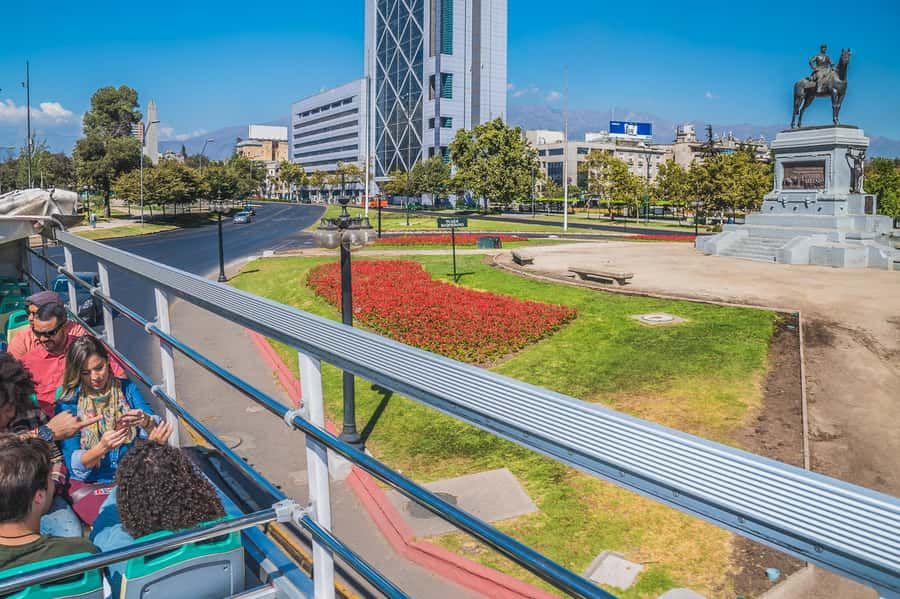
Plaza de Armas is at the heart of the historic center. The stop puts you close to colonial landmarks and the Metropolitan Cathedral, making it one of the most useful places to leave the bus.
I would give this stop priority if you want to walk through Santiago rather than only photograph it from the upper deck. The square gives you a feel for the city’s older core, while the cathedral and surrounding buildings provide the kind of context that recorded commentary cannot fully replace.
This is also one of the stops where you can easily lose track of time. A short look can turn into a longer walk through the center, so check the bus schedule before you leave. If you only have time for two major stops, Plaza de Armas and the cable car are sensible choices.
La Moneda Palace and Santa Lucía Hill
The La Moneda Palace stop is at Teatinos 254, directly in front of Chile’s government headquarters. It is an efficient stop for a photograph and a look at one of Santiago’s most important civic buildings.
Santa Lucía Hill sits on Avenida Alameda near the Lastarria district. The hill has terraces and viewpoints, and its location makes it convenient if you want to combine sightseeing with a walk through Lastarria. This stop offers a more intimate city view than the cable car, with paths and terraces rather than a ride above the city.
You probably cannot give La Moneda and Santa Lucía Hill the attention they deserve while also visiting every other stop in one day. I would choose one based on your interests, then continue toward the hill or the shopping districts.
Aviation Plaza, Costanera Center, and Las Condes

Aviation Plaza is at Avenida Providencia 969, beside the Mapocho River. It is known for a fountain and green areas. This can be a pleasant short stop, especially if you want a quick break from the bus without committing to a major attraction.
Costanera Center at Avenida Vitacura 2653 is the largest mall in South America and sits beside the Sky Costanera observatory. The bus ticket does not include other attraction entry fees, so you should treat the observatory as a separate paid visit if you choose to go. The mall itself is useful for food, shopping, and a modern city comparison with Santiago’s historic center.
The final stop is the Las Condes Interactive Museum at Isidora Goyenechea 3365. The surrounding area has restaurants, and the museum offers interactive experiences. This stop suits families and anyone interested in the modern eastern districts, though you need to check how much time you have before leaving the route.
These eastern stops help show Santiago’s economic and commercial side. They are less essential if your priority is history and viewpoints, but they are useful if you want to see how different the city’s districts can feel.
The audio guide and the practical weak spots
The recorded commentary is available in six languages, and it adds value during long stretches between stops. You learn more than you would from simply riding around, though one direct review described the audio as too soft and poor in quality. I would bring your own earbuds if the vehicle system supports them, but the supplied information does not confirm personal audio connections.
The largest practical problem is stop signage. Several stops are not clearly marked from the street, and you may need to ask the staff or nearby people where to wait. One useful fix is the Turistik app, available for iOS and Android, which provides stop information, things to do, and real-time bus location.
The app can make the difference between a smooth day and a frustrating one. Download it before you set out, study the 10 stops, and save the names of the stops you plan to use. Staff are generally helpful, and one named staff member, Nicole, was repeatedly praised for being kind and attentive. Still, you should not rely only on finding a clearly labeled roadside sign.
The bus frequency is about 30 minutes, which is workable but not instant. If you miss a bus after walking away from a stop, you may spend enough time waiting to affect your next plan. Keep some spare time before the final circuit.
How to plan one efficient day

Start with the stop closest to you rather than automatically beginning at Parque Arauco. The operator recommends this approach because you can board at any point along the two routes.
A sensible plan is:
- Begin with the cable car and funicular if the hill is a top priority.
- Visit Plaza de Armas or Santa Lucía Hill in the middle of the day.
- Use one eastern stop, such as Parque Arauco or Costanera Center, if shopping interests you.
- Leave time for the bus ride itself, since the route is part of the experience.
- Catch the last full circuit before 4:00 PM.
Do not try to make every stop a full visit. Choose two or three stops for serious exploring, then use the remaining route for photographs and orientation. That approach fits the one-day ticket much better than racing on and off the bus.
Bring water and your passport or ID card. Keep personal items with you because the operator is not responsible for objects left inside the vehicles. Transportation to or from your accommodation is not included, so you must reach the first stop on your own.
Who gets the best value from the $60 price
I would recommend this to a first-time visitor who wants a broad introduction to Santiago without arranging several separate rides. It also suits families, couples, and independent visitors who like choosing their own stops instead of following a fixed walking group.
The cable car and funicular improve the value. If you use both, ride the panoramic buses in Metropolitan Park, and make several bus stops, the package offers a practical mix of transport and sightseeing. The staff support and multilingual audio also help if you are new to Santiago.
I would be more cautious if you prefer slow travel. One reviewer found that only Plaza de Armas and the cable car were truly worth leaving the bus for, while another said a two-day package would be better for anyone who likes to spend time at each place. That is fair advice. A single day gives you breadth, not depth.
The tour may also disappoint you if you expect polished stop signs, perfect audio, or a new bus. Some feedback points to older vehicles, weak stop markings, and a price that feels high compared with other hop-on hop-off services. The lack of a real-time tracker was also a concern in earlier feedback, though the Turistik app is now presented as a source for live bus location.
Should you book this Santiago bus and cable car ticket?
Book it if you want an easy first look at Santiago and you care most about the cable car, funicular, Plaza de Armas, and broad city views. The combination of upper-deck sightseeing and Cerro San Cristóbal makes it more useful than a bus-only loop.
Skip it if you want to explore every district slowly, dislike waiting for scheduled buses, or plan to spend most of your day inside individual museums and neighborhoods. For the best result, download the app, start early, avoid Monday, and decide your two or three priority stops before boarding.
You can cancel up to 24 hours before the activity for a full refund, and the reserve-now-pay-later option keeps your plans flexible. Those policies help, but the real booking decision comes down to pace: choose this for a broad, scenic introduction, not an exhaustive day of sightseeing.
FAQ
How long does the Santiago hop-on hop-off ticket last?
The ticket is valid for one day. You can use the hop-on hop-off bus as many times as you like during that day.
How many bus stops are included?
The route has 10 stops, covering shopping districts, parks, Cerro San Cristóbal, Bellavista, the historic center, Providencia, and Las Condes.
Are the cable car and funicular included?
Yes. The first-day ticket includes the Santiago Cable Car and Santiago Funicular. Unlimited panoramic bus use inside Metropolitan Park is also included.
Do the Cerro San Cristóbal attractions operate on Mondays?
No. The Teleférico, Funicular, and panoramic buses at Cerro San Cristóbal do not operate on Mondays.
What languages are available for the audio guide?
The audio guide is available in English, Spanish, Portuguese, German, French, and Chinese.
Where is the meeting point?
The meeting point is at Avenida Presidente Kennedy Lateral 5059 in Las Condes, beside Parque Arauco. Look for the red information kiosk in front of the Ripley department store.
Do I need to arrive before departure?
Yes. You should arrive 15 minutes before the departure time.
Is transportation from my accommodation included?
No. You need to arrange your own transportation to and from the meeting point or another bus stop.
Newest Santiago trips on the site
- Walking City Tour with Funicular, Cable Car and Tasting★ 4.3 · 6 reviews
- VIÑA DEL MAR AND VALPARAISO TOUR★ 4.8 · 20 reviews
- Undurraga Wine tour★ 4.2 · 15 reviews
- Coast and Color: Discover Viña and Valparaíso in a Day★ 5.0 · 58 reviews
- Valparaiso & Casablanca : Wine, Gastronomy and Living Culture★ 5.0 · 37 reviews
- Traditional Dinner Show in Santiago★ 4.5 · 41 reviews
- Private Cruise Transfer : Santiago → Valparaiso or San Antonio★ 4.5 · 51 reviews
- Valle nevado Sunset★ 5.0 · 40 reviews
Tickets, compared.

Tour Parque Farellones Ticket+Transportation, optional Snowwear
Read our review →
Museo Chileno de Arte Precolombino Admission Ticket
Read our review →
Skiing in Farellones Park: Ski Tickets, Lessons, Transportation and More
Read our review →
city tour and ticket to the house of Pablo Neruda
Read our review →Browse the lists this tour appears in