
Reviewed · CYCLING TOURS
Santiago: Markets Bike Tour
Santiago’s best introduction may come on two wheels, with a warm sopaipilla in hand and the smell of fresh fruit, seafood, and spices around you. This three-hour markets bike tour links Bellavista, La Chascona, Parque Forestal, La Vega Central, and Mercado Central in one easy outing. I like the gentle pace and the way the route shows ordinary city life, not just grand buildings. I also like the small-group format, limited to 10 people, which gives guides such as Isabella, Marti, Diego, and Adrin room to answer questions.
The main thing to know is that this is only partly a bike ride. You spend a good chunk of the tour walking through the markets, and one rider felt the bikes were inconvenient inside the tighter market spaces. If you want three straight hours of cycling, choose another outing. If you want a relaxed city orientation with food and local context, this is a strong choice.
Key Points at a Glance
- Bellavista by bike: See cobbled streets, colorful murals, and the neighborhood’s connection to Santiago’s evening culture.
- Pablo Neruda’s Santiago home: Ride to La Chascona and learn about the Nobel Prize winning poet and his connection to the city.
- Two very different markets: La Vega Central focuses on everyday produce and Chilean food, while Mercado Central is known for seafood.
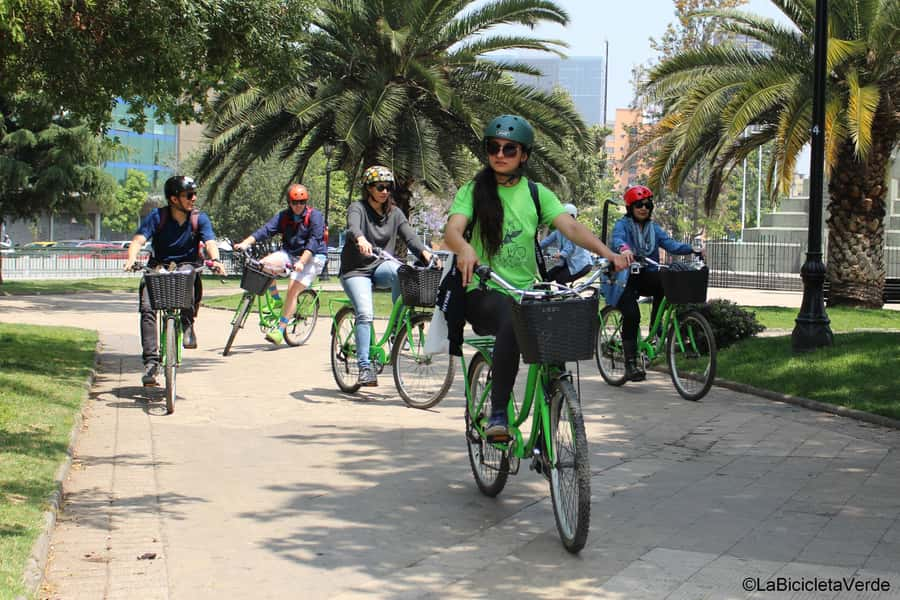
- Mostly easy riding: The route is described as gentle and mostly flat, with bike lanes, parks, and some streets.
- Useful food advice: Your guide can explain traditional dishes, suggest local plates, and help point you toward good market purchases.
- Good practical extras: A beach cruiser, helmet, water, sunscreen, fresh juice, and sopaipilla are included for $45.
Why This Route Works as a Santiago Introduction
Santiago can feel large at first. The central districts spread across a wide basin, and the city’s character changes quickly from artsy streets to formal parks, riverfront paths, and busy food halls. This tour gives you a simple way to connect those areas without spending your first morning underground or trying to decode city buses.
The route also has a useful mix. Bellavista gives you street art and nightlife culture. La Chascona adds a major cultural figure. Parque Forestal brings shade, open space, and sculpture. The markets show what people buy and eat today. You get a city lesson through neighborhoods, not a string of photo stops.
At $45 per person, the value is solid if you use the guide well. The fee includes the bike, mandatory helmet, bottled water, sunscreen, a traditional sopaipilla, and freshly squeezed natural juice. You are also paying for three hours of route planning and local interpretation. The price is less compelling if you mainly want to pedal, since the market visits take up a substantial part of the morning.
The group limit of 10 matters. A guide can keep track of riders at crossings, pause for questions, and help you navigate the market without turning the outing into a large procession. The strongest feedback centers on guides who explain history clearly, watch the group closely, and talk easily about daily life in Chile.
More Bike Tours in Santiago
- Santiago: Highlights, Parks and Politics Bike Tour
★ 4.6 · 75 reviews - Santiago Center Cultural Bike Tour
★ 5.0 · 51 reviews - Private Full-Day Bike Tour of Santiago Cultural 5-6 hrs
★ 5.0 · 49 reviews
Starting in Bellavista’s Murals and Cobblestones
The meeting point is at Constitución 153, next to Plaza Mori and near Baquedano Metro Station. That location puts you right by Barrio Bellavista, so the tour starts in one of Santiago’s most recognizable arts and entertainment districts rather than in a generic bike shop area.
Bellavista is known here through its street art, cobbled streets, and nocturnal life. During the ride, your guide places the murals in the context of the neighborhood, helping you see more than painted walls. You will also ride past the entrance to Parque Metropolitano on Cerro San Cristóbal, according to the route described by one rider.
The cycling itself is intended to be inclusive and gentle. Several riders found it easy, mostly flat, and suitable for different skill levels. The route uses bike lanes and parks when possible, with some riding in the street. Guides are expected to manage crossings and keep the group together, which is especially useful if you are not comfortable cycling in an unfamiliar city.
The bikes are beach cruisers with small baskets. One person found the gears somewhat rusty, though still usable. That is a fair warning for riders who expect polished performance. These are practical city bikes for an easy route, not high-end touring bicycles.
You must wear the provided helmet under Chilean law. Water and sunscreen are supplied, but Santiago can be bright and dry, so bring comfortable clothing and your camera. You may want local currency later in the morning for market purchases.
La Chascona and the Pablo Neruda Connection
From Bellavista, the ride continues to La Chascona, Pablo Neruda’s Santiago home. The stop gives the tour a cultural anchor and explains why this property matters to Chilean literature and identity.
The experience description promises a ride to the house and information about Neruda. It does not state that admission inside the property is included, so you should think of this as an exterior visit and guide-led stop unless your booking details say otherwise. That distinction matters if you are hoping for a full house tour.
Even without an interior visit, La Chascona adds something important to the route. You are not simply moving from one market to another. You are seeing how an artist and Nobel Prize winning poet fits into the story of Santiago, then moving back into the everyday city around him.
This is also a good place to ask questions. Guides such as Tammy, Nico, Valentina, and Phillipe have been praised for explaining Chilean history and current culture in an approachable way. The tour works best when you treat it as a conversation, not just a ride behind a guide.
Parque Forestal Brings a Pause by the Mapocho
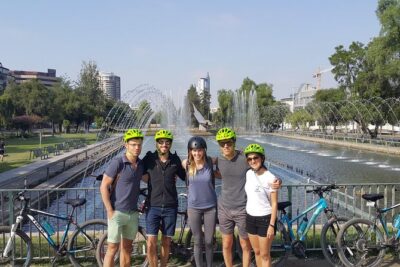
The route then heads through Parque Forestal, one of Santiago’s most attractive pieces of open city space. The park gives you a break from traffic and a chance to see the Mapocho River corridor from a bicycle.
A rider specifically enjoyed the sculpture garden, while another highlighted the park, bridge, and river as part of the appeal. Those details show why this section matters: it is not a filler ride between landmarks. It gives you a more relaxed view of the city and a change in pace before the markets.
You will cross the Mapocho River on the way toward Mercado Central. The river is part of Santiago’s physical identity, but the tour keeps the experience practical rather than turning it into a long scenic stop. Expect a brief look and a continued ride, not a dedicated river cruise style visit.
The park section is also one reason the tour suits first-time visitors. You get a broad sense of central Santiago without spending the whole morning in traffic. The route combines public space, art, residential streets, and commercial areas in a way that helps the city make sense.
Same corner of Chile, a completely different day out:
- Santiago: Cajon del Maipo/Embalse del Yeso Tour with Picnic
★ 4.3 · 3,789 reviews - Santiago: Vina Del Mar, Valparaiso, Casablanca & Reñaca Tour
★ 4.2 · 2,838 reviews - Small-Group Cajón del Maipo Full-Day Tour and Picnic
★ 4.5 · 2,277 reviews - Santiago: Cajon del Maipo & Embalse El Yeso Trip with Picnic
★ 4.5 · 1,859 reviews
La Vega Central: Santiago’s Everyday Food Market
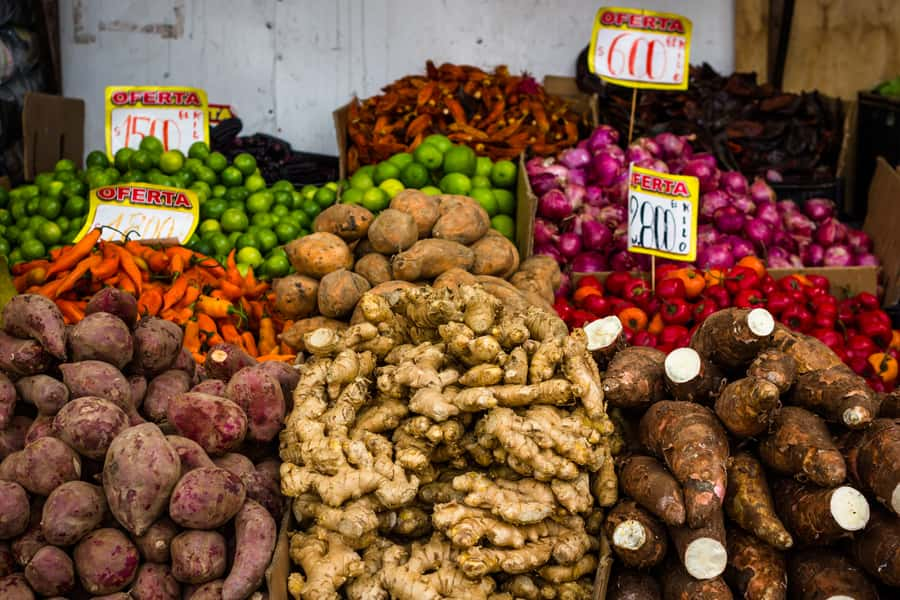
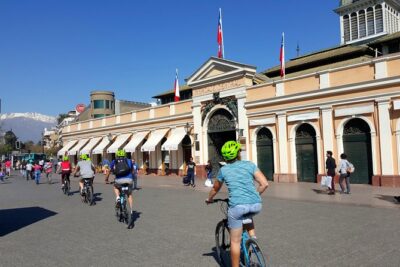
La Vega Central is the heart of the tour for many people. It is Santiago’s largest local market, and your guide uses the stalls to explain Chilean foods, shopping habits, and everyday cooking.
This is where the bike portion gives way to walking. You may find that the bicycle is less useful inside narrow market areas, and one rider felt that some stops would have worked better without having to manage a bike. That is a real tradeoff. The bike helps you reach the market and cover more ground across town, but it is not an ideal tool for every indoor or crowded section.
The payoff is access to a market that feels practical rather than staged. Your guide can point out produce, explain traditional ingredients, and suggest dishes to try later. If you want to buy fruit or another snack, guides have helped with choosing a stall and negotiating for a good purchase. Bring Chilean pesos if you plan to shop, since local currency is specifically recommended.
The included food tasting keeps things simple. You receive a sopaipilla, a traditional Chilean snack, and freshly squeezed natural juice. This is not a full meal, so plan another lunch if you have a large appetite. The tasting is useful because it gives you an immediate food reference before you order on your own later.
I especially like the market portion for visitors who are unsure what to eat in Santiago. A guide can recommend local dishes and explain which foods are worth seeking out. You leave with more than a photograph of a market aisle. You have a short list of things to look for on the rest of your trip.
Mercado Central and Chile’s Long Coast
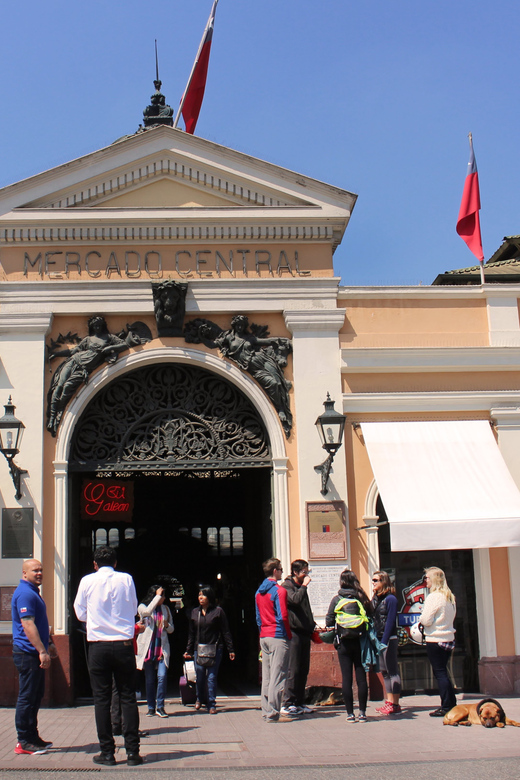
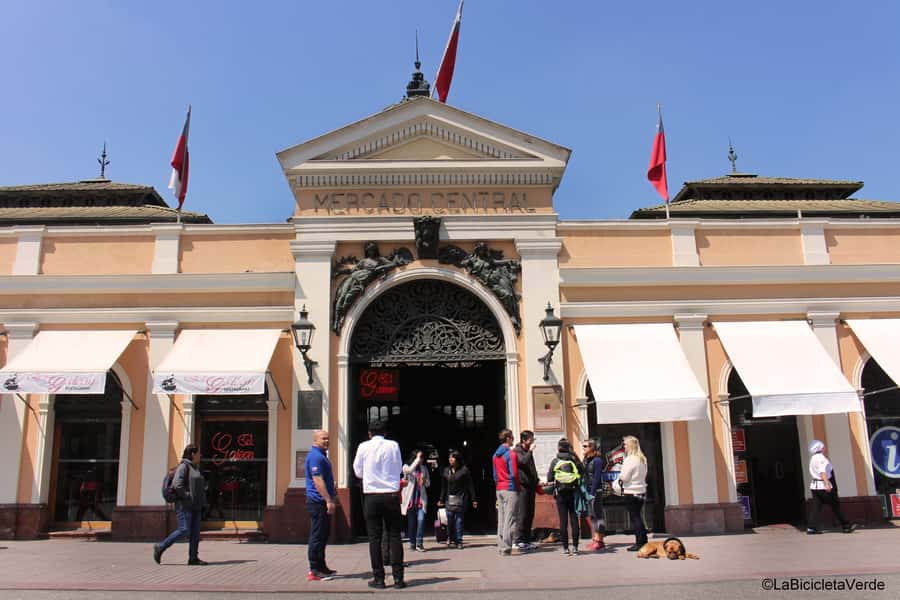
After La Vega, the route crosses the Mapocho River to Mercado Central, Santiago’s seafood market. Chile has more than 6,000 kilometers of coastline, so seafood is a natural part of the country’s food story.
Mercado Central gives the tour a different market experience. La Vega is about produce and daily shopping, while Mercado Central brings the sea into the middle of the capital. Your guide discusses seafood and local customs, helping you connect what you see on the counters with Chile’s coastal geography and eating habits.
The market is lively and sensory, but the visit is not built around a formal restaurant meal. The included juice and sopaipilla come as part of the tour, while any additional food or goods you purchase are your responsibility. Keep some money aside if you want to sample something beyond the included tasting.
Several riders wished the tour lasted longer, especially because the market could easily occupy several hours. That is a compliment to the stop, but it also points to the tour’s limit. You will receive an introduction, not an exhaustive food crawl. If you find a stall or dish you love, note its location and return later with more time.
The Guide Makes the Difference
The route is useful on its own, but the guide shapes the experience. The strongest guide names connected with this outing include Isabella, Marti, Diego, Adrin, Felipe, Joanna, Valentina, Nico, Tammy, Phillipe, Stefano, Matilda, Carlos, Gino, and Karla.
The key qualities to look for are clear English or Spanish, good group control, and a willingness to explain rather than rush. Isabella was praised for her English, market help, and care in keeping the group together. Marti was described as fun and engaging. Diego received credit for making riders feel safe on bike lanes and streets. Adrin was singled out for hospitality and city knowledge.
The tour is bilingual, in English and Spanish. You should be comfortable asking questions during stops, since the value comes from context about history, politics, food, and daily life. One group enjoyed discussing current events with its guide, while another appreciated practical advice about using the subway and visiting other districts afterward.
The high overall rating of 4.8 from 107 reviews fits the pattern: safety, guide quality, and the easy pace receive the most praise. The lower points are practical rather than serious. Some riders wanted more cycling, and one found the bike condition merely adequate.
Who Will Enjoy It Most?
I would choose this tour for a first or second day in Santiago. It gives you neighborhood orientation, food ideas, cultural background, and a few places you may want to revisit. It is also a good fit if you like active sightseeing but do not want a strenuous ride.
The tour suits:
- First-time visitors who want a broad central Santiago introduction
- People who enjoy markets and local food
- Riders comfortable with an easy, mostly flat route
- Small groups and solo visitors who want a guide
- Anyone who wants practical recommendations for later meals and sightseeing
I would hesitate if your main goal is a serious cycling workout. The tour includes market walks and explanation stops, so the actual riding is closer to half of the three-hour experience. You should also reconsider if you use a wheelchair, since the activity is not suitable for wheelchair users.
Hotel pickup and drop-off are not included. You need to reach Constitución 153 near Plaza Mori and Baquedano Metro Station on your own. The activity includes free cancellation up to 24 hours before the start and a reserve-now, pay-later option, which can help if your Santiago schedule is still shifting. Insurance is not included.
Is the Santiago Markets Bike Tour Worth Booking?
Yes, if you want a gentle introduction to Santiago that combines cycling, city history, street art, parks, and food. The strongest reason to book is the route’s variety. In three hours, you move from Bellavista murals to Neruda’s home, across Parque Forestal and the Mapocho, then into two major markets.
The main caution is simple: do not book it expecting three hours on a bicycle. You will spend meaningful time walking and listening in the markets, and that is where much of the tour’s value lies. At $45, the package is fair for a small group, bilingual guide, bike, safety equipment, water, sunscreen, and tastings.
Bring local currency, wear comfortable clothes, and leave room in your schedule to return to La Vega or Mercado Central on your own. If that sounds like your kind of morning, this is an easy, useful way to get your bearings in Santiago.
FAQ
How long is the Santiago Markets Bike Tour?
The tour lasts three hours.
How much does the tour cost?
The price is $45 per person.
Where does the tour meet?
The meeting point is Constitución 153, next to Plaza Mori and near Baquedano Metro Station.
Is the tour offered in English?
Yes. A live guide is available in English or Spanish.
How large is the group?
The tour is limited to 10 participants.
Is the cycling difficult?
The ride is described as gentle and mostly flat. The route uses parks, bike lanes, and some streets, and it is intended to suit a range of riding abilities.
Are a bike and helmet included?
Yes. A beach cruiser city bike and helmet are included. Helmet use is mandatory under Chilean law.
What food and drinks are included?
You receive bottled water, sunscreen, a traditional Chilean sopaipilla, and freshly squeezed natural juice.
Can wheelchair users join the tour?
No. The activity is not suitable for wheelchair users.
Newest Santiago trips on the site
- Walking City Tour with Funicular, Cable Car and Tasting★ 4.3 · 6 reviews
- VIÑA DEL MAR AND VALPARAISO TOUR★ 4.8 · 20 reviews
- Undurraga Wine tour★ 4.2 · 15 reviews
- Coast and Color: Discover Viña and Valparaíso in a Day★ 5.0 · 58 reviews
- Valparaiso & Casablanca : Wine, Gastronomy and Living Culture★ 5.0 · 37 reviews
- Traditional Dinner Show in Santiago★ 4.5 · 41 reviews
- Private Cruise Transfer : Santiago → Valparaiso or San Antonio★ 4.5 · 51 reviews
- Valle nevado Sunset★ 5.0 · 40 reviews
Cycling Tours, compared.

Bike Tour in San Pedro de Atacama – Devil’s Throat
Read our review →
Private Full-Day Bike Tour of Santiago Cultural 5-6 hrs
Read our review →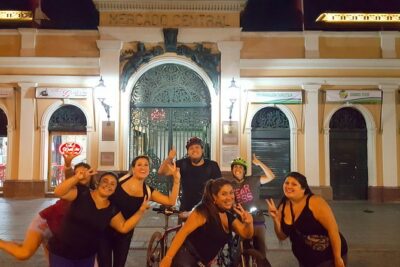

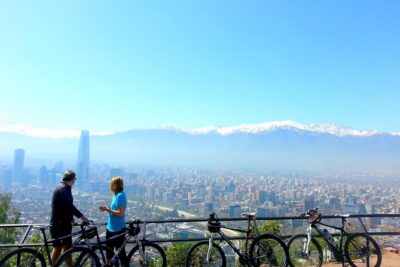
Private San Cristobal Hill & Metropolitan Park Santiago Bike Tour
Read our review →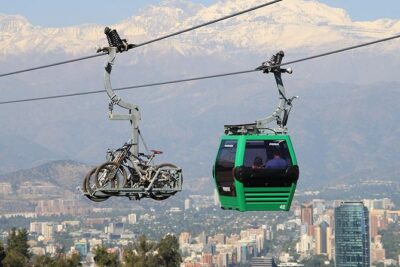
Browse the lists this tour appears in