
Reviewed · HISTORICAL TOURS
Santiago: Guided Walking Tour of the Historical Old Town
Santiago reveals itself best on foot, and this tour gives you a useful sweep from the government quarter to the restaurant-lined streets of Bellavista. You move through grand civic buildings, old plazas, art districts, and hilltop viewpoints rather than checking off one isolated sight.
I like the small group of no more than 10 and the route’s smart finish at Patio Bellavista. I also like the guide’s practical touch: Eugenio, often called Eugene, has helped people with restaurant ideas, museum plans, photographs, and even an Uber back to the hotel.
The main drawback is pace. Three hours covers a lot of ground, and some guides explain details quickly, especially when speaking in more than one language. This is a walking introduction, not a leisurely museum tour.
Key points at a glance
- A useful first-day route: Begin at Palacio de la Moneda and finish in Bellavista, giving you a clear sense of Santiago’s central districts.
- Major landmarks included: See the Stock Exchange Building, Bandera Avenue, the Courts of Justice, Ex Congress National, Plaza de Armas, and Santiago Cathedral.
- A proper city view: Climb Santa Lucia Hill for a panoramic look across Santiago. Entrance is free Tuesday through Sunday.
- History with local context: Eugenio and the other guides connect architecture, politics, society, food, and Chilean history.
- Small-group attention: The group is limited to 10, so questions are easier and the guide can keep an eye on the pace.
- Good value at $25: You get three hours with a guide and bottled water, though lunch, museums, Pablo Neruda’s house, and San Cristobal Hill are extra.
Why this Santiago walk works as a first introduction
Santiago can feel spread out when you first arrive. Its historic center, art districts, parks, hills, and restaurant neighborhoods each have a different mood, and it is easy to spend a day seeing attractive buildings without understanding how they fit together.
This route solves that problem with a broad walking loop. You start near Palacio de la Moneda, Chile’s seat of government, then pass through the civic core before reaching Plaza de Armas. From there, the walk shifts toward Bellas Artes, Lastarria, Santa Lucia Hill, Forest Park, and Bellavista.
I see this as a get your bearings fast tour. You will not have time for long visits inside every building, but you will leave with a list of places to revisit. That makes it especially useful on your first day, during a short stay, or during a long layover.
The $25 price is fair for three hours of guiding, bottled water, and a route that links several parts of central Santiago. You are paying less for entry tickets and more for the explanation that turns streets and facades into a story. Since most of the attractions are viewed from outside, you should book this for orientation and context, not as a series of museum admissions.
More Historical Tours in Santiago
- Essence of Santiago : History, Flavors and Panoramic Views
★ 5.0 · 45 reviews - Santiago: Private tour, historic center, high altitude viewpoint, cable car
★ 4.9 · 27 reviews - Discover Santiago, where modernity merges with history
★ 5.0 · 12 reviews
Starting at Palacio de la Moneda
The tour begins at Palacio de la Moneda, an imposing landmark in Santiago’s government district. Starting here gives the walk a clear political and historical frame before it moves toward churches, plazas, museums, and food streets.
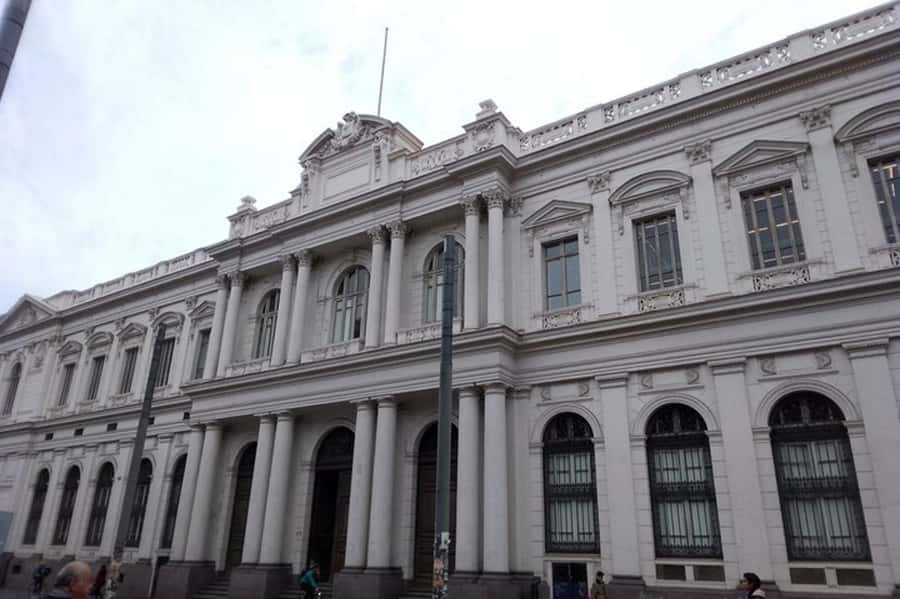
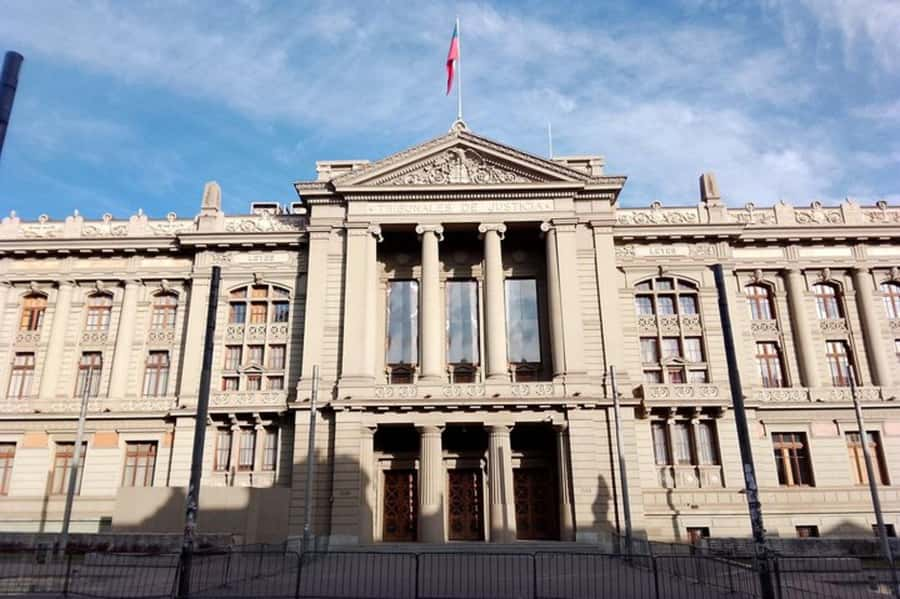
You then pass the Stock Exchange Building and Bandera Avenue. These stops help show Santiago as a working city, not only a collection of old monuments. The route also includes the Courts of Justice, where the guide can connect public architecture with Chile’s institutions and civic life.
This opening section is strongest when you pay attention to the contrast between formal buildings and the active streets around them. You will want comfortable shoes because the tour keeps moving, with regular pauses for explanations rather than long periods spent sitting.
Plaza de Armas and the 1748 cathedral
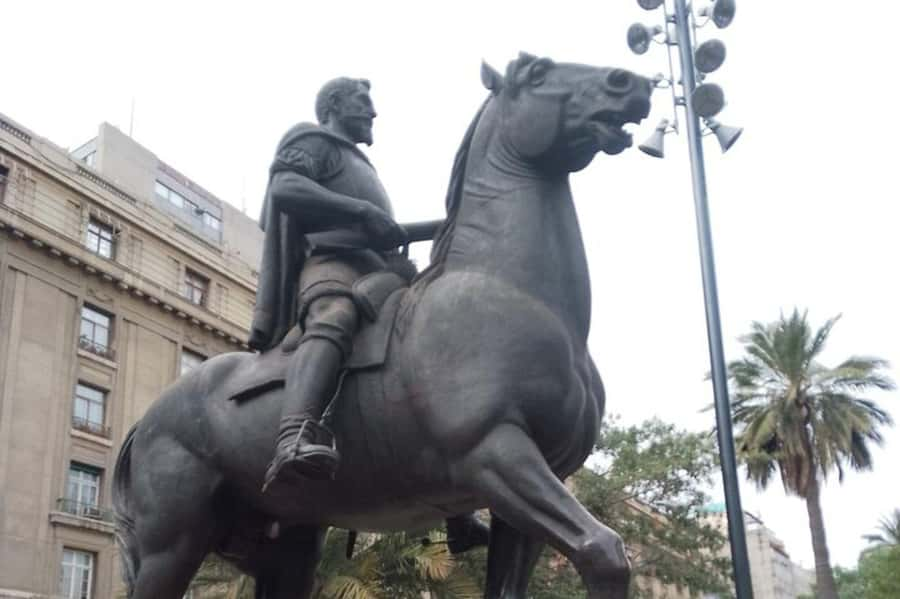
Plaza de Armas is the emotional center of the historic route. It is the sort of place where Santiago’s past and present meet: important buildings line the square, while daily city life continues around them.
The Cathedral of Santiago is the main stop here. The current cathedral dates to 1748, and its scale gives the plaza a strong visual anchor. You can admire the facade and interior details as part of the guided visit, though the tour is not presented as a long, formal church tour.
The route also takes in Ex Congress National and Santiago City Hall. These buildings broaden the story beyond colonial religion. With a good guide, you get a useful mix of architecture, government, social change, and the people who shaped Chile.
Eugenio is particularly well suited to this kind of walk. His explanations cover both major events and small details, and he has a habit of answering side questions rather than brushing them aside. Several people found his friendly manner as valuable as the information itself.
Bellas Artes, art, and a change of mood
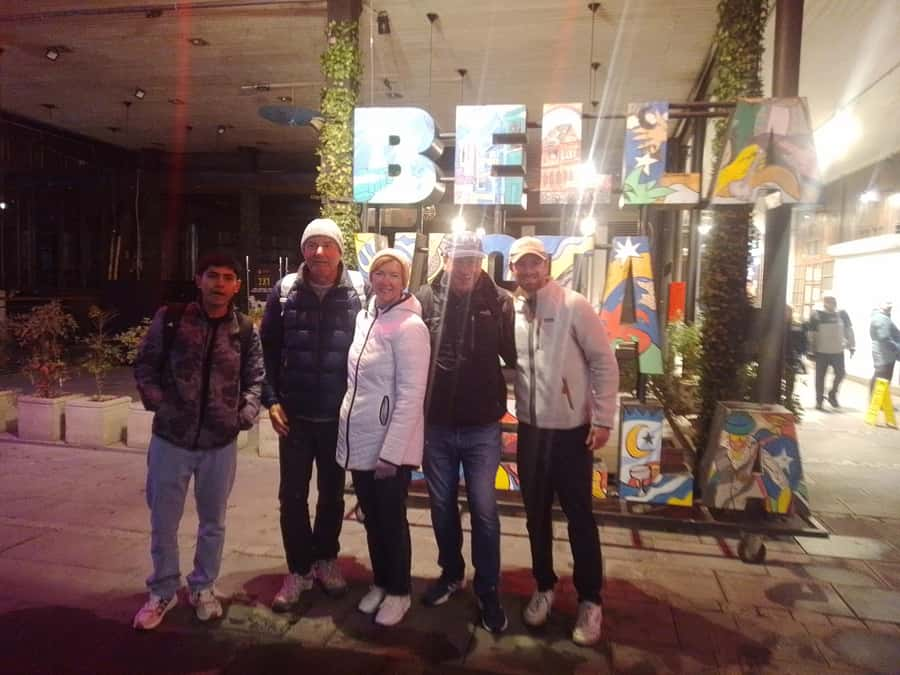
The walk then shifts into the Bellas Artes Neighborhood, one of the more artistic parts of central Santiago. This is a welcome change after the formal government quarter and the monumental Plaza de Armas.
The Bellas Artes Museum is part of the route. The experience gives you an introduction to the museum and neighborhood, but entry is not listed as part of the $25 price. If you want a proper museum visit, plan to return after the tour or check the day’s opening details separately.
I like this part because it shows how close Santiago’s grand civic center is to its arts scene. You move from official buildings to galleries, cultural spaces, and streets that invite a slower wander. The tour itself still has a fixed schedule, so do not expect enough time to study every exhibit.
More Walking Tours in Santiago
- Santiago Half-Day Walking Tour with Hotel Pick up & Brunch
★ 4.7 · 148 reviews - Santiago De Chile: Private Custom Walking tour with A Guide
★ 4.4 · 88 reviews - 2-Hour Walking Tour of Yungay The Coolest Neighborhood in Chile
★ 5.0 · 85 reviews - Santiago de Chile Private Walking Tour-5 Hours with Hotel Pick-up
★ 5.0 · 77 reviews
Santa Lucia Hill and the best view on the route

Santa Lucia Hill is the route’s visual reward. You climb the hill for panoramic views over Santiago, giving you a chance to see how the central neighborhoods fit together.
This stop matters because the city can seem flat and divided when you are walking at street level. From above, you get a clearer sense of the urban spread and the surrounding setting. It is also a natural pause in a tour packed with buildings and historical explanations.
Entrance to Santa Lucia Hill is free from Tuesday through Sunday. The information provided does not promise the same access on Monday, so check the operating conditions when you choose your date. The climb also makes the footwear advice important. Sandals with little support will not be your best friend here.
The hill is not the same as San Cristobal Hill, and San Cristobal is not included. That distinction matters if you are hoping for the city’s other famous high viewpoint. You can treat Santa Lucia as the included central viewpoint, then decide later if you want to arrange San Cristobal separately.
Lastarria and Forest Park
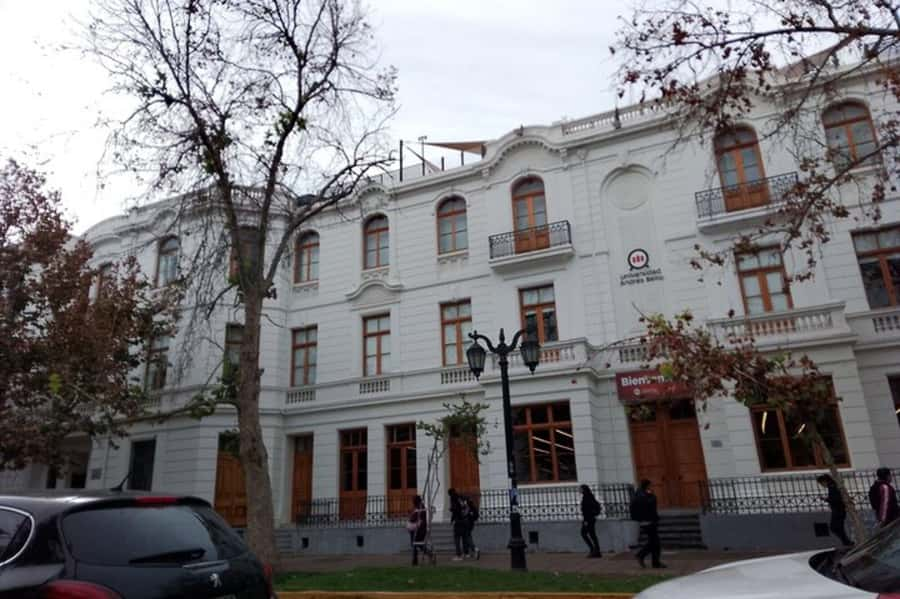
After Santa Lucia Hill, the route continues through Lastarria and Forest Park. This part gives the tour some breathing room. You are no longer focused only on official monuments, and the walk becomes more about how people use central Santiago today.
Lastarria is a good area to explore after the tour because it connects naturally with the Bellas Artes district and Forest Park. The route lets you see these areas in context rather than arriving without a map of how they relate.
Forest Park adds a greener stretch to a day that otherwise spends plenty of time on paved streets. Do not confuse this with a countryside outing. It is still a central urban walk, but the change of setting helps break up the route.
The group’s pace seems to be one of the tour’s strengths. People describe it as manageable, with stops that prevent the walk from becoming a forced march. On hot days, Eugenio has chosen shady places for explanations and checked that everyone was keeping up. Still, Santiago’s sun can be strong, so bring sun protection and water even though bottled water is included.
Ending in Bellavista and Patio Bellavista
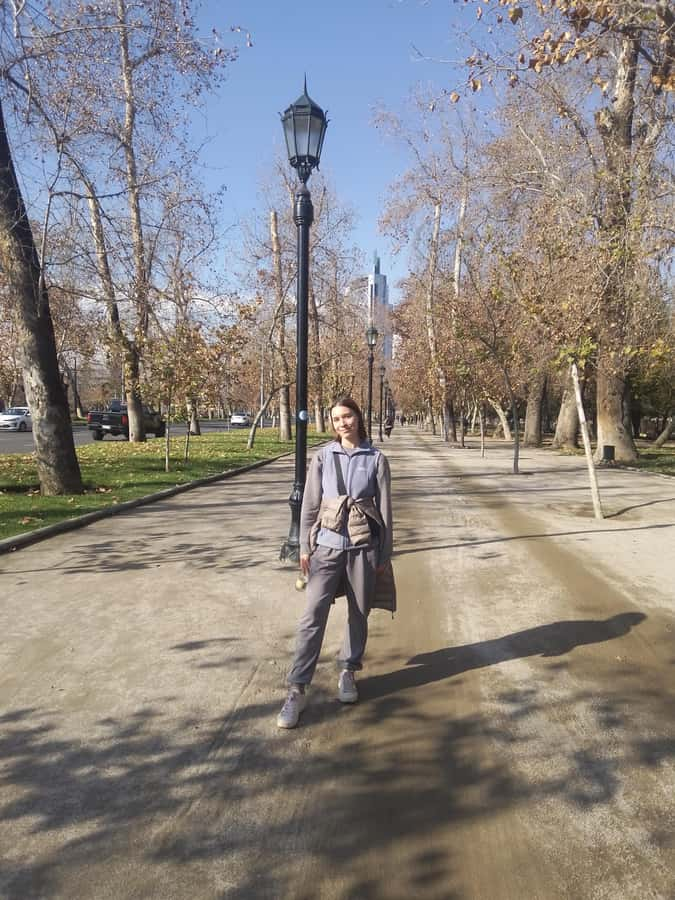
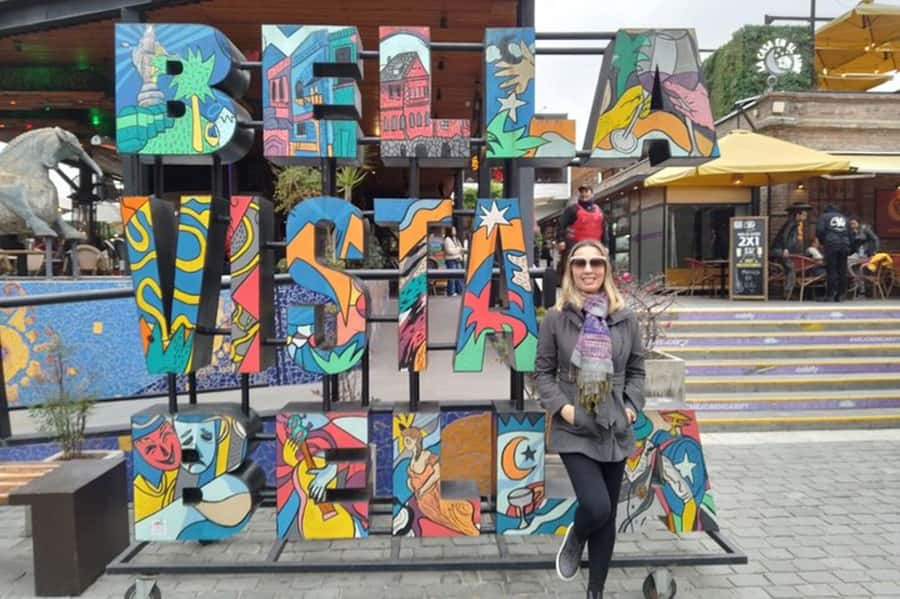
The final district is Bellavista, a lively area known for food and evening activity. Ending here is a practical choice because you do not have to find a restaurant after three hours on your feet. Patio Bellavista provides a central place to stop for a meal, coffee, or further plans.
This is where the tour becomes especially useful for food-minded visitors. Lunch is not included, but the guide can offer suggestions about restaurants and local flavors. Several people appreciated getting practical advice on where to eat and what to visit next.
The route does not include entry to Pablo Neruda’s house. If you want to visit it, arrange that separately and allow more time. The same applies to San Cristobal Hill. These exclusions keep the walking tour focused, but they also mean you should not mistake Bellavista for a complete tour of every nearby attraction.
Because the tour ends at Patio Bellavista, you can continue exploring on your own instead of returning to the starting point. That saves time and makes the experience fit well into a larger day plan.
What the guide adds to the walk
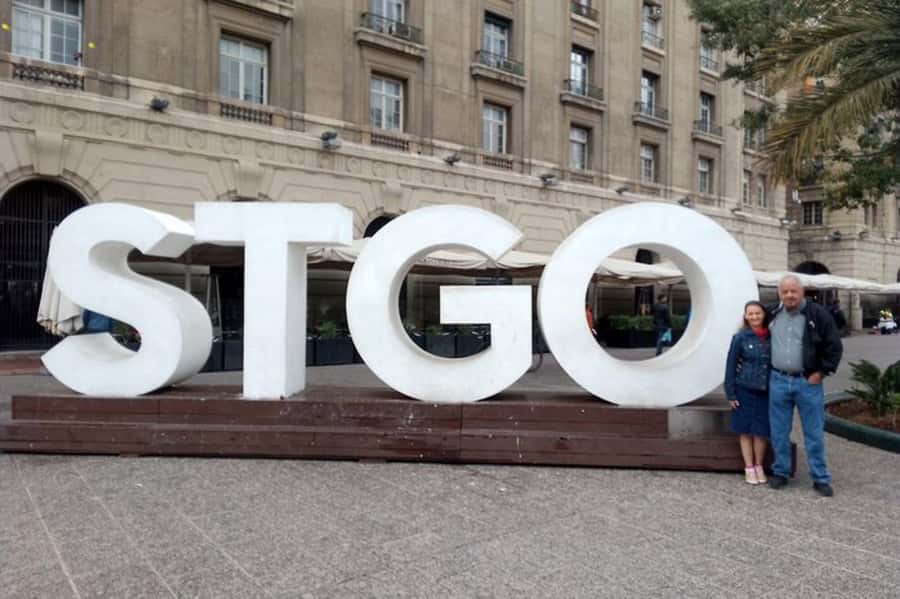
The buildings are worth seeing, but the guide determines how much you take away. Eugenio, also referred to as Eugene, receives the strongest praise for being friendly, well informed, patient, and easy to ask questions of. He speaks English well and can guide in English, Spanish, or Portuguese.
The mixed-language groups require care. Eugenio has explained stops in both English and Spanish, making sure people from different countries were not left behind. That can add time to the route, and one practical criticism is that explanations may sometimes come quickly when the guide is covering a lot.
I would tell you to speak up if you need a slower explanation. The group size makes that realistic, and the guide’s willingness to answer questions is one of the main reasons to choose a guided walk instead of using a map alone.
The best part of the guiding style is its range. You get architecture, political history, social background, food suggestions, museum ideas, and current city context. The tour is not just a list of dates. It tries to explain why the buildings matter and how the neighborhoods differ.
Pace, fitness, and weather
Three hours of walking requires a reasonable level of comfort on your feet. Wear proper walking shoes and expect hills, especially at Santa Lucia. The route is not designed for someone who wants to remain seated or move at a very slow pace.
The activity is not recommended for pregnant people or for those with heart problems or other serious medical conditions. Children under four are not suitable according to the supplied age restrictions, and the details also separately exclude children under two, children under three, and babies under one. Because those age notes overlap, confirm the exact child policy before booking with young children.
Weather affects the tour. If poor conditions force cancellation, you are offered another date or a full refund. The same applies if the minimum number of participants is not reached. You can cancel up to 24 hours ahead for a full refund, and the reserve-now, pay-later option helps if your schedule is still moving around.
How the $25 price measures up
At $25 per person, this is good value if you want a guide to connect the stops. The route covers a large portion of central Santiago in three hours, and the small group keeps the experience more personal than a big coach outing.
The price does not include lunch, museum entry, Pablo Neruda’s house, or San Cristobal Hill. That is not a problem if you treat the tour as a city introduction. It becomes less attractive if you expect a full package with admissions and a meal.
Bottled water is included, and guides have also made extra coffee or café stops on some outings. Do not count on those as guaranteed parts of the schedule, but the practical attention is a good sign.
I would book this early in a Santiago stay. Use the route to mark places you want to revisit, then return to the Cathedral, Bellas Artes Museum, Lastarria, or Bellavista at your own speed. The tour is most useful as a framework for the rest of your visit.
Who should book this Santiago walking tour?
I recommend it for first-time visitors, short-stay visitors, people on a layover, and anyone who wants historical context without committing to a full-day excursion. It also suits solo visitors and couples who like asking questions as they walk.
It is a good match for English, Spanish, and Portuguese speakers, especially in a mixed group where the guide takes care to include everyone. The small size is a real advantage if you want personal suggestions for museums, food, or later sightseeing.
I would skip it if your priority is entering every major building, spending long periods in museums, or taking a slow photography walk. The route covers many stops, so some explanations may feel packed. You should also think twice if hills and three hours of walking will be uncomfortable.
Should you book it?
Book this tour if you want a well-planned introduction to Santiago that combines government buildings, the old center, art districts, a hilltop view, and a food-focused ending. The route is broad, the price is sensible, and Eugenio’s warm, flexible approach adds real value.
Choose it for your first day or your only day in town. Just bring good shoes, allow time for a brisk flow between stops, and remember that museum visits, lunch, Pablo Neruda’s house, and San Cristobal Hill require separate plans.
FAQ
How long does the Santiago walking tour last?
The tour lasts three hours.
What is the price per person?
The price is $25 per person.
Where does the tour start?
It starts at Palacio de la Moneda.
Where does the tour finish?
It ends at Patio Bellavista in the Bellavista Neighborhood.
Which languages are available?
The guide service is available in English, Spanish, and Portuguese.
Is Santa Lucia Hill included?
Yes. The route includes a climb up Santa Lucia Hill for city views. Entrance is free from Tuesday through Sunday.
Are lunch and other major attractions included?
No. Lunch, entry to Pablo Neruda’s house, and access to San Cristobal Hill are not included.
Newest Santiago trips on the site
- Walking City Tour with Funicular, Cable Car and Tasting★ 4.3 · 6 reviews
- VIÑA DEL MAR AND VALPARAISO TOUR★ 4.8 · 20 reviews
- Undurraga Wine tour★ 4.2 · 15 reviews
- Coast and Color: Discover Viña and Valparaíso in a Day★ 5.0 · 58 reviews
- Valparaiso & Casablanca : Wine, Gastronomy and Living Culture★ 5.0 · 37 reviews
- Traditional Dinner Show in Santiago★ 4.5 · 41 reviews
- Private Cruise Transfer : Santiago → Valparaiso or San Antonio★ 4.5 · 51 reviews
- Valle nevado Sunset★ 5.0 · 40 reviews
Historical Tours, compared.
Walking Tour Valparaiso, History & Art – Private Optional
Read our review →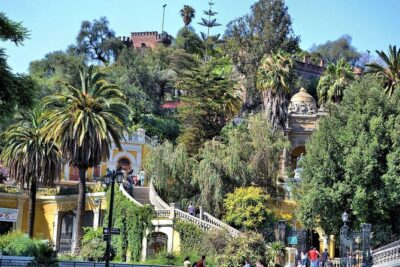
Essence of Santiago : History, Flavors and Panoramic Views
Read our review →
Private tour, historic center, high altitude viewpoint, cable car
Read our review →
Private tour: where the history of the Moai was born
Read our review →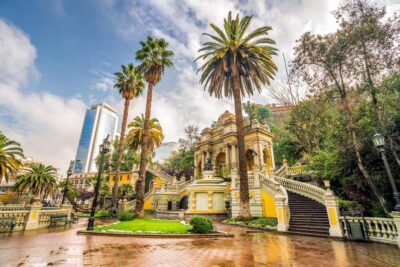
Discover Santiago, where modernity merges with history
Read our review →
Browse the lists this tour appears in