
Reviewed · MOAI TOURS
Private tour: where the history of the Moai was born
Rano Raraku is the heart of this tour. This volcanic quarry is where most moai were carved, and unfinished statues still sit in the rock as if the work stopped yesterday. I like that the route also includes Tongariki, with its long row of standing moai, and ends at Anakena Beach, giving you both serious archaeology and time beside the Pacific.
I also like the small maximum of four people and the chance to travel with a native guide. Guides named Tete, Sophia, and Hella have been praised for humor, flexibility, and warm company. The main caution is timing: the tour is sold as seven hours, but one booking ended after just over three hours, so confirm the actual start and finish before you pay.
Key points to know
- Rano Raraku is the main event: See moai in many stages of carving at the island’s famous quarry.
- Tongariki offers the classic view: Fifteen moai form the best-known row on the island.
- Anakena adds a beach stop: You can relax, swim, and see moai beside palm trees and white sand.
- Native guides shape the day: Tete, Sophia, and Hella have each been praised for friendliness and personal attention.
- Groups are capped at four: This is more intimate than a large coach outing.
- The national park ticket costs extra: Transportation, pickup, drop-off, and guiding are included, but park admission is not.
Why Rano Raraku gives this tour its purpose
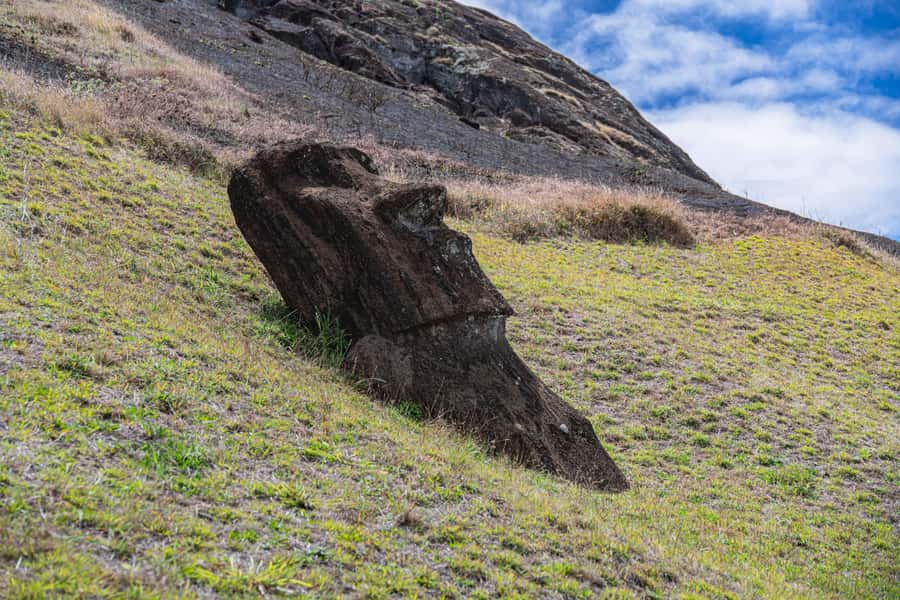
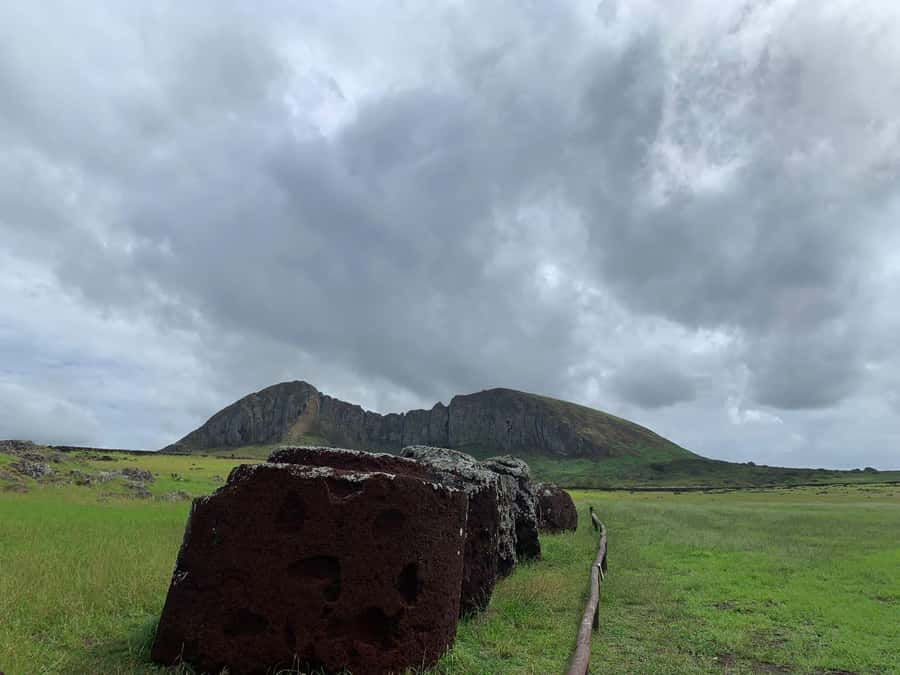
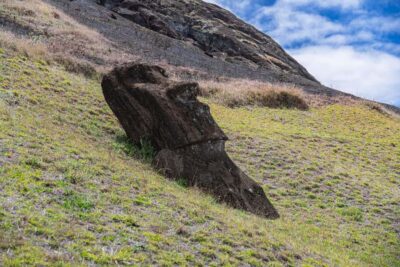
The title of this outing is well chosen. At Rano Raraku, you see where the moai were born, not simply where they were placed. The crater served as a stone workshop, and the slopes still hold statues at different stages of work.
Some figures appear only partly separated from the volcanic rock. Others are more complete, but were never moved to a ceremonial platform. That unfinished quality is what makes the quarry so compelling. You are not looking at a polished museum display. You are looking at a work site left behind.
Your guide is important here. Without explanation, Rano Raraku can look like a field of large stone figures. With a good guide, you can better understand the carving process and the scale of the labor involved. The strongest feedback for this tour centers on guides who explain the sites with humor and patience, rather than rushing you from one stop to the next.
The quarry is also where the tour earns much of its $150 price. A private or very small-group visit lets you ask questions and spend more time on the parts that interest you. That matters at a place where a quick photo stop would miss the point.
More moai and Rapa Nui archaeology:
- From Hanga Roa: Journey from Orongo to Ana Te Pahu
★ 4.3 · 75 reviews - Two days of Full Day Tour of Rapa Nui + Sunrise in Tongariki
★ 4.8 · 55 reviews - Sunrise Tongariki: Sunrise at Tongariki Park Private Tour
★ 4.5 · 47 reviews
Vaihu begins with fallen moai and unanswered questions
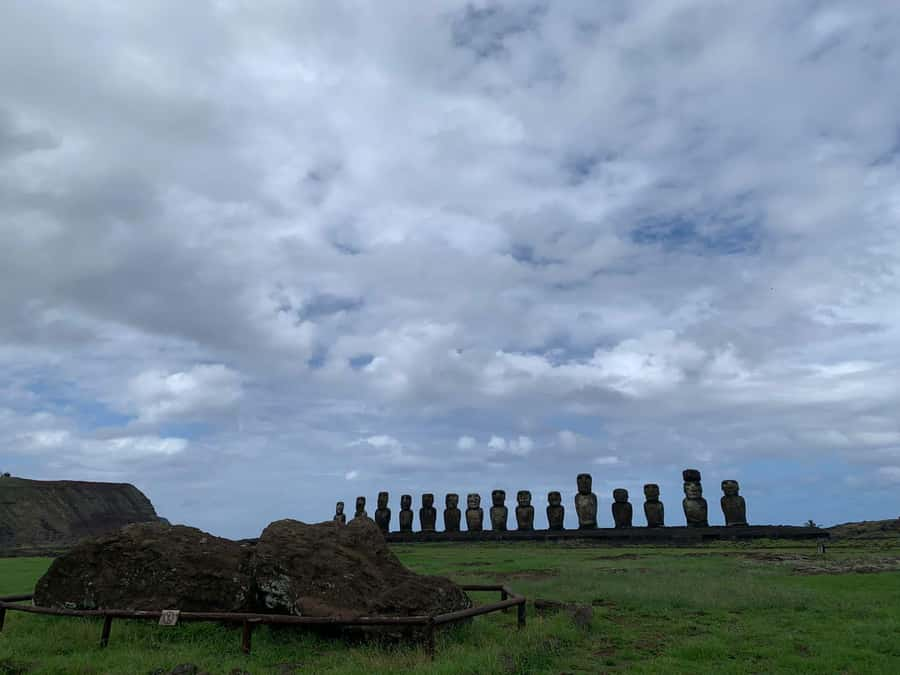
Vaihu is an early reminder that Rapa Nui is more than a collection of upright statues. Ancient moai lie scattered across the site, offering a different view from the neat row you later see at Tongariki.
I like starting here because the fallen figures make the island’s past feel less tidy. You can look closely at the stonework and hear explanations about the role and meaning of the moai. The setting also gives your guide room to discuss the questions surrounding their construction and movement.
Do not expect every mystery to receive a firm answer. The value of a native guide is not pretending that every detail is settled. It is hearing the local stories and historical interpretations that give the stones a human setting.
This is one place where your pace matters. One five-star account specifically praised having enough time at every stop, while another account described being hurried through the day. If you want time for photographs and questions, say so early.
Akahanga shows the island before the postcard view
At Akahanga, you see the remains of ancient settlements, stone platforms, and toppled moai in different stages of completion. It is a more broken and subdued stop than Tongariki, but that is exactly why it matters.
A row of restored statues can give you a clean, powerful image of Rapa Nui. Akahanga shows something less arranged. The fallen figures and unfinished work invite questions about how the island changed and why these ceremonial sites no longer functioned in their original form.
Your guide can connect the remains to the island’s past and explain the stories attached to the moai. The quality of that explanation will shape your visit. One guide was praised for telling stories in a funny, entertaining way, while another person wanted more background about the Rapa Nui people, their origins, and settlement of the island.
That contrast is useful. If you want archaeology explained in a wider historical setting, ask your guide for more context. This tour covers important places, but the amount of broader history can depend on who leads your group.
Tongariki delivers the strongest moai photograph
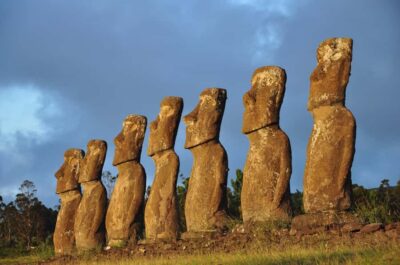
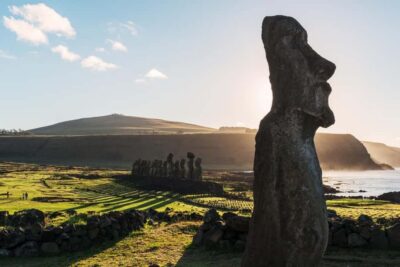
Tongariki is likely to be the visual high point. Fifteen moai are arranged in a long row, facing inland with the Pacific behind you. The sight is orderly, powerful, and very different from the toppled figures at Vaihu and Akahanga.
The tour description highlights morning light at Tongariki, when the statues can take on a warm glow. Your start time matters here. Ask when you will arrive, especially if seeing the moai in early light is a major reason for booking.
This is also a place where a small group helps. With only up to four participants, you can stop for photographs without negotiating space with a large bus group. Still, do not expect solitude to be guaranteed. Tongariki is one of Rapa Nui’s best-known sights, and the appeal is obvious.
I would give this stop proper time. The row is easy to photograph, but the real pleasure is standing back and taking in the scale. Look at the relationship between the figures, the platform, and the open setting. Your guide can point out details you might otherwise pass by.
More Historical Tours in Easter Island:
- Easter Island: Private Full Day History Of The Moai
★ 4.6 · 12 reviews - Santiago: Guided Walking Tour of the Historical Old Town
★ 4.8 · 459 reviews - Walking Tour Valparaiso, History & Art – Private Optional
★ 4.5 · 59 reviews - Essence of Santiago : History, Flavors and Panoramic Views
★ 5.0 · 45 reviews
Te Pito Kura adds legend to the route
Te Pito Kura brings a different mood. Here you see a large moai and a distinctive spherical stone linked with local legend and special meaning.
This stop is less about a long visit and more about the stories attached to the place. It gives your guide a chance to explain how archaeology and oral tradition sit side by side on Rapa Nui. You may not leave with every question resolved, but you should leave with a better sense of why certain stones carry such strong importance.
Because the stop is tied to myths, it is worth asking your guide to separate established facts from traditional stories. That approach keeps the visit respectful and helps you appreciate both forms of knowledge.
Anakena ends the day with sand, palms, and sea
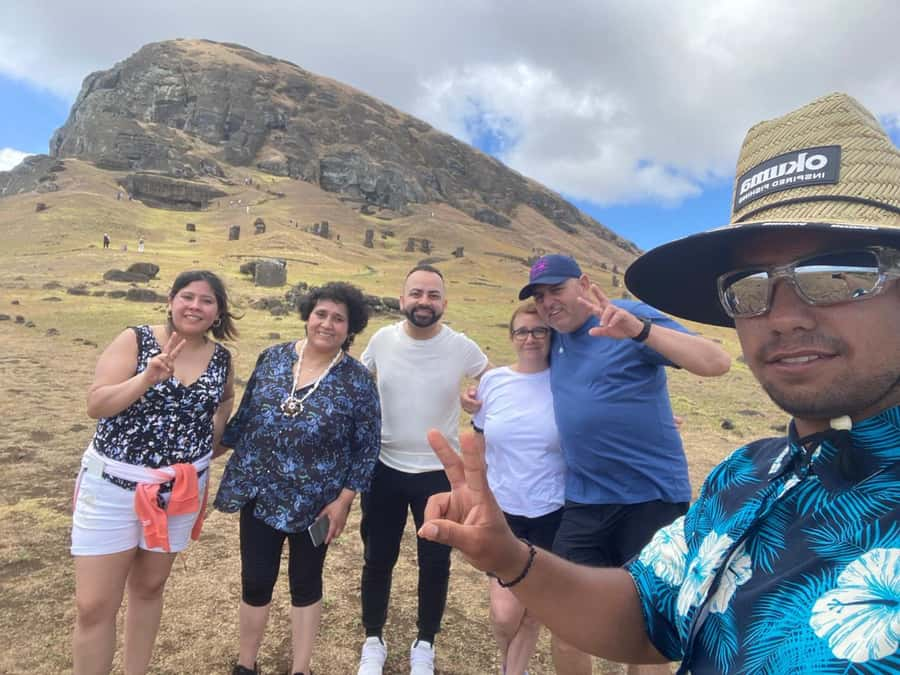
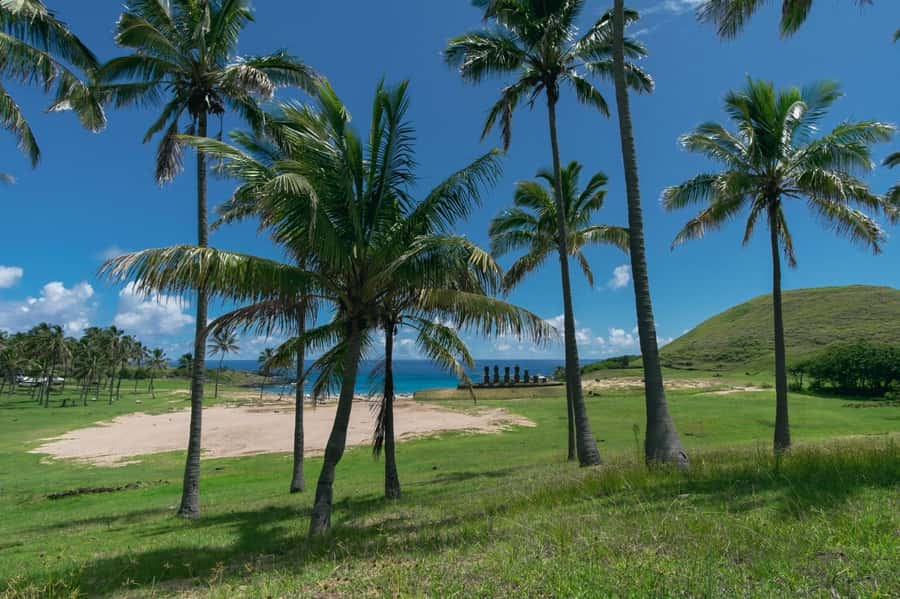
Anakena is a smart final stop. After several archaeological sites, you reach a beach with white sand, palm trees, and clear Pacific water. Moai stand nearby, so the setting still connects to Rapa Nui’s past, but the mood becomes more relaxed.
You can use this time to rest, swim, and think over the sites you have seen. The beach makes the seven-hour route feel less like a nonstop sequence of ruins. One especially positive account described ending the visit with lobster on one of the island’s beaches, though a meal is not included and should not be assumed.
Bring a swimsuit if swimming appeals to you, but keep in mind that the supplied details do not promise a set amount of beach time. If Anakena matters to you, ask the guide how long the group will stay. A short stop may be enough for photographs, while a longer one makes swimming possible.
The beach also helps balance the tour. Rano Raraku is intense and full of questions. Anakena gives you a quieter place to take a breath.
Native guides make the biggest difference
The strongest feature here is the human side of the outing. The guides are described as native guides, and the named examples show different strengths.
Tete was praised for taking the group around without rushing and for telling stories in a funny, entertaining way. Sophia adapted the day for a solo participant and added places that suited that person’s interests. She could guide in English or Spanish and also introduced some Chilean Spanish. Hella was praised for a prompt pickup, a well-paced agenda, and a friendly presence.
Those details tell you what to hope for: a guide who can adjust the pace, answer questions, and connect the archaeological sites with life on Rapa Nui today. That last point matters because the tour is not only about old stones. One especially strong experience included discussion of present-day island life as well as history and culture.
The guide quality is not perfectly consistent. One account described a reserved beginning that improved later. Another noted an emergency replacement guide and a dirty vehicle. That sounds like an operational problem rather than the intended standard, but it is worth remembering. Ask who will guide you and confirm the vehicle arrangements if comfort matters.
Seven hours, small groups, and the $150 question
At $150 per person, this is not the cheapest way to see the island. The value depends on what you want from the day.
The price includes transportation, pickup, drop-off, and a live guide in English or Spanish. A group limited to four gives you more personal attention than a large scheduled excursion. If you are traveling alone or as a couple, that small scale may be worth paying for, especially if you want questions answered or the pace adjusted.
The national park ticket is not included. Add that cost to your planning before comparing this with other outings. The tour also does not include meals, despite the possibility of arranging or buying food during the day.
The advertised duration is seven hours. That should be enough time for the six named stops, provided the schedule is followed. But the timing needs checking. One booking began at 10 a.m. and ended at about 1:10 p.m., far short of the advertised length. Before booking, ask for the exact pickup time, expected return time, and order of stops.
This is especially important if you have a flight, another tour, or a limited number of days on Rapa Nui.
Who will get the most from this outing
I would choose this tour if you want the main moai sites in one day and prefer a small group over a large coach. It suits first-time visitors who want the quarry, the famous standing row, fallen figures, a legendary stone, and a beach in one route.
It is also a good match if you value conversation. A native English- or Spanish-speaking guide can add local perspective that a self-guided visit may not provide. Sophia’s flexibility and Tete’s entertaining storytelling show how much better the day can become when the guide responds to your interests.
Solo visitors may find the small-group format particularly appealing. The experience can also work well for couples or friends who want transportation handled for them.
I would be more cautious if you want a formal, lecture-style account of Rapa Nui settlement and ancient society. The available information suggests that some guides offer plenty of history, while at least one visitor wanted more context about the people, their origins, and the island’s past. Ask for that focus in advance.
Practical points before you book
The tour offers free cancellation up to 24 hours before departure and allows you to reserve now and pay later. Those policies make it easier to fit the outing around uncertain plans, but they do not solve the question of the daily schedule.
Confirm these points before you commit:
- The exact starting and ending times
- The name of the guide, if available
- Whether the full six-stop route will be followed
- The national park ticket cost
- How much time is planned at Anakena
- Whether swimming or a meal stop will fit the schedule
The overall rating is 4.7 from 13 reviews, with especially strong praise for hospitality, guide quality, and the amount of time at the sites. The lower experience came from a major timing problem, while another mixed account raised concerns about limited historical context and vehicle cleanliness. Those are not minor details, so clear communication before departure is sensible.
Should you book the Moai birthplace tour?
I would book it if you want a compact, personal introduction to Rapa Nui and can confirm that you will receive the full seven-hour program. The route covers the sites most people hope to see, and the best guides add warmth, humor, local stories, and flexibility.
The $150 price is reasonable when you value a group of no more than four, included transportation, and a native guide. It is less attractive if the day is shortened or if you want a highly structured academic explanation of island history.
Your best move is to request the exact schedule and guide details before payment. If the operator confirms the full route, this tour gives you a strong first look at the places where the moai were carved, displayed, toppled, remembered, and finally appreciated beside the sea.
FAQ
How long is the tour?
The advertised duration is seven hours. Confirm the exact start and finish times before booking because one reported outing ended much earlier than that schedule.
What sites does the tour visit?
The route includes Vaihu, Akahanga, Rano Raraku, Tongariki, Te Pito Kura, and Anakena Beach.
Is the national park ticket included?
No. The national park ticket is not included in the $150 price.
What does the price include?
Transportation, pickup, drop-off, and a live guide are included.
How many people can join the tour?
The group is limited to four participants.
What languages are available?
Guiding is available in English and Spanish.
Can I swim at Anakena Beach?
The itinerary allows time to relax and swim at Anakena, but confirm the planned beach time with your guide.
Can I cancel for a full refund?
You can cancel up to 24 hours in advance for a full refund.
Can I reserve without paying immediately?
Yes. The reserve-now, pay-later option lets you book without paying on the day of reservation.
Newest Easter Island trips on the site
- Volcanic Refuges: Excursion to Underground Civilization★ 4.7 · 8 reviews
- Half Day Tour in Rapa Nui★ 5.0 · 48 reviews
- Ride to the highest point on the island for sunset★ 5.0 · 40 reviews
- Tongariki Sunrise: Half Day Private Tour★ 3.8 · 9 reviews
- Terevaka Horse Excursion: The highest point and 360° view.★ 4.7 · 38 reviews
- Easter Island: Private Full Day History Of The Moai★ 4.6 · 12 reviews
- Rapa Nui: Polynesian Massage★ 4.8 · 5 reviews
- Rapa Nui Highlights Program: 3 incredible tours to discover!★ 4.8 · 18 reviews
Moai Tours, compared.
Two days of Full Day Tour of Rapa Nui + Sunrise in Tongariki
Read our review →
Sunrise Tongariki: Sunrise at Tongariki Park Private Tour
Read our review →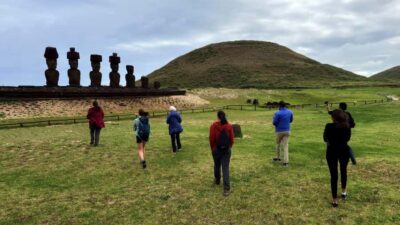
Ahu Vinapu, Rano Kao and Orongo City Half-Day Tour
Read our review →
Browse the lists this tour appears in