
Reviewed · MOAI TOURS
Two days of Full Day Tour of Rapa Nui + Sunrise in Tongariki
Rapa Nui is best understood outdoors, beside the Moai and volcanic rock, not from a quick photo stop. This three-day plan gives you two full days with certified local guides, followed by a sunrise at Ahu Tongariki, the island’s famous line of statues.
I like the chance to hear different views from guides such as Alex, Alejandro, David, and Ariki, and I like that hotel pickup, drop-off, rain ponchos, and pre-trip help are included. The main caution is the sunrise timing: one morning pickup around 6 a.m. left too little time to wait for the sunrise, which began closer to 8 a.m. Confirm the schedule before you go.
Key points to know
- Two full touring days: Visit major Moai sites, archaeological areas, volcanic terrain, and notable viewpoints with local guides.
- Ahu Tongariki at sunrise: The early visit can be beautiful, but ask exactly how long you will remain at the site.
- Different guides may lead each day: Alex, Alejandro, David, and Ariki have all been assigned to recent departures, giving you varied styles and interpretations.
- National Park entry costs extra: Bring the correct ticket before the first excursion. The listed rates are 20,000 CLP for Chilean nationals and 72,000 CLP for foreign nationals.
- Bring food and water: Meals are not included, though the route includes places where you can buy supplies.
- Small or private groups are available: Confirm the group format and language when booking.
Why two full days matter on Rapa Nui
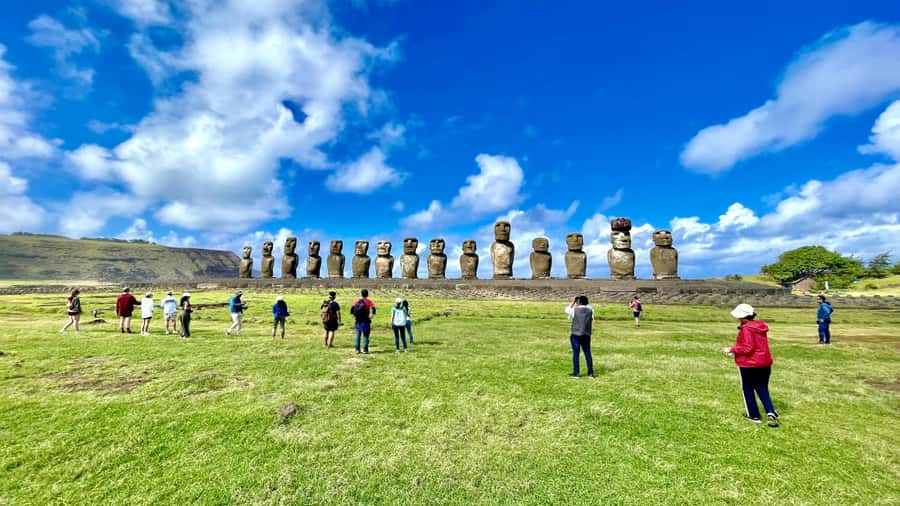
Rapa Nui can look small on a map, but its important sites are spread across an island with volcanic terrain and long stretches of open country. A rushed day can give you Moai photographs without much sense of how the sites relate to one another.
This plan gives you two complete daytime excursions. That extra time matters because the guides can explain the island’s ancient society, legends, ceremonies, and the questions that remain unanswered. You are not only looking at stone figures. You are learning why they were made, how they were placed, and what later generations have tried to understand about them.
The exact order of stops is not supplied, so you should not expect a fixed list of sites in a guaranteed sequence. The confirmed focus is on Rapa Nui’s best-known attractions, archaeological places, dramatic volcanic areas, and Moai platforms such as Ahu Tongariki.
I like this flexible structure for a first visit. You get enough time to see the major sights without trying to force the whole island into one long day. It also gives you the chance to ask questions as the visit develops, rather than hearing a short explanation and immediately being pushed back into a vehicle.
More Full-Day Tours in Easter Island
- Easter Island: Full-Day Tour to Anakena
★ 4.7 · 27 reviews - Hanga Roa: Full Day Moai and Mistery
★ 4.4 · 22 reviews - From Hanga Roa: Easter Island Sightseeing Full Day Tour
★ 4.5 · 189 reviews
Day one: Moai, archaeology, and the island’s central story
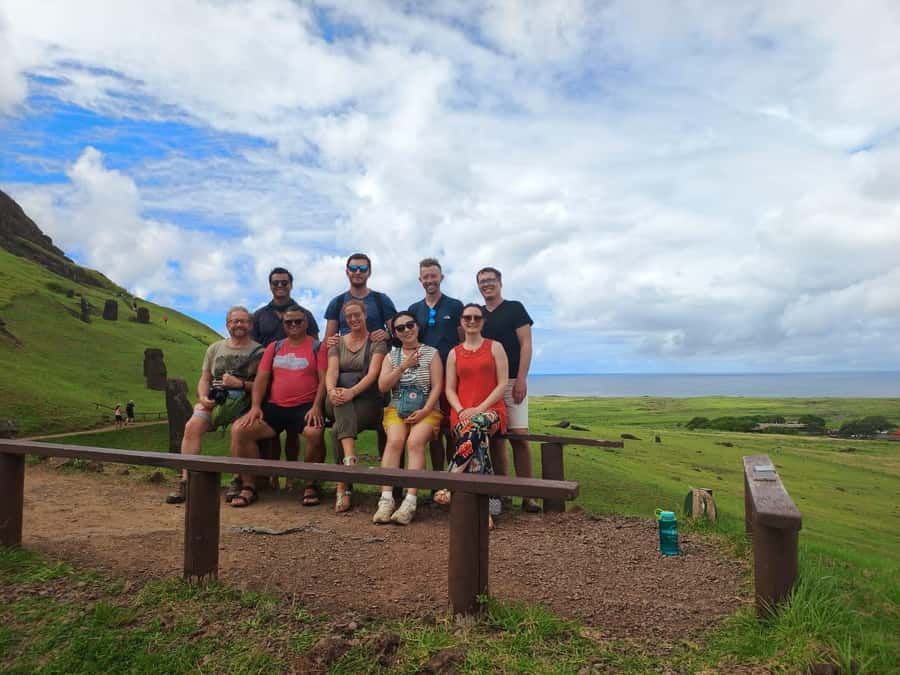
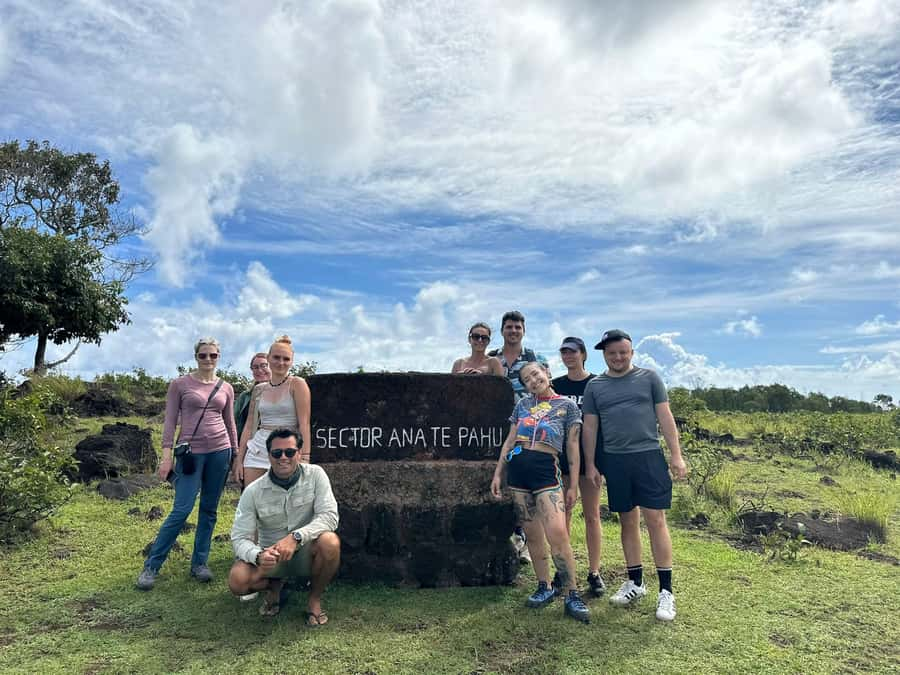
Your first full day begins with pickup at your accommodation. You need to wait in the reception or lobby area. The vehicle does not go door to door at room level, and the group cannot wait for late arrivals, so be ready at the stated time.
The day is built around the island’s renowned tourist places. Expect a mix of archaeological sites and outdoor viewpoints, with time to see the Moai in their original setting. The value here is the guide’s interpretation. Rapa Nui’s past includes written records only from later periods, so explanations often involve accepted evidence, oral traditions, and competing ideas.
A guide such as Alejandro may appeal to you if you prefer a clear, orderly explanation. Alex has also been praised for his command of the subject and his enthusiasm for the island. Since the company may assign different guides on different days, you can hear more than one way of explaining events that have no single written answer.
That variety can be a strength. One guide may focus on archaeology, another on oral tradition or local customs. I would treat differing explanations as part of the experience, not as a flaw, provided the guide makes clear what is established and what remains theory.
The full-day format also means you should pace yourself. Wear shoes that can handle uneven ground and bring comfortable clothing. The required fitness level is moderate, not extreme, but this is an outdoor sightseeing program rather than a seated museum visit.
Day two: volcanic ground and the wider Rapa Nui story
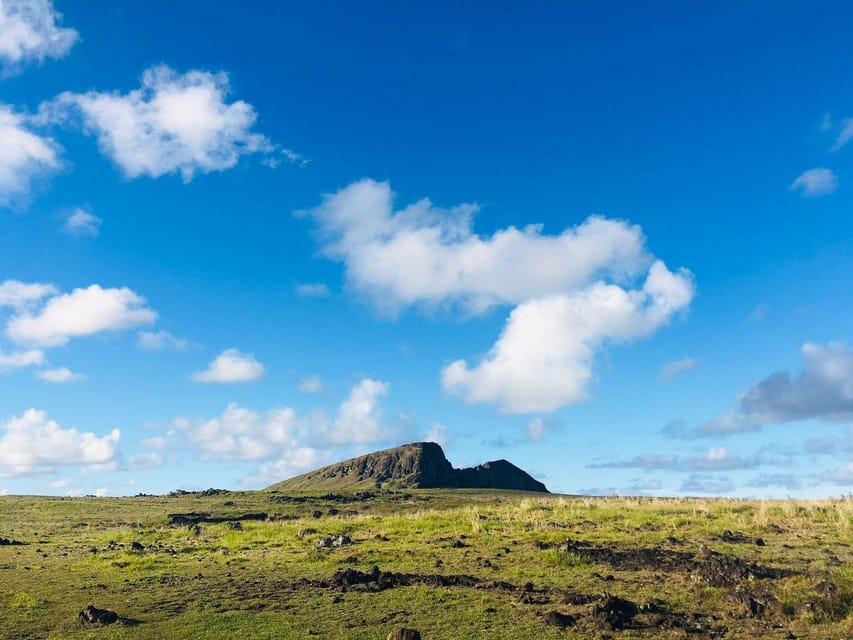
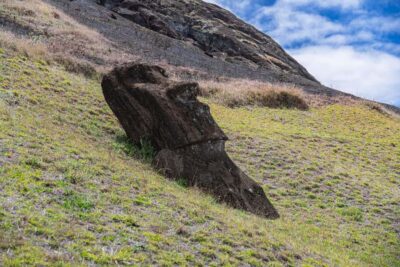
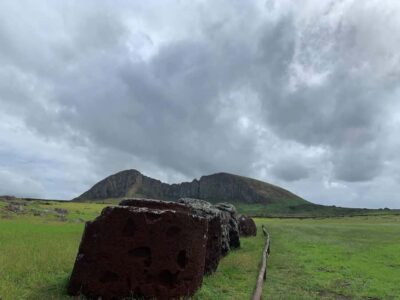
The second full day continues through the island’s volcanic terrain and major archaeological areas. Rapa Nui’s setting is essential to understanding the monuments. The Moai are not isolated decorations placed beside a road. They belong to a place shaped by volcanic stone, open hills, ocean views, and the work of earlier communities.
Your guide can connect the physical setting with the island’s traditions and rituals. That is where this tour can offer more than a self-guided drive. You may see the same kind of stone or platform on your own, but you are less likely to understand its purpose or place in the larger story without local context.
The second day is also useful for questions you did not think to ask on day one. If Alejandro gives you a formal account, another guide such as David may offer a more inventive or disputed interpretation. I would listen carefully, ask what evidence supports each idea, and enjoy the fact that Rapa Nui still contains genuine uncertainty.
The transport arrangements may feel less polished at times. One recent experience involved several pickup loops that seemed to circle around before collecting everyone. That can be irritating when you are eager to start, though shared pickup is a normal tradeoff for a small-group tour. If you want the smoothest possible movement, ask about a private option.
Food is not included. You may be able to buy something at points along the route, but I would bring snacks and drinks from the start. This is one of the simplest ways to keep the day comfortable, especially if a stop takes longer than expected or you prefer not to rely on the available purchase points.
Ahu Tongariki sunrise: beautiful, but check the clock
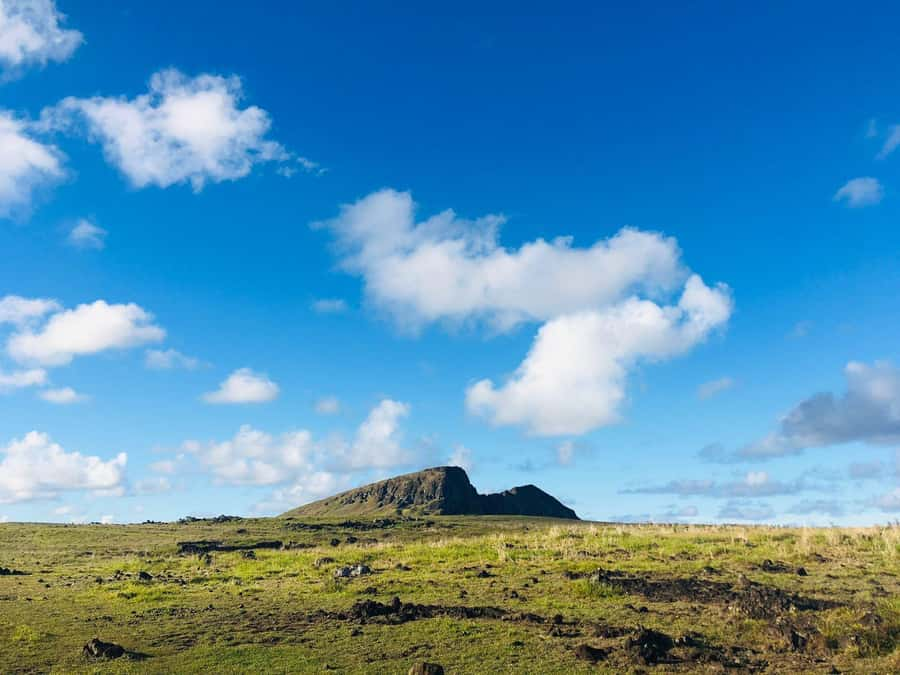
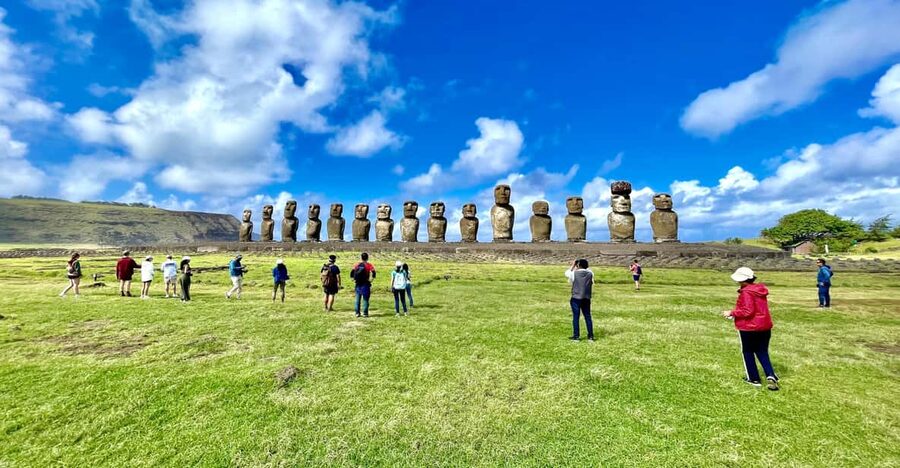
The third part of the experience is the sunrise at Ahu Tongariki. This is the visual centerpiece for many people: a long ceremonial platform with Moai facing inland, set against the changing morning light.
A sunrise visit sounds simple, but timing matters more than it does on an ordinary sightseeing stop. You need enough time to arrive, walk into position, wait through the changing light, and remain until the sun has actually appeared. A short transfer followed by an early return can turn a sunrise outing into a pre-dawn photo stop.
One recent schedule involved pickup at about 6 a.m., while sunrise began closer to 8 a.m. The guide needed to return for a full-day tour starting around 9 a.m., so the group did not have enough time to stay for the complete sunrise. That is the clearest practical issue with this package.
Ask three questions before booking:
- What time will I be collected?
- What time does the group leave Tongariki?
- Will I stay through the actual sunrise, or only reach the site before dawn?
The guide assigned to this portion may be Ariki. In one experience, the role was mainly transport and attendance rather than a detailed interpretation of the site. That does not necessarily make the visit poor, but it means you should not assume the sunrise guide will provide the same depth as the full-day guides.
The best viewing point is another detail worth asking about. One participant later felt the group had not been positioned at the strongest viewpoint. Since you cannot change the sun’s schedule, your position and the amount of waiting time have an outsized effect on the morning.
Bring warm, comfortable clothing and be prepared to wait outdoors. A towel is listed among the suggested items, though the tour does not explain exactly when you will use it. Comfortable shoes are essential, and high-heeled shoes are not allowed.
More moai and Rapa Nui archaeology:
- From Hanga Roa: Journey from Orongo to Ana Te Pahu
★ 4.3 · 75 reviews - Sunrise Tongariki: Sunrise at Tongariki Park Private Tour
★ 4.5 · 47 reviews - Ahu Vinapu, Rano Kao and Orongo City Half-Day Tour
★ 4.6 · 20 reviews - Easter Island: The Moai Trail Private Archeological Tour
★ 4.9 · 12 reviews
The guides are part of the value
The company uses certified local guides and offers tours in English, Spanish, and French. That is important on Rapa Nui because the best explanations often connect archaeological evidence with local identity and tradition.
The guide quality may vary from day to day. Alex is described as highly informed and enthusiastic. Alejandro is associated with a logical, informative style. David may present more controversial or inventive interpretations. Ariki has been used for the sunrise transfer and may provide less commentary during that portion.
Different guides can be a real benefit if you enjoy comparing explanations. You may hear more than one interpretation of a ceremony, monument, or unanswered question. If you prefer one consistent voice, ask if a private booking or a specific guide can be arranged. The information provided does not guarantee a particular guide, so treat these names as examples rather than promises.
I would also use the guides for practical advice beyond the scheduled touring. The company offers help with other activities and viewpoints during your stay. That support can be useful on an island where you may want help deciding what to do with free time.
What the $250 price really includes
The listed price is $250 per person for the three-day experience. That covers two full-day tours and the Tongariki sunrise, with accommodation pickup and return, local guides, rain ponchos when needed, and pre-sale and post-sale support.
The value depends on how much you would otherwise spend on transport, planning, and guiding. If you want the main Rapa Nui sights explained in person and prefer not to arrange separate excursions, the package is reasonably easy to understand. You are paying for access to local organization as much as for the vehicle and sightseeing.
The National Park ticket is not included. The stated prices are 20,000 CLP for Chilean nationals and 72,000 CLP for foreign nationals. That is a substantial extra amount for international visitors, so add it to your real budget before comparing this tour with alternatives. You must have the ticket before the first day, and it can be bought at Ma’u Henua offices or through the Rapa Nui National Park website.
Food is also extra. This is not a problem if you plan ahead, but it changes the cost of each full day. Buy drinks and snacks before pickup, or use the purchase points along the route.
The package allows free cancellation up to 24 hours in advance and lets you reserve while paying later. Those terms help if your island plans are still moving, though you should still read the final booking conditions carefully.
Pickup, group size, and comfort
Pickup is included, but the system is strict. Wait in your lodging’s reception or lobby, not inside your room. The vehicle cannot wait for someone who is late because other passengers are on the schedule.
Private and small-group formats are available. A small group usually gives you a better chance to ask questions without turning every stop into a long lecture. A private option may be worth considering if sunrise timing, photography, or a more personal pace matters to you.
The vehicle route may include several accommodation pickups. That can create a few loops before the tour settles into its main route. I would accept this as a possible cost of shared transport, but ask about pickup arrangements if you dislike uncertain departure times.
Rain ponchos are supplied if needed. Still, dress for changing outdoor conditions and wear shoes suited to rough or uneven surfaces. Bring a towel, comfortable clothes, food, and water. High heels have no place on this outing.
Who should book this Rapa Nui tour?
I would recommend it to a first-time visitor who wants the major sites explained by local guides and prefers a ready-made plan. It also suits you if you want support before and after the excursions, or if you appreciate hearing several interpretations of Rapa Nui’s past.
It is a good match for people with moderate physical fitness who are comfortable spending long days outdoors. The two full-day format gives you time to see more than a quick highlights trip, while the small-group option can keep the experience personal.
I would be more cautious if your main goal is a long, unhurried sunrise at Tongariki. The sunrise schedule needs confirmation, especially if the same company must prepare for a full-day tour soon afterward. I would also look elsewhere if you need meals included or want one guide for every part of the program.
Should you book it?
Book this experience if you want broad coverage of Rapa Nui, local interpretation, hotel transfers, and a simple three-day structure. The strongest parts are the two full days, the chance to hear different guides, and the access to places that are hard to understand without context.
Before paying, confirm the Tongariki departure and return times, the group size, the language, and the extra National Park fee. Pack food and drinks, arrive early at the lobby, and treat the guide assignments as flexible. If those conditions suit you, this is a practical way to see Rapa Nui without arranging every excursion yourself.
FAQ
How long does the experience last?
The activity lasts three days: two full-day excursions and one sunrise visit at Ahu Tongariki.
Is the National Park entry ticket included?
No. You must purchase the National Park ticket before the first excursion. The listed prices are 20,000 CLP for Chilean nationals and 72,000 CLP for foreign nationals.
What languages are available?
The tour can be provided in English, Spanish, or French.
Is hotel pickup included?
Yes. Pickup and drop-off at your accommodation are included. You must wait in the reception or lobby area, and the vehicle does not enter rooms to knock.
Is food included?
No. Food is not included, though there are places along the route where you can buy it. Bringing snacks and drinks is recommended.
Can I book a private tour?
Yes. Private and small-group options are available.
What should I bring?
Bring comfortable shoes, comfortable clothing, food and drinks, and a towel. Rain ponchos are supplied when needed. High-heeled shoes are not allowed.
Can I cancel the booking?
You can cancel up to 24 hours in advance for a full refund. You can also reserve now and pay later, subject to the booking terms.
More Full-Day Tours in Hanga Roa
- Small-Group Cajón del Maipo Full-Day Tour and Picnic
★ 4.5 · 2,277 reviews - Piedras Rojas, Altiplanics Lagoons & Salar Full-Day Tour
★ 4.7 · 592 reviews - From El Calafate: Torres del Paine Full Day Tour
★ 4.6 · 434 reviews - Punta Arenas: Full-Day Whales, Penguins, and Glaciers Tour
★ 4.9 · 325 reviews
More Morning in Hanga Roa
- Atacama: San Pedro de Atacama Sunrise Hot Air Balloon Ride
★ 4.7 · 76 reviews - Tongariki Sunrise: Half Day Private Tour
★ 3.8 · 9 reviews - Geysers del Tatio: Sunrise and breakfast in Atacama
★ 4.4 · 5 reviews
Newest Hanga Roa trips on the site
- Volcanic Refuges: Excursion to Underground Civilization★ 4.7 · 8 reviews
- Rapa Nui: Polynesian Massage★ 4.8 · 5 reviews
- Rapa Nui Highlights Program: 3 incredible tours to discover!★ 4.8 · 18 reviews
- Rapa Nui: 3 Excursions with Hotel Transfers★ 4.3 · 6 reviews
- Rapa Nui Dreams: Experiencie Pack 3 Days★ 4.7 · 32 reviews
- Ahu Vinapu, Rano Kao and Orongo City Half-Day Tour★ 4.6 · 20 reviews
- Hanga Roa: Full Day Moai and Mistery★ 4.4 · 22 reviews
- Easter Island: Tropical Diving★ 4.8 · 13 reviews
Moai Tours, compared.
Sunrise Tongariki: Sunrise at Tongariki Park Private Tour
Read our review →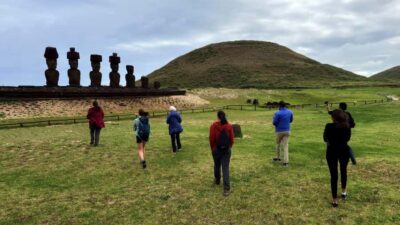
Ahu Vinapu, Rano Kao and Orongo City Half-Day Tour
Read our review →
Private tour: where the history of the Moai was born
Read our review →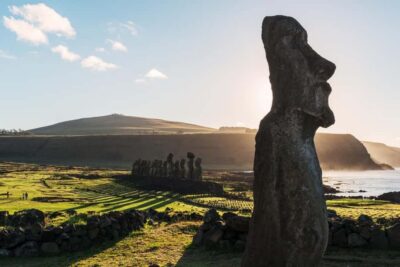
Browse the lists this tour appears in