
Reviewed · MOON VALLEY TOURS
Moon Valley Tour from San Pedro de Atacama
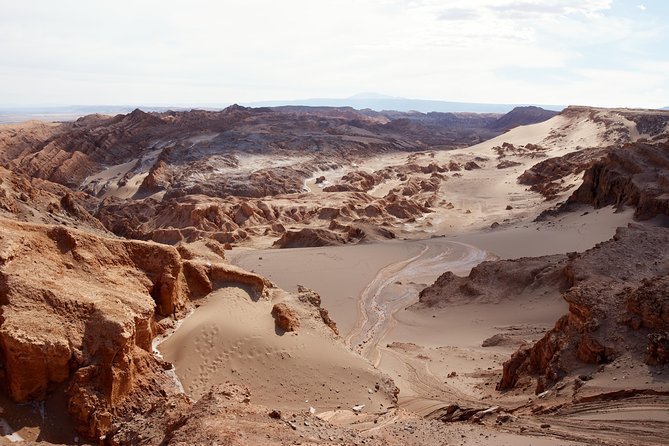
San Pedro de Atacama’s Moon Valley is one of those places where a short outing delivers scenery that feels far beyond Earth. Wind, water, and salt have carved the Cordillera de la Sal into ridges, caves, dunes, and sharp folds that look closer to the Moon or Mars than northern Chile.
I like two things here: the tour packs several striking stops into a half-day, and the late timing gives you the best chance to see the desert change color. The sunset from Coyote Stone is the main event, but the salt caves and Las Tres Marias give the outing more substance than a simple viewpoint stop.
The main caution is the guide service. Some guides, including Damian, Edgar, Anita, and Francisca, have been praised for clear explanations and thoughtful help. Others have provided little English or rushed the stops, so your experience can depend heavily on the person leading your group.
Key points to know before you book
- Expect a 4 to 5-hour outing: Pickup begins around 3:00 to 3:40 pm in summer, with slightly earlier winter times.
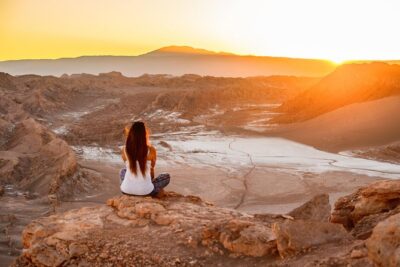
- The sunset is the highlight: Coyote Stone offers a broad view over the Moon Valley as the light turns the salt ridges orange.
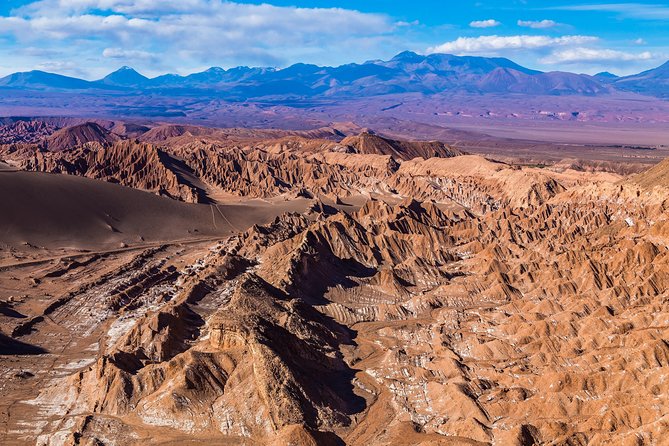
- You visit more than one site: The route includes the Salt Mountain Range, Valley of Death views, salt caves, Las Tres Marias, the amphitheater, and a large dune.
- Bring cash for admission: The CLP 10,800 entrance fee is separate from the US$51 tour price.
- Plan for sand and uphill walking: Comfortable trekking shoes, water, sun protection, and a jacket are essential.
- Guide quality matters: English explanations and geological detail can vary from one departure to another.
What the US$51 price really covers
The tour costs US$51 per person, not including the CLP 10,800 entrance fee to Valle de la Luna. That makes the real cost higher than the headline price, and you should carry cash for the park admission.
For that amount, you get hotel pickup from qualifying hotels near San Pedro, transport in an air-conditioned minivan or bus, a professional guide, and drop-off in the town center. You are paying for a practical half-day outing rather than a private tour or a slow, independent visit.
I think the price is fair if you want transport and a planned route. Moon Valley is close to San Pedro, but the stops are spread around the protected area. Having a vehicle saves you from arranging transport and lets you finish after sunset without worrying about how to get back.
The value drops if you mainly want a quiet sunset. Some departures have involved waiting, crowded viewpoints, or too little time at individual sites. If you dislike fixed schedules, a private arrangement or independent visit may suit you better, though this tour remains the simpler choice for a first visit.
The advertised group limit is 15 people. That is small enough for a guide to keep the group together, at least in theory, but you should still expect a shared excursion rather than a personal geology lesson.
More Valle de la Luna trips:
- San Pedro de Atacama: Valle de la Luna Guided Tour
★ 4.4 · 312 reviews - Valle de la Luna (Moon Valley) from San Pedro de Atacama
★ 4.5 · 145 reviews - San Pedro de Atacama: Shared Moon Valley Tour
★ 4.7 · 135 reviews
Leaving San Pedro for the Salt Mountain Range
Pickup begins in the middle of the afternoon. The exact window is listed as 3:00 to 3:40 pm in summer and 2:30 to 3:10 pm in winter. Reconfirm your pickup details at least one day ahead, especially if your hotel sits outside the nearby town area.
The drive to the protected Valle de la Luna area covers about 8 miles, or 13 kilometers. The air-conditioned vehicle is welcome because the first part of the outing can be hot, even though the desert begins to cool once the sun drops.
Your first real stop is in the Cordillera de la Sal, the Salt Mountain Range. This area was shaped by mineral deposits and folding, then altered by wind and water over a very long period. The result is a dry maze of pale ridges, sandy hollows, exposed rock, and strange sculpted forms.
This is where the tour begins to make sense visually. The terrain does not resemble a conventional desert of flat sand. It has sharp edges and wrinkled surfaces, with little vegetation to soften the view. The lack of trees gives you a wide, uninterrupted view of the formations.
The stop lasts about an hour. You may visit a viewpoint toward the Valley of Death and the surrounding salt ridges before continuing toward Moon Valley. Bring water even for this early section. The air can feel dry and the sun remains strong.
The first views of Valle de la Luna
Inside the Moon Valley area, the route includes the Licanantay viewpoint. From above, you can see the Salt Mountain Range in a broad sweep, with the desert’s pale colors broken by darker rock and shadow.
This viewpoint is useful because it gives you scale. On foot, a cave or ridge can feel like a single curiosity. From above, you see how the formations fit together across the valley. I would pay attention to the folds in the rock and the way the sun picks out their edges, rather than rushing only to take photographs.
The guide’s explanation matters here. A strong guide can connect the visible shapes to the forces that formed them and explain why salt appears in such unusual structures. A weaker guide may offer only brief comments before sending the group onward.
English service has not always been equally strong. If you need detailed English interpretation, confirm the language when booking and be ready for some bilingual commentary. The company assigns guides with different levels of experience and communication, so the person leading your departure can shape the educational side of the visit.
Salt caves and Las Tres Marias
The Moon Valley portion covers several sites over roughly two hours. One of the first is a small salt cave. This is not a long underground expedition. It is a short exploration of a natural formation, but it gives you a closer look at the layered, brittle character of the salt and rock.
Watch your footing. Sand and uneven ground make the walking less predictable than the short distance suggests. The tour calls for moderate physical fitness, and that is a fair description.
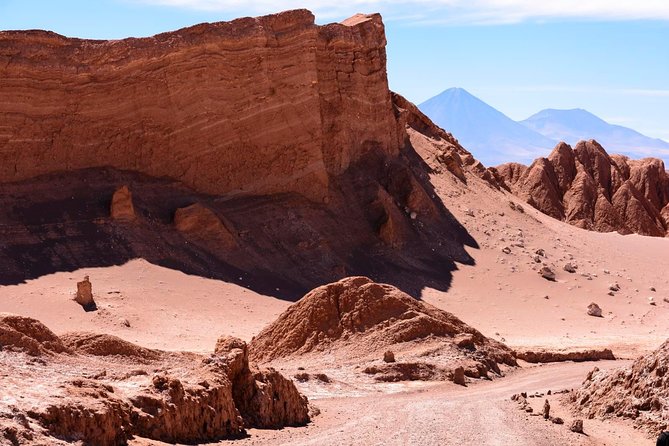
The route also includes Las Tres Marias, or the Three Marys, a group of distinctive salt and rock forms. This is one of the area’s most recognizable stops and an easy place to understand why the valley gained its lunar reputation.
Some departures have spent too much time here and not enough on the larger dune walk. If you are more interested in geology than a quick photo stop, ask your guide for context about how the formations developed. The value of Las Tres Marias comes from knowing what you are looking at, not just standing beside it.
The amphitheater is another notable formation. Its curved walls and layered surfaces show how erosion has shaped the valley. The name fits the form, though the setting is far more silent than any concert hall. You will have time to look around, but the precise amount depends on the group’s pace and how well everyone returns to the vehicle.
A few more San Pedro de Atacama half-days worth a look
- San Pedro de Atacama: El Tatio Geysers Tour
★ 4.7 · 943 reviews - San Pedro de Atacama: Etno-Stargazing Tour with Transfer
★ 4.8 · 629 reviews - Piedras Rojas, Altiplanics Lagoons & Salar Full-Day Tour
★ 4.7 · 592 reviews - San Pedro de Atacama: Stargazing Experience
★ 4.7 · 489 reviews
Walking the dune before sunset
The route then moves toward the large central sand dune. This is the most physically demanding part for some people, though it does not require advanced hiking ability.
You will walk on sand and climb gradually uphill. The surface gives way under your shoes, making a modest slope feel more tiring than it looks. Trekking shoes or sturdy walking shoes are much better than sandals. Trekking pants, socks, and light clothing will help keep sand from becoming a constant annoyance.
The conditions can change quickly. At the start of the outing, you may want light clothing, a hat, sunglasses, sunscreen, and plenty of water. Near sunset, wind and falling temperatures make a windbreaker or jacket useful. Gloves are also recommended in the tour instructions, especially during cooler months.
The dune is worth the effort because it gives you a wider view than the lower stops. You can see the folds of the valley, the salt ridges, and the darker shapes of the surrounding terrain. The climb is not suitable for someone who wants to avoid all uneven or uphill walking, and parents should know that it is not necessarily an easy stroll for young children.
The best approach is to keep your own pace. Stay close enough to follow the group, but do not feel pressured to rush the climb. The guide should help gather people and explain when the group is moving on.
Waiting for sunset at Coyote Stone
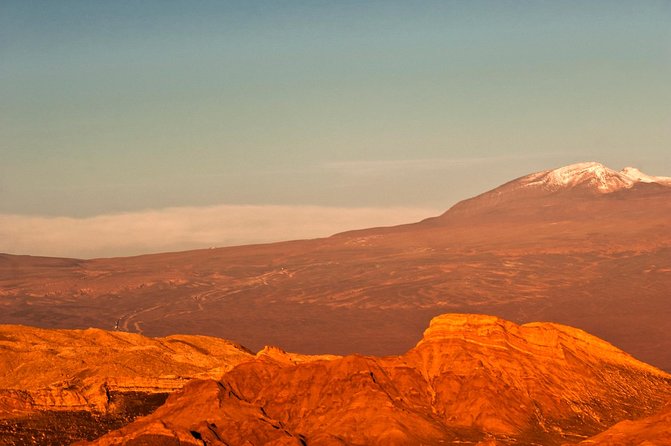
The tour finishes its sightseeing at Coyote Stone, the designated sunset viewpoint. Here, you wait while the sun drops and the valley shifts from bright white and tan to pink, orange, and shadow.
Sunset is the reason most people choose the afternoon departure, but it is not guaranteed to produce dramatic color. Weather, haze, and cloud cover affect the result. Some evenings bring a beautiful wash of warm light across the folds. Other evenings are more subtle, with the main change being the lengthening shadows.
You may also spend a fair amount of time waiting. The sunset is late, and the group needs to arrive before the final light. If you prefer constant activity, the pause can feel long. Bring water and an extra layer rather than assuming the desert will stay warm.
The viewpoint can also become crowded. The tour is not offering a private sunset, and several groups may gather in the same area. Arriving with a group means less freedom to choose your exact spot, but it also removes the need to organize transport after dark.
Some guides have added a cocktail break or a small spread at sunset. Do not assume food or drinks are included, since the stated inclusions do not list a snack. One past account specifically noted that no snack was provided. Bring something small if you know you will be hungry.
How much explanation should you expect?
The geological setting deserves more than a few quick labels. The Salt Mountain Range formed through mineral and geological forces, while later wind and water helped shape the canyons, dunes, caves, and depressions you see today. The onsite exhibition provides added context about the geology and ecology of the area.
A strong guide can turn the stops into a connected story. Damian Berrios and Edgar have been praised for explaining the formations clearly and helping with photographs. Anita was singled out for looking after an older family member while also keeping an eye on the group. Francisca has also been described as attentive and strong at explaining the area.
That said, guide quality is not uniform. Some English-speaking visitors have received only short explanations, with most of the commentary delivered in Spanish. Others have found that guides lost track of time, gave unclear directions, or left too little time at a stop.
If the educational side matters to you, listen early in the tour for how clearly the guide handles both languages. You can also ask direct questions at the first viewpoint. A guide who welcomes questions is more likely to make the geology meaningful for you.
Transport, timing, and the return to San Pedro
The return begins after sunset at Coyote Stone. You go back to San Pedro by minivan or bus, with drop-off in the city center. The full outing is advertised at roughly four to five hours, though actual timing can stretch if pickup is slow or people take a long time returning to the vehicle.
The schedule matters if you have evening plans. Do not book a restaurant reservation too close to the stated end time. The tour may run smoothly, but sunset departures involve several pickup points, a shared group, and a return after dark.
Hotel pickup is included only for hotels near town. You must provide the correct hotel details in advance and reconfirm them at least one day before the outing. If your accommodation is outside the pickup area, clarify where you need to meet the vehicle.
The drop-off point is in central San Pedro rather than necessarily at your hotel. That is convenient if you are staying near the center, but it is worth checking the final arrangement before you set out.
What to wear and carry
The desert creates a wide temperature range in a single afternoon. Dress for heat at the beginning and cool wind after sunset.
Bring:
- Water
- Sunscreen
- Sunglasses
- A hat
- Comfortable trekking shoes
- Trekking pants and socks
- A windbreaker or jacket
- Gloves, especially in cooler conditions
- Cash for the CLP 10,800 entrance fee
A backpack is more useful than a shoulder bag because you may walk on sand and climb the dune. Keep your hands free for balance and photographs.
Do not count on the tour providing food. The listed inclusions cover transport, pickup, guide service, and drop-off, not a meal or snack. If you need regular food or have children with you, pack something suitable.
Who will enjoy this tour most?
I would recommend this outing to a first-time visitor who wants to see Moon Valley without arranging transport. The route gives you a useful first look at the Salt Mountain Range, several named formations, a cave, a dune walk, and sunset from one organized afternoon.
It also suits photographers who want changing light. The same ridges can appear pale, pink, orange, or dark gray within a short period. You will have more visual variety than on a quick midday viewpoint visit.
The tour is less suitable if you want long walks, quiet solitude, or detailed scientific interpretation at every stop. The pace is fixed, and some time may go toward waiting for the sunset or gathering the group.
People with moderate fitness should manage the walking, but the sand and uphill section can be tiring. If you have mobility concerns, ask before booking because the route includes uneven ground, a cave visit, and a sand dune climb.
Should you book the Moon Valley sunset tour?
Book it if you want a straightforward introduction to one of the Atacama’s most unusual areas, especially if you value hotel pickup and do not want to arrange an independent visit. The scenery is the main reason to go, and the sunset gives the half-day route a strong finish.
Go in with realistic expectations. The sunset may be beautiful rather than spectacular, the viewpoint may be busy, and the quality of the explanation depends on your guide. The tour is strongest when the guide keeps the group together, explains the geology in clear English or Spanish, and allows enough time at the dune and viewpoints.
If you book, reconfirm pickup, carry cash for admission, bring water and warm layers, and ask questions early. With those details handled, the US$51 price plus entrance fee buys a practical and memorable introduction to the strange salt formations outside San Pedro.
FAQ
How long does the Moon Valley tour last?
The tour lasts approximately four to five hours, including transport from San Pedro de Atacama, the sightseeing stops, sunset, and the return to town.
What time does the tour start?
Pickup takes place from about 3:00 to 3:40 pm in summer and 2:30 to 3:10 pm in winter. The stated meeting start time is 3:30 pm, but you should reconfirm your exact pickup time at least one day ahead.
Is the entrance fee included?
No. The Valle de la Luna entrance fee is CLP 10,800 per person and should be paid in cash.
What places does the tour visit?
The route includes the Cordillera de la Sal, views toward the Valley of Death, the Licanantay viewpoint, Moon Valley, salt caves, Las Tres Marias, the amphitheater, a large sand dune, and Coyote Stone for sunset.
What should I bring?
Bring water, sunscreen, sunglasses, a windbreaker or jacket, gloves, and comfortable clothing and shoes suitable for walking on sand. Cash is needed for the entrance fee.
Can I cancel for a full refund?
You can cancel up to 24 hours before the experience starts for a full refund. Cancellations or changes made less than 24 hours before the start time are not refunded or accepted. If poor weather forces cancellation, you will be offered another date or a full refund.
Newest San Pedro de Atacama trips on the site
- Vallecito★ 4.7 · 13 reviews
- San Pedro de Atacama: Valle de la luna★ 3.0 · 3 reviews
- Atacama Desert and Magic Bus Visit★ 4.8 · 15 reviews
- Valle de la Luna: A Moon-Like Escape in Atacama★ 5.0 · 3 reviews
- Valley of the moon★ 5.0 · 50 reviews
- San Pedro de Atacama: Half day Valle de la Luna, Afternoon Tour★ 4.5 · 52 reviews
- Unique 3-Day Tour in San Pedro de Atacama★ 4.5 · 43 reviews
- Half-Day Tour to Laguna Cejar★ 5.0 · 54 reviews
Moon Valley Tours, compared.
Valle de la Luna (Moon Valley) from San Pedro de Atacama
Read our review →
Small-Group Tour to Moon Valley from San Pedro de Atacama
Read our review →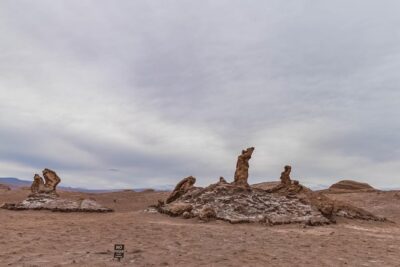
Browse the lists this tour appears in