
Reviewed · SALT FLATS TOURS
Uyuni Salt Flats 4-days tour from Atacama> private room available
The great draw here is the four-day crossing from Chile into Bolivia, not just a quick visit to the salt flats. You get geysers, flamingos, hot springs, volcanic rock formations, a salt hotel, and a sunrise on the Uyuni flats, all tied together by a long but memorable Andean road journey.
I like the small maximum group of 12, the seven-seat 4×4, and the fact that meals, border transfers, and accommodation are arranged for you. I also like the private-room option, since nights in basic high-altitude hostels are easier when you do not have to share a dorm.
The catch is the altitude and the rough pace. Day one begins at 7:00 AM and packs in several stops, while days three and four start at 5:00 AM. You need to speak at least some Spanish, stay flexible, and accept simple lodging and long hours in the vehicle.
Key points to know before booking
- The route begins in San Pedro and ends there: Round-trip transfers take you from your hotel to the Bolivian border and back.
- A seven-seat 4×4 handles the Bolivian section: The smaller vehicle suits rough roads and keeps the group more personal, though space may feel tight with luggage.
- The first two days focus on the Altiplano: Expect lagoons, geysers, hot springs, flamingos, volcanic rocks, canyons, and wetlands before reaching the salt flats.
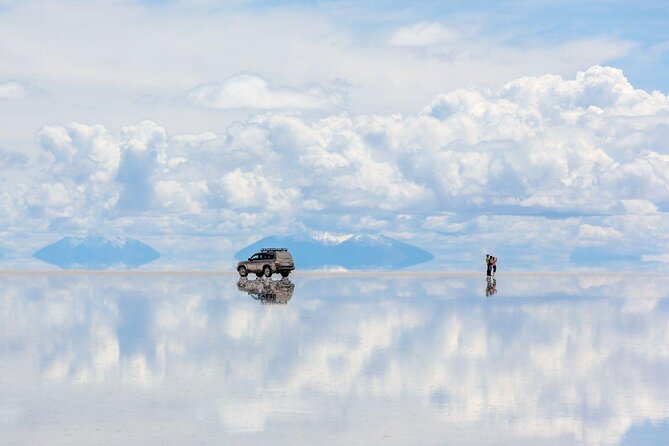
- The salt flats begin at sunrise on day three: You leave around 5:00 AM for the mirror effect in the rainy season or geometric photo opportunities in the dry season.
- Meals and basic stays are included: You receive three breakfasts, three lunches, and three dinners, with hostel accommodation and a salt hotel night.
- Budget for extra entrance fees: Incahuasi Island, the hot springs, and the national park are not included, and a Bolivian border tax may apply.
Why this route is more than a salt-flat photo stop
At $325 per person, this tour offers a lot of ground for the money. You are not paying only for a visit to the Salar de Uyuni. The price covers round-trip transportation from San Pedro, a seven-seat 4×4 in Bolivia, three nights of accommodation, and nine meals.
That matters because arranging this route independently would mean coordinating a border crossing, a Bolivian driver, remote lodging, food, and return transport. Here, those pieces are placed into one four-day plan. The value is strongest if you want the sights without managing every transfer yourself.
The tour is also booked well ahead, with an average booking point of about 47 days before departure. That is useful planning information for a popular route with limited vehicle space. Confirmation arrives within 48 hours, subject to availability, so you should not treat a reservation as final until it is confirmed.
The group limit is 12, but the main Bolivian drive takes place in a seven-seat 4×4. That may mean several vehicles or a small-group arrangement, depending on the departure. Either way, this is not a large coach excursion. The tradeoff is simple: more access on rough roads, less personal space for bags and legs.
More salt flat days from San Pedro de Atacama:
- Piedras Rojas, Altiplanics Lagoons & Salar Full-Day Tour
★ 4.7 · 592 reviews - Full Day Tour to Ruta de los Salares
★ 5.0 · 105 reviews - San Pedro de Atacama: 3 D. Tour Uyuni and Back to San Pedro
★ 4.8 · 61 reviews
Crossing from San Pedro to the Bolivian Altiplano
Your day begins with pickup at your San Pedro accommodation at 7:00 AM. Once the group is collected, a shuttle takes you to the Bolivian border, where you have your passport stamped and transfer into a seven-seat 4×4.
The border change is an important part of the trip. You are not simply moving from one attraction to the next. You are entering a remote high-altitude region where the roads, facilities, and daily rhythm are more basic than in San Pedro.
A Spanish-speaking driver-guide leads the tour. A few Spanish phrases will help with practical questions and group coordination. One past experience specifically warned that Spanish could matter, so do not assume you will receive detailed English guiding throughout the four days.
The first day is full, and the altitude can make it feel harder than the clock suggests. One French-speaking visitor found the first day very difficult because of the effects of altitude. If you are not prepared for high elevations, plan to move slowly, drink water, and avoid treating the schedule like a relaxed sightseeing day.
Day one: lagoons, hot springs, geysers, and flamingos
Once across the border, you spend much of the day inside Eduardo Avaroa National Andean Fauna Reserve. The opening stops include the White Lagoon and Green Lagoon, set below Licancabur Volcano.
The colors and mountain setting are the reason these lagoons matter. They give you a quick introduction to the stark scenery of the Altiplano, where bright water, volcanic peaks, and open ground create the feeling of a very remote place. The Salvador Dali Desert follows, with a broad plateau and sculpted rock forms surrounded by mountains.
The name suggests a connection to surrealist art, and the setting earns it. Wind and erosion have left isolated shapes across an otherwise open plain. You have roughly three hours around this part of the route, including the first stops, so bring clothing that handles cold wind and strong sun.
Next comes Polques Hot Springs. You have about two hours here, enough time to change and sit in the natural thermal water. The hot bath is especially welcome after a cold morning outside, but getting out can be the hardest part. The contrast between warm water and cold air is real, so keep your towel and clothes close.
The hot spring admission is not included, even though the itinerary lists the stop itself as free. You should set aside money for this entrance fee, along with the park and Incahuasi charges.
After lunch, the Sol de la Mañana geyser field gives you a different kind of spectacle. Fumaroles and small geysers rise from the ground, creating a raw, active scene. You spend about two hours here, and the site rewards careful walking and attention to the terrain rather than a rushed photo.
The final major stop is Laguna Colorada, or Red Lagoon. Its color and setting make it one of the most striking stops of the trip. Three flamingo species nest here, and a short walk along the edge gives you a closer look at the water and birds.
You then continue to Villa Mar for dinner and your first night. The lodging is described as hostel accommodation, so expect practical rather than polished facilities. Ask about the private-room option when booking if sharing a dorm would make the trip less comfortable.
Day two: volcanic rocks, a canyon, and a salt hotel
Day two begins with breakfast and a series of geological stops. Lost Italy features rock formations that can remind you of old Western-film scenery. Nearby, Valle de las Rocas has eroded volcanic rocks with names such as the World Cup and the Camel.
This is a good morning for photographs and short walks. The shapes are the attraction, but the wider value is seeing how wind and erosion have shaped the high plateau. You will not find museums or built attractions here. The setting itself is the point.
The day continues to Laguna Negra. The schedule allows about three hours for this part of the route. The stop adds another dark-water setting to a trip already filled with unusual lagoons, but the long driving time means you should expect a steady rhythm of getting out, walking, taking photos, and returning to the vehicle.
The route then includes Anaconda Canyon and Sora Wetland. From natural viewpoints, the canyon gives you broad views down toward a winding river. Sora Wetland changes the mood again, with birds, camelids, and plants adapted to the Altiplano.
I like this part of the itinerary because it prevents the trip from becoming one long sequence of white salt and dry rock. The wetland shows that this high region has more variety than its harsh appearance suggests.
Late in the day, you stop in a small village at Colcha K. There is a shop where you can sample local beers from the Bolivian Altiplano and use Wi-Fi. The stop is modest, but it gives you a brief connection with daily life and a chance to contact home before the most remote part of the journey.
At sunset, you reach a salt hotel. The dining room has views across the Altiplano, and the private rooms are built from salt. This is one of the tour’s most distinctive accommodation details. It is not a luxury hotel in the usual sense, but sleeping in a building made from the very material that defines the next day is a memorable touch.
A few more San Pedro de Atacama half-days worth a look
- San Pedro de Atacama: El Tatio Geysers Tour
★ 4.7 · 943 reviews - San Pedro de Atacama: Etno-Stargazing Tour with Transfer
★ 4.8 · 629 reviews - San Pedro de Atacama: Stargazing Experience
★ 4.7 · 489 reviews - San Pedro Atacama: Baltinache Lagoons
★ 4.6 · 359 reviews
Day three: sunrise on the Salar de Uyuni
Day three starts around 5:00 AM, so pack warm layers where you can reach them quickly. You head to the Salar de Uyuni in time to watch sunrise with the group.
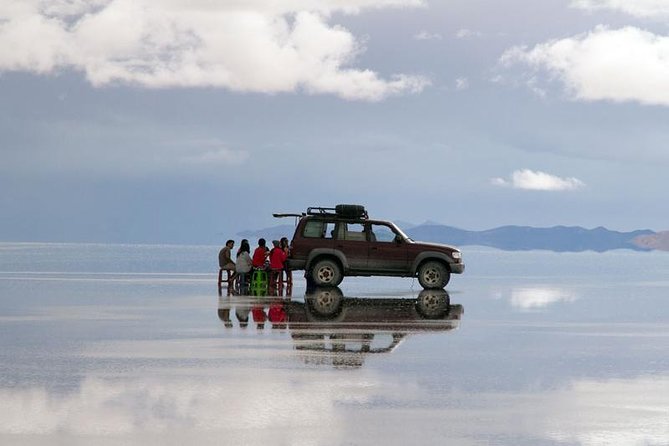
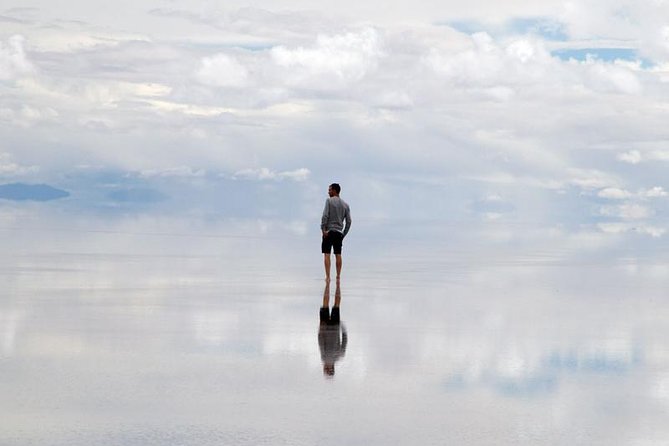
The salt flats can look completely different depending on the season. From January through March, rain can leave a thin layer of water on the surface, creating the famous mirror effect. During the dry season, the salt forms a broad white expanse, and your driver helps create perspective photographs using the flat, empty setting.
The morning light is one reason the early start is worth it. You get cooler air, softer color, and a sense of scale that is difficult to find later in the day. The downside is fatigue. By this point, you have already spent two long days in the vehicle, and the early wake-up comes after a basic overnight stay.
Incahuasi Island is the next major stop. The island rises from the salt flats and supports giant cacti. Its height gives you a different view over the white surface, while breakfast is served with the flats around you.
The entrance fee to Incahuasi is not included. Bring extra cash for this charge, as well as the hot springs and national park fees. The information provided does not state the exact amounts, so confirm the current costs before departure.
After the island, you have time for photographs on the flats. In the rainy season, the water creates reflections. In the dry season, the flat surface lets you create forced-perspective images, and the driver may help with the timing and camera angles.
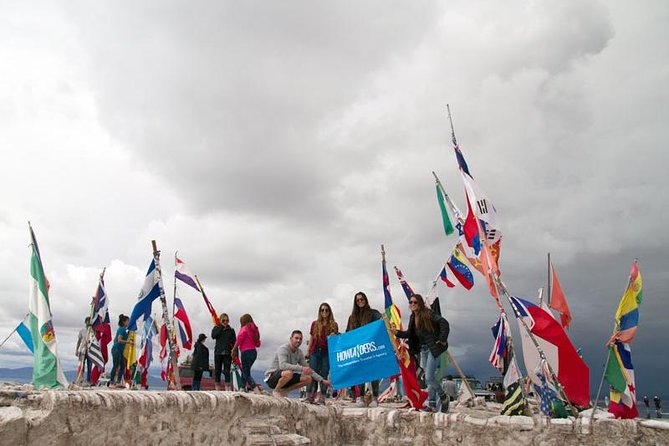
Colchani provides a change from open salt. The village has artisan shops where you can look for a souvenir. You also visit the Dakar Monument and the Island of Flags before lunch. These are brief, highly photographed stops, but they add recognizable landmarks to your salt-flat morning.
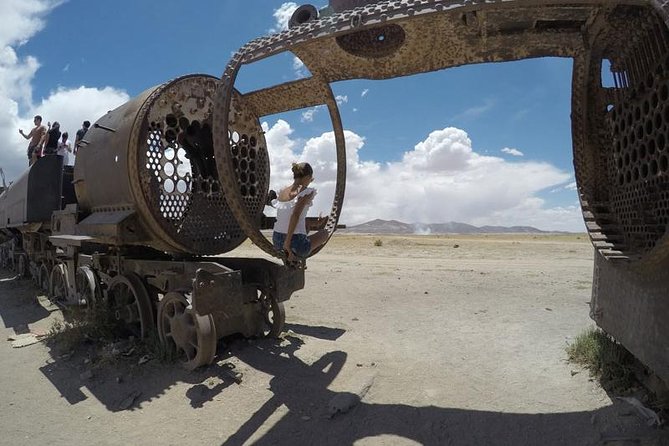
Lunch is served at a sit-down restaurant in Colchani rather than from the portable setup used on earlier days. That small change will feel welcome after two days of roadside meals. You then continue to the train cemetery on the edge of Uyuni.
The cemetery contains the remains of old locomotives linked to Bolivia’s development. Rusting train bodies against the empty ground make for strong photographs, but the stop also gives the trip a little historical context. Afterward, you return to Villa Mar for the night.
Day four: a long return to San Pedro
The final morning starts with breakfast at 5:00 AM. You then face about four hours of travel to the Bolivia-Chile border, followed by the private shuttle back to San Pedro.
Arrival is planned for around 1:00 PM, making this a useful return day if you have afternoon plans. Still, border procedures can affect the pace, so I would avoid booking a tight onward connection.
The return journey is less about sightseeing than completing the route. After three days of dramatic stops, you spend much of the morning in transit. That is the price of reaching the flats from San Pedro and returning to Chile by land.
Food, rooms, language, and physical comfort
Three breakfasts, three lunches, and three dinners are included. The food is described as varied and well served, with meals ranging from portable roadside lunches to a sit-down meal in Colchani. Do not expect restaurant choice each day, since you are moving through remote areas.
Accommodation is in hostels, with a private room or shared dorm option. The salt hotel includes private rooms built from salt. If sleep and privacy matter to you, request the private option early and confirm exactly which nights it covers.
The driver-guide speaks Spanish. Some past guests singled out drivers named Guilder, Raul, and Walder for being careful, respectful, and attentive to needs, but you should not assume one of those guides will lead your departure. Howlanders sends the guide’s contact details after confirmation so you can coordinate pickup.
Altitude is the biggest practical concern. The trip includes high desert, geysers, mountain lagoons, and early starts. You should be comfortable with cold conditions, short walks, basic lodging, and a schedule that leaves little room for recovery.
Is $325 a fair price?
For four days, the price is strong if you value convenience. Transportation from San Pedro and back, a dedicated 4×4, three nights of lodging, and all listed meals are included. The tour also covers a wide range of sites that would be difficult to connect without local transport.
The price is not all-inclusive. You need to budget for the Bolivian border tax if it applies, plus entrance charges for Incahuasi Island, the hot springs, and the national park. Those costs should be added to your real trip budget.
The private-room option can also affect the final cost or availability, so ask before paying. The tour is generally booked well ahead, and the small vehicle capacity means waiting until the last moment may limit your choices.
Who should book this Uyuni tour?
I would choose this trip if you want the main Uyuni sights plus the full route through the Bolivian Altiplano. It suits people who enjoy dramatic scenery, long road days, simple accommodation, and a group setting.
It is a good fit for photographers, since the itinerary includes sunrise, flamingos, geysers, giant cacti, salt reflections, volcanic rock shapes, and forced-perspective photos. It also suits anyone who wants meals and transfers handled in one package.
I would think twice if you need a comfortable schedule, polished hotels, extensive English guiding, or private transport throughout. The route is tiring, the altitude can be rough, and some communication will be easier if you speak Spanish.
The cancellation policy allows a full refund if you cancel at least three full days before the start time. Changes or cancellations inside that period are not accepted for a refund.
FAQ
How long is the Uyuni Salt Flats tour from San Pedro de Atacama?
The tour lasts approximately four days, beginning and ending in San Pedro de Atacama.
What time does pickup begin?
Pickup begins at 7:00 AM from your accommodation in San Pedro de Atacama.
Is transportation from my San Pedro hotel included?
Yes. Transfers from your San Pedro accommodation to the Bolivian border and back to San Pedro are included.
What vehicle is used in Bolivia?
The Bolivian portion uses a seven-seat 4×4 vehicle.
Is accommodation included?
Yes. Hostel accommodation is included, with a private-room or shared-dorm option. The second night includes private rooms in a hotel built from salt.
Are meals included?
Yes. The tour includes three breakfasts, three lunches, and three dinners.
Is the tour conducted in English?
The driver-guide is Spanish-speaking. The available information does not state that an English-speaking guide is provided.
Are entrance fees included?
Some entrance fees are not included. You must pay separately for Incahuasi Island, the hot springs, and the national park. A Bolivian border tax may also apply.
Does the tour visit the salt flats during sunrise?
Yes. On day three, you leave at about 5:00 AM to reach the Salar de Uyuni for sunrise.
How many people can join the tour?
The maximum group size is 12 people, although the Bolivian transport is described as a seven-seat 4×4.
Should you book this tour?
Book it if you want a well-organized, budget-minded route from Chile to Uyuni with a private-room possibility, meals, and a wide range of Altiplano sights. Skip it if altitude, early mornings, basic hostels, or Spanish-language guiding would make the trip stressful. The scenery is exceptional, but the journey asks for stamina.
Newest San Pedro de Atacama trips on the site
- Vallecito★ 4.7 · 13 reviews
- San Pedro de Atacama: Valle de la luna★ 3.0 · 3 reviews
- Atacama Desert and Magic Bus Visit★ 4.8 · 15 reviews
- Valle de la Luna: A Moon-Like Escape in Atacama★ 5.0 · 3 reviews
- Valley of the moon★ 5.0 · 50 reviews
- San Pedro de Atacama: Half day Valle de la Luna, Afternoon Tour★ 4.5 · 52 reviews
- Unique 3-Day Tour in San Pedro de Atacama★ 4.5 · 43 reviews
- Moon Valley Tour from San Pedro de Atacama★ 4.0 · 59 reviews
Salt Flats Tours, compared.
Piedras Rojas, Altiplanics Lagoons & Salar Full-Day Tour
Read our review →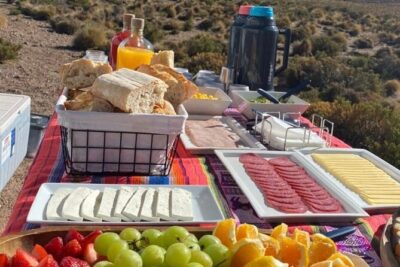
Cejar Lagoon, Tebenquiche Lagoon and Ojos del Salar
Read our review →
San Pedro de Atacama Day Trip: Atacama Desert and Salt Flats
Read our review →Browse the lists this tour appears in