
Reviewed · EASTER ISLAND TOURS
Birdman Cult and Caves
The most striking part of this six-hour outing is the way it links moai culture with Easter Island’s volcanic ground. You move from the seven statues at Ahu Akivi to a cave, a red-stone quarry, a ceremonial site, and the birdman village at Orongo. I like the strong mix of archaeology and scenery, and I like that pickup, transport, drop-off, and a local guide are handled for you.
I also like the chance to see less familiar sites such as Puna Pau and Vinapu, not just the island’s best-known statues. The main caution is guide quality. A 3 out of 5 assessment specifically describes the guide as bad, so you should book this for the route and access to major sites, but keep your expectations measured about the commentary.
Key points to know before booking
- Six major stops in six hours: Ahu Akivi, Ana Te Pahu, Puna Pau, Vinapu, Rano Kau, and Orongo make for a full day of sightseeing.
- The birdman cult is the finale: Orongo brings together ceremonial buildings, carved symbols, and wide views from the rim of Rano Kau.
- A local guide leads the day: English and Spanish are available, with hospitality, culture, and native knowledge at the center of the experience.
- The National Park ticket costs extra: You must arrange this separately because it is not included in the $90 price.
- Transportation is covered: Pickup and drop-off remove the need to arrange a vehicle for a route spread across the island.
- Guide quality is the key unknown: The single specific criticism in the available feedback concerns the guide, not the sights or the schedule.
A full day of Easter Island’s major stories
I see this as a route for someone who wants a broad introduction to Easter Island in one organized outing. Six hours is long enough to reach several important places, but the schedule is also busy, so you should expect stops with limited time rather than a slow visit at each site.
The route covers several kinds of evidence. You see moai platforms, volcanic stone, caves, petroglyphs, a crater, and the remains of the birdman ceremony. That variety gives you a better sense of how the island’s people used both natural features and carved stone for religious and social purposes.
The tour costs $90 per person. That price is easier to justify if you value transport and a guide, since you are not building the route yourself or arranging a vehicle between distant locations. It is less attractive if you already have transport and only want a single site, especially because the National Park ticket is not part of the fee.
A few more Easter Island half-days worth a look
- From Hanga Roa: Rapa Nui Culture Sightseeing Tour
★ 4.6 · 307 reviews - From Hanga Roa: Easter Island Highlights 2-Day Tour
★ 4.3 · 205 reviews - From Hanga Roa: Easter Island Sightseeing Full Day Tour
★ 4.5 · 189 reviews
Ahu Akivi and the seven moai
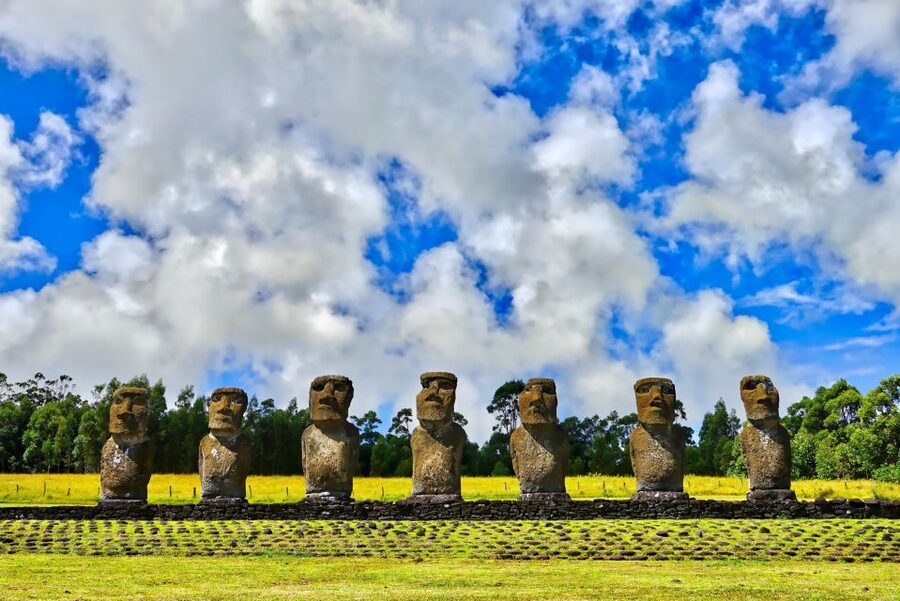
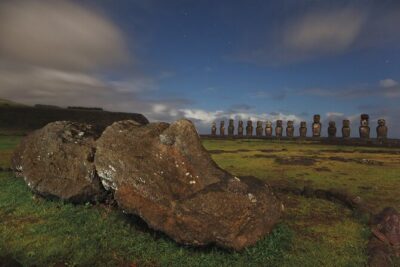
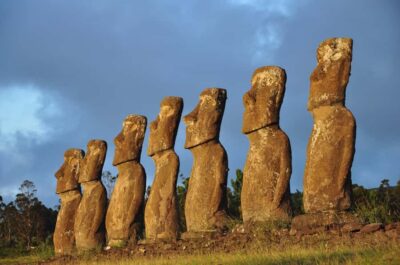
Ahu Akivi is the opening stop, with a platform carrying seven moai. The statues offer a useful starting point because the tour can introduce you to the island’s moai culture before moving into more specialized sites.
Their celestial orientation is part of the story here. That detail gives the statues more meaning than their size or appearance alone. You can look at the platform as a work of stone, but also as part of a society that connected ceremony, authority, and the sky.
I like beginning here because it gives you a reference point for the rest of the day. When you later see the quarry at Puna Pau or the ceremonial village at Orongo, you already have a basic idea of how statues fit into the island’s wider traditions.
Your experience at Ahu Akivi will depend heavily on the guide. A clear explanation of the seven figures and their orientation can turn a quick photo stop into a useful lesson. A weak explanation may leave you admiring the statues without understanding why this platform matters.
Ana Te Pahu and the island beneath your feet
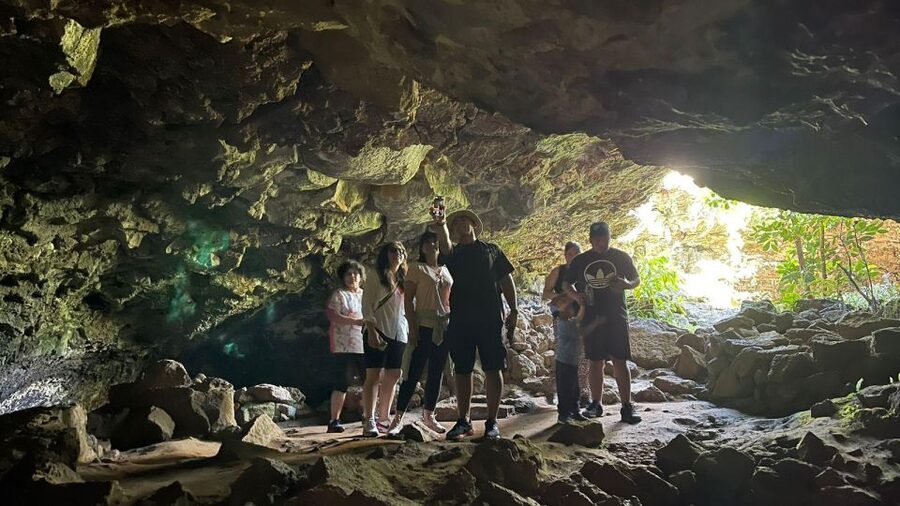
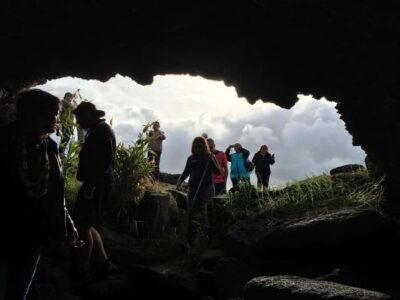
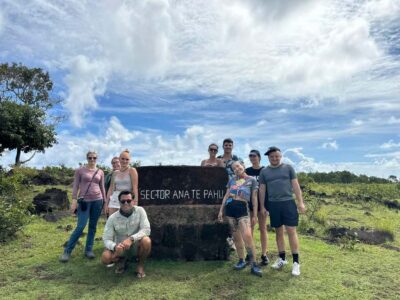
Ana Te Pahu is described as a ceremonial cave on the slopes of Rano Kau. It carries petroglyphs and paintings connected with the island’s traditions, giving you a change of pace after the open-air moai platform.
I find caves valuable on a route like this because they show another side of island life. The moai are public, monumental, and easy to recognize. A cave feels more enclosed and personal, with the surrounding rock becoming part of the setting for ritual and artistic expression.
The cave also reminds you that Easter Island is volcanic from the ground up. You are not simply visiting isolated monuments. The same volcanic forces that shaped the island also created spaces that people later used and gave cultural meaning.
You should pay attention to the footing and the setting here. The supplied information does not specify the exact walking conditions or how long you remain inside, so comfortable shoes are a sensible choice. The tour is listed as wheelchair accessible, but the details of cave access are not explained. If you use a wheelchair, confirm the practical route before booking.
Puna Pau, where red stone became a symbol
At Puna Pau, you visit the quarry that supplied the distinctive red scoria topknots placed on many moai. These stone additions are easy to overlook when you see finished statues, but the quarry helps explain how much work went into their appearance.
The red stone also adds visual variety to the day. After the gray or weathered tones associated with many moai sites, Puna Pau focuses your attention on color, material, and craft. You can think about the planning needed to shape and move the topknots from the quarry to the statues.
This stop is especially useful if you want to understand the moai as a complete design rather than as simple stone figures. The topknot was not a minor decoration. Its material and color helped express identity and meaning.
The quality of the visit will again rest on the guide’s explanation. The stop has a clear subject, but without context it can become a short look at a quarry and little more. If the guide explains how the red scoria relates to the finished statues, the visit should feel much more worthwhile.
Same corner of Chile, a completely different day out:
- Full day tour – DREAM
★ 5.0 · 86 reviews - From Hanga Roa: Journey from Orongo to Ana Te Pahu
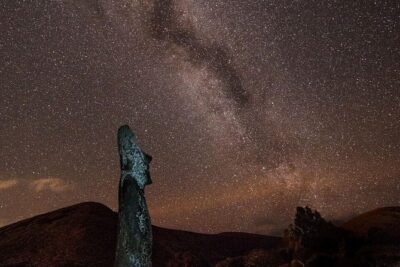
★ 4.3 · 75 reviews - Rapa Nui Stargazing
★ 4.5 · 62 reviews - Two days of Full Day Tour of Rapa Nui + Sunrise in Tongariki
★ 4.8 · 55 reviews
Vinapu and the question of outside influence
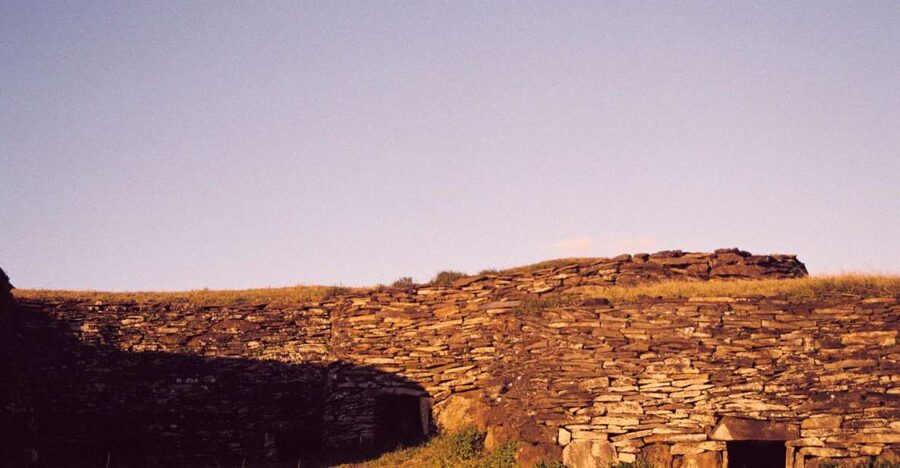
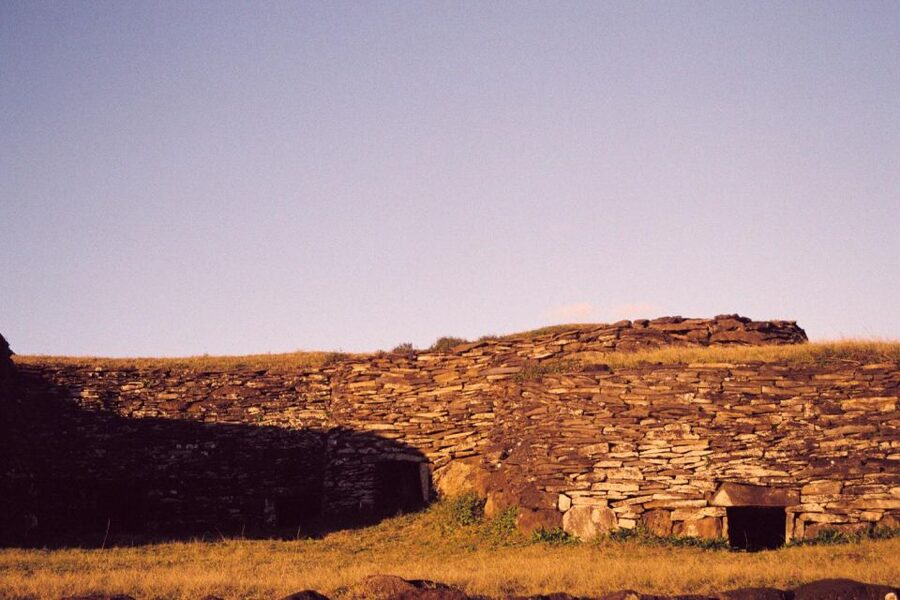
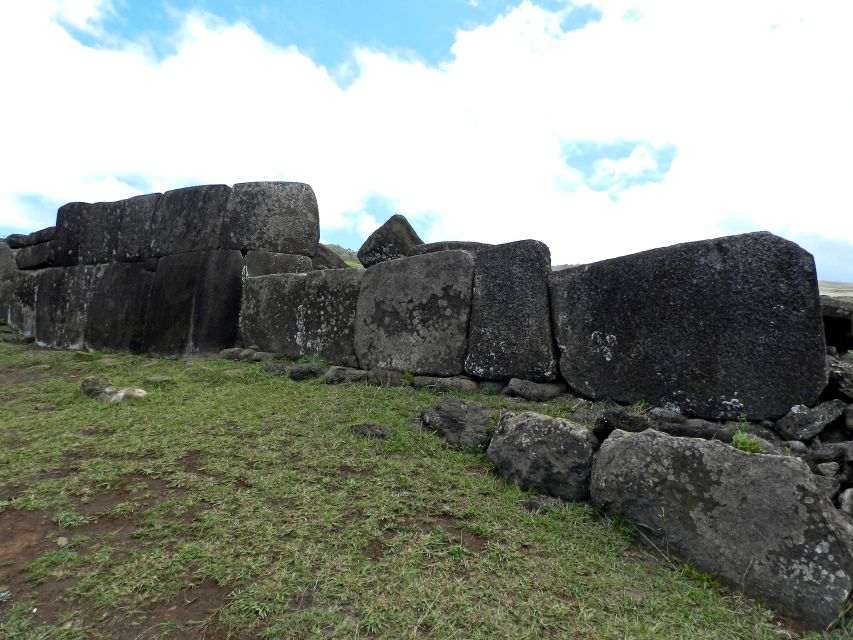
Vinapu brings you to megalithic construction marked by careful stonework. The precision has drawn comparisons with structures in South America, including sites around Cuzco. That comparison is one of the tour’s more thought-provoking themes.
You should treat the similarity as a question rather than a final answer. Stonework can look alike for many reasons, and a careful guide should separate visible resemblance from proven historical contact. This is a place where good interpretation matters more than a dramatic claim.
I like Vinapu because it makes you look closely. The site is not only about statues or a sweeping view. It asks you to notice how large stones fit together and to consider what that precision says about the people who built the structure.
For you, this may be one of the more rewarding stops if you enjoy archaeology and unresolved questions. If you mainly want famous statues, Vinapu may feel less immediately powerful than Ahu Akivi or Orongo. Its value comes from examining construction and thinking about connections.
Rano Kau, a crater with its own world
Rano Kau is a large volcanic crater and one of the day’s major natural sights. From here, you gain a wider view of Easter Island while learning about the island’s volcanic formation and unusual ecosystems.
The crater provides a needed pause in a schedule filled with cultural sites. It gives you room to look outward and understand the shape of the island. The natural setting is not separate from the human story. It helped determine where people lived, gathered, and carried out ceremonies.
The tour information does not promise a hike around the crater, a meal, or a long period for independent exploration. You should therefore expect a guided stop with views and interpretation, not a full walking excursion.
Rano Kau is also important because it sets up the final stop. Orongo sits on the crater rim, so the geography prepares you for the birdman cult site. When you arrive there, the ceremony makes more sense as something tied to a dramatic, carefully chosen place.
Orongo and the birdman cult
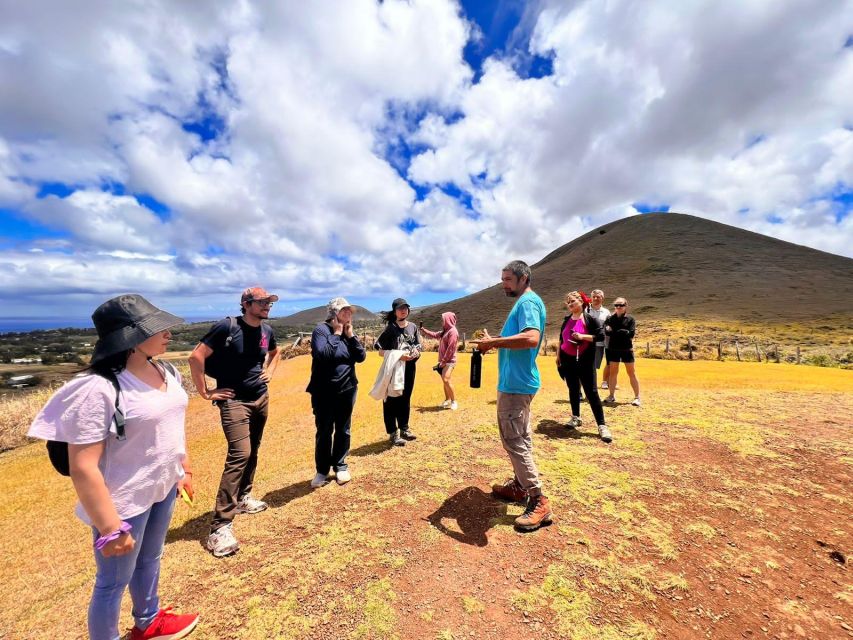
Orongo is the emotional center of the route. This ceremonial village sits on the rim of Rano Kau and is connected with the birdman cult, one of Easter Island’s most distinctive religious traditions.
You see ceremonial buildings and petroglyphs here, along with broad Pacific views. The setting helps explain why Orongo feels different from a moai platform. The village is tied to ritual competition and sacred symbols, while the crater and ocean create a powerful physical boundary around the site.
The birdman cult gives the tour a strong closing story. Earlier stops focus on statues, stone, and older forms of ceremony. Orongo shows another chapter in the island’s religious life, with birds, cliffs, and authority woven into the tradition.
I would save your attention for this final stop. Listen closely to the explanation of the petroglyphs and the ceremonial village, then take time to look across the crater and sea. The view is not just a scenic reward. It helps you understand how the location shaped the ritual.
What the $90 price really covers
At $90 per person, this is a midrange guided excursion rather than a simple transfer. The fee includes transportation, pickup, drop-off, and a live guide in English or Spanish. Those services matter on an island route with several separate sites.
The price also buys structure. You do not need to decide how to connect Ahu Akivi, Ana Te Pahu, Puna Pau, Vinapu, Rano Kau, and Orongo. If you have only a short stay, that efficiency can be worth more than the cost of arranging each stop yourself.
The National Park ticket is extra, and that changes the final budget. Add that cost before deciding if the tour fits your plans. The activity does not state the ticket price, so you should check the current charge separately.
The value is strongest for first-time visitors who want an overview and do not have their own transport. It is weaker for people who already have a vehicle, prefer long visits at one site, or want a specialist archaeology tour with guaranteed depth of commentary.
Guide quality and the native guide promise
The advertised focus is on hospitality, culture, and native guides. That can be a real advantage on Easter Island, where names, ceremonies, and local meaning are not always obvious from the stones alone.
At the same time, the only detailed feedback supplied includes a 3 out of 5 assessment saying the guide was bad. I would take that criticism seriously because the guide is central to this experience. The route has value even without brilliant commentary, but the interpretation is what connects the separate stops into one story.
No guide’s name is provided, so you cannot choose a particular person in advance. English and Spanish are offered, which gives you a practical language choice, but the information does not explain whether every departure has the same guide or how large the group will be.
If you book, go in with a few questions ready. Ask about the celestial orientation at Ahu Akivi, the red scoria at Puna Pau, the South American comparison at Vinapu, and the birdman ceremony at Orongo. Those topics can help you get more from the day even if the commentary is brief.
Who will get the most from this route
I think this outing suits you best if you want to see several major sites without arranging transport. It is also a good fit if you like a mix of archaeology, geology, ceremony, and wide views rather than a day devoted only to moai.
You should also consider it if you have limited time on Easter Island. The six-hour schedule gives you a strong first look at the island’s main themes, including places that are easy to miss when you focus only on the most famous statues.
You may prefer another arrangement if you want to linger, sketch, photograph, or walk at every stop. Six locations in six hours means the day will move along. The exact starting time depends on availability, so check the schedule before making other plans.
The activity is listed as wheelchair accessible, but the supplied information gives no detailed notes about the cave, walking surfaces, or access at each site. If accessibility is important to you, ask for a stop-by-stop confirmation before paying.
Booking decision
I would book this tour if you want a practical introduction to Easter Island, need transport, and value seeing Orongo, Rano Kau, Ahu Akivi, Puna Pau, Vinapu, and Ana Te Pahu in one day. The route is broad, the final stop is memorable, and the local cultural focus gives the day a clear purpose.
I would hesitate if expert guiding is your top priority. The recorded 3 out of 5 assessment raises a real concern, and no guide name or group-size information is provided. At $90 plus the National Park ticket, the tour is reasonable for convenience, but not a bargain if the commentary falls short.
FAQ
How long does the Birdman Cult and Caves tour last?
The tour lasts six hours. Starting times depend on availability, so check the schedule when you choose your date.
How much does the tour cost?
The price is $90 per person. The National Park ticket is not included and must be paid for separately.
What locations does the tour visit?
The route includes Ahu Akivi, Ana Te Pahu, Puna Pau, Vinapu, Rano Kau, and Orongo.
Is transportation included?
Yes. Transportation, pickup, and drop-off are included in the activity price.
Is a guide included?
Yes. A live local guide is included, with English and Spanish available.
Is the National Park ticket included?
No. The National Park ticket is not included in the tour price.
Can I cancel for a full refund?
Yes. You can cancel up to 24 hours in advance for a full refund.
Can I reserve now and pay later?
Yes. The activity allows you to reserve your place and pay later.
Is the tour wheelchair accessible?
Yes, the activity is listed as wheelchair accessible. The available information does not give detailed access notes for each stop, so confirm the cave and site conditions if needed.
Newest Easter Island trips on the site
- Volcanic Refuges: Excursion to Underground Civilization★ 4.7 · 8 reviews
- Half Day Tour in Rapa Nui★ 5.0 · 48 reviews
- Ride to the highest point on the island for sunset★ 5.0 · 40 reviews
- Tongariki Sunrise: Half Day Private Tour★ 3.8 · 9 reviews
- Terevaka Horse Excursion: The highest point and 360° view.★ 4.7 · 38 reviews
- Easter Island: Private Full Day History Of The Moai★ 4.6 · 12 reviews
- Rapa Nui: Polynesian Massage★ 4.8 · 5 reviews
- Rapa Nui Highlights Program: 3 incredible tours to discover!★ 4.8 · 18 reviews
Easter Island Tours, compared.
Two days of Full Day Tour of Rapa Nui + Sunrise in Tongariki
Read our review →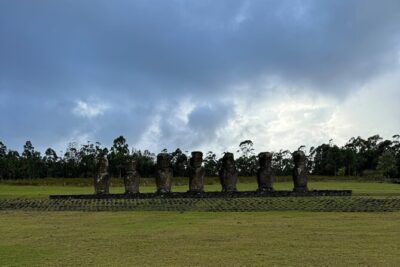
Browse the lists this tour appears in