
Reviewed · EASTER ISLAND TOURS
From Hanga Roa: Easter Island Highlights 2-Day Tour
Rapa Nui is far too important to rush, and this two-day route gives you a strong first look at its moai, volcanic quarries, caves, and sacred sites. I like the local guides, who explain both archaeology and present-day island life, and I like the small-group format, limited to 14 people. The minibus pickup also saves you from piecing together transport.
The main catch is that the two days may not feel equally smooth. Day one is generally fuller and more relaxed, while day two can involve bilingual commentary, long pickup times, and a quicker pace. Lunch and site entrance fees are extra, so plan for those costs.
At a glance
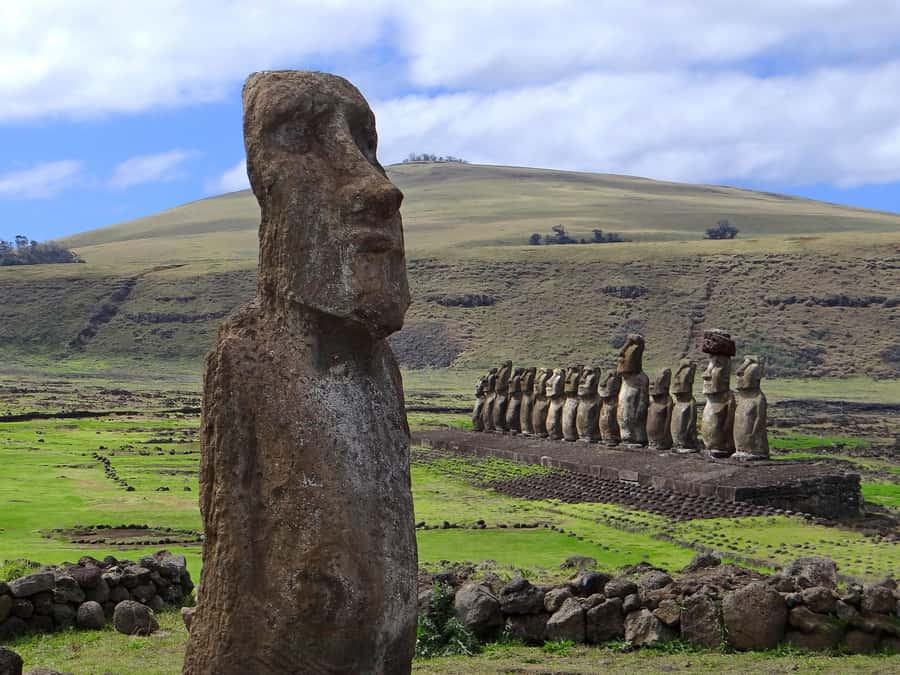
- Fifteen moai at Tongariki: The island’s most powerful group display comes with time to look, photograph, and listen.
- A local voice at every major stop: Guides including Jeremías, Enerike, Zoe, Roberto, and Javier’s Hucke have been praised for explaining Rapa Nui traditions and daily life.
- Two different kinds of days: The first follows the southern and eastern coast toward Anakena; the second covers Orongo, Vinapu, Puna Pau, caves, and Ahu Akivi.
- Caves with lanterns supplied: Ana Te Pahu adds a more physical, atmospheric stop to the archaeological route.
- Lunch needs planning: Meals are not included, and the second day may offer no proper food stop before the tour ends.
- A practical value at $170: Transport, two full days of guiding, and access to major sites make the price reasonable, but entrance fees still sit outside the package.
Why two days makes sense on Rapa Nui
Rapa Nui is small enough to look manageable on a map, yet its important sites are spread around the island. The moai are not gathered in one open-air museum. You need road time, site timing, and some background to understand why a toppled statue, an empty quarry, or a red stone cylinder matters.
This tour splits the island into two broad outings. That is useful because you are not trying to squeeze every major site into one long day. You get time for the great southern route on day one, then a separate look at the ceremonial and cave sites on day two.
I especially like this arrangement for a first visit. Much of the island is protected parkland, and several major stops require a guide. You can rent a motorcycle and see parts of Rapa Nui independently, but a guide adds the stories, theories, and cultural context that are easy to miss from the roadside.
Pickup comes directly from your accommodation, and transport is by spacious minibus. The group size can reach 14 people, though some departures are much smaller. One day has had as few as five people, while another reached the full group limit. That variation matters: a small group feels personal, but a full minibus means slower pickups and less room for everyone to ask questions.
A few more Hanga Roa half-days worth a look
- Two days of Full Day Tour of Rapa Nui + Sunrise in Tongariki
★ 4.8 · 55 reviews - Santiago: 2-Day Hop-On Hop-Off Bus Ticket and Cable Car
★ 4.3 · 162 reviews - 2 Days in Patagonia. Torres del Paine and Balmaceda and Serrano Glacier.
★ 4.1 · 4 reviews
Day one: from toppled moai to Anakena
The first day is the stronger half for many visitors because it brings together the island’s most famous sights in a natural sequence. Expect a late morning start after pickup, followed by a full day on the road and at the sites.
Vaihu and Akahanga
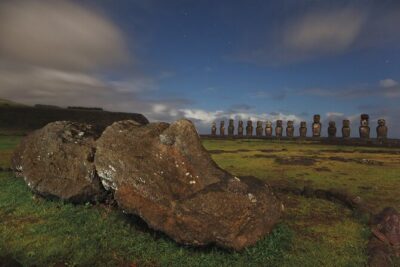
At Vaihu, you begin with moai lying near the coast, a reminder that these statues are not all upright and polished for visitors. Their fallen positions are part of the story. The setting also gives you a first sense of how closely Rapa Nui’s ceremonial sites sit beside the Pacific.
Akahanga continues that theme. Here, toppled moai rest among the remains of an ancient ceremonial platform. It is less instantly dramatic than Tongariki, but I find it useful early in the day because it helps you understand that the island is an archaeological site, not simply a collection of intact statues.
Your guide should explain the theories surrounding the moai and the changes that took place on the island. This is where local interpretation adds real value. Jeremías has been praised for explaining culture, daily life, and different ideas about the statues in clear detail. Other guides, including Enerike and Zoe, bring family traditions and personal island connections into the storytelling.
Rano Raraku, the moai quarry
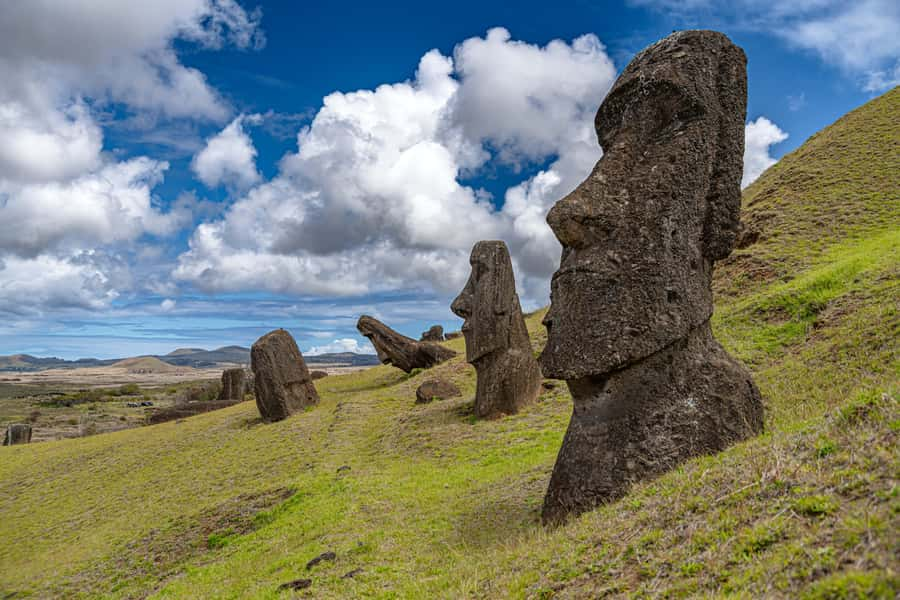
Rano Raraku is the day’s great turning point. This volcanic quarry is where many of the moai were carved from stone. You can see unfinished figures and statues still connected to the slopes, making the quarry feel like a workshop interrupted rather than a finished monument.
The site rewards patience. Look beyond the largest figures and notice how many statues remain partly embedded in the rock. Your guide can help explain the carving process and the competing ideas about how the moai were moved.
A practical note: this is one of the places where your timing may affect lunch. One itinerary has included a cafe stop near the quarry, but it can be busy. If the group waits too long, the schedule may continue toward Anakena instead. Bring a substantial snack so your appetite does not dictate your sightseeing.
Same corner of Chile, a completely different day out:
- From Hanga Roa: Rapa Nui Culture Sightseeing Tour
★ 4.6 · 307 reviews - From Hanga Roa: Journey from Orongo to Ana Te Pahu
★ 4.3 · 75 reviews - Sunrise Tongariki: Sunrise at Tongariki Park Private Tour
★ 4.5 · 47 reviews - Rapa Nui Dreams: Experiencie Pack 3 Days
★ 4.7 · 32 reviews
Tongariki and its fifteen moai
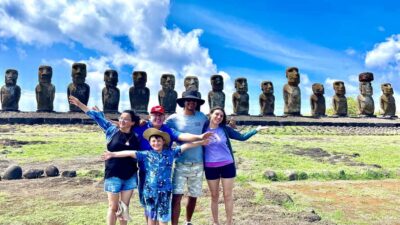
Ahu Tongariki is the big photographic moment. Fifteen moai line the platform, facing inland with the Pacific behind you. The scale is hard to take in at first. You will want to photograph the entire row, then walk your attention from one figure to the next.
This is also a good place to ask questions about restoration and the ceremonial platforms, rather than treating the statues as isolated objects. The guide’s explanation can turn a striking view into something more meaningful.
Expect open sun here and at several other stops. Bring a hat, water, and strong sun protection. One visitor specifically found that much of the day was spent in direct sunlight, and that is useful advice for planning your clothing.
Te Pito Kura and Anakena
Te Pito Kura adds a sacred and legendary layer to the day. It is not as visually overwhelming as Tongariki, but it helps show how belief, place, and stone are tied together in Rapa Nui culture.
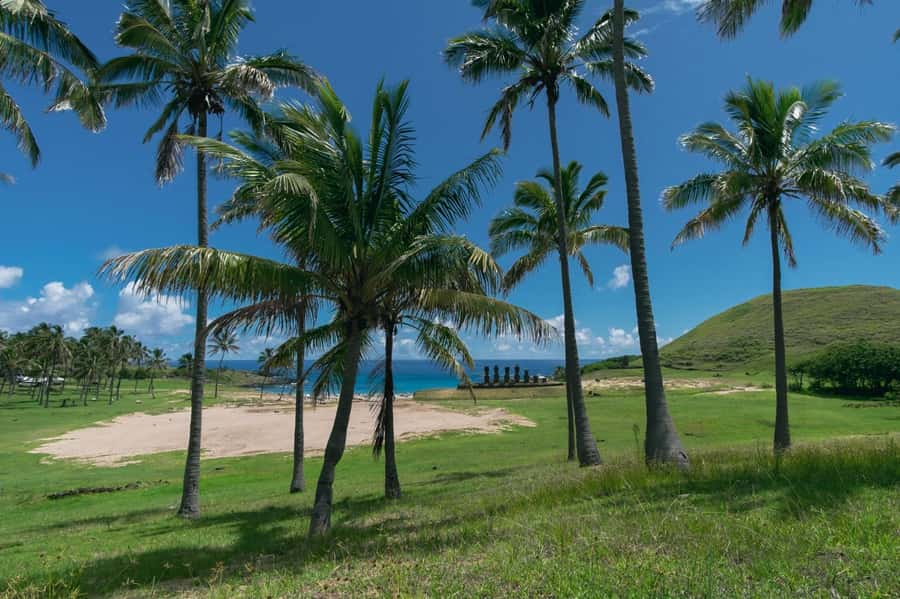
Anakena provides a welcome change of pace. This palm-fringed beach is one of the island’s most inviting places, with moai nearby and time to enjoy the setting. Some departures have spent about an hour here, while the late arrival has meant eating around 4:30 p.m. That makes Anakena a pleasant stop, but not a substitute for packing food.
Day one can run from roughly 9:30 a.m. pickup to around 6 p.m. drop-off. It is a substantial day, yet the variety keeps it moving: fallen statues, a quarry, a giant platform, a sacred site, and a beach.
Day two: crater views, red stone, and caves
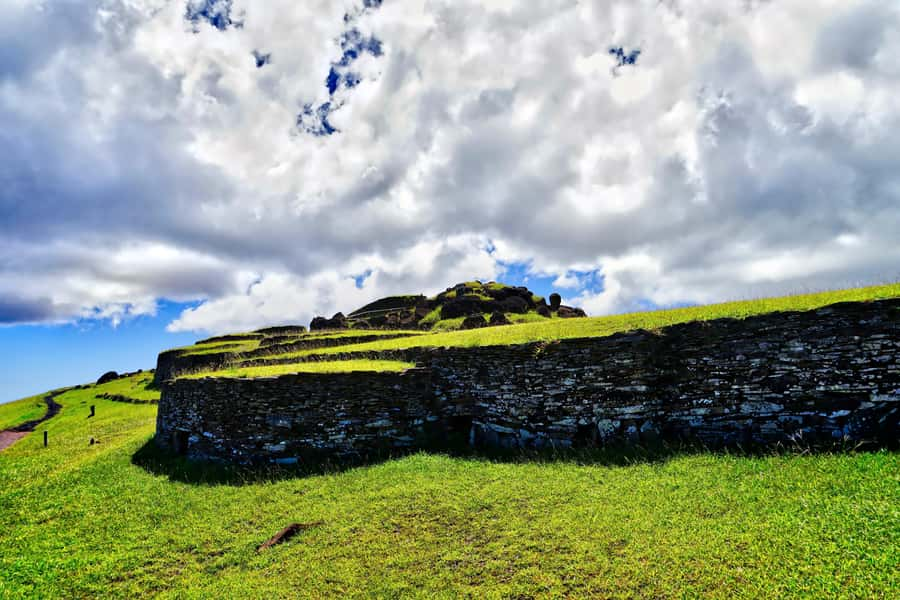
The second day covers a different side of Rapa Nui. It is more varied in subject, but the timing can feel less generous. Some departures finish around 3 p.m., and pickup may take a long time if the minibus is collecting people from several accommodations.
Orongo and Rano Kau
Orongo is often the highlight of day two. The village sits above the cliffs of Rano Kau, a volcanic crater with broad views across the island and ocean. This is one of those places where the physical setting carries as much force as the ruins.
The village connects to the birdman tradition, one of Rapa Nui’s best-known ceremonial practices. Your guide can explain how the site functioned and why its position on the crater edge mattered. If you care most about views and cultural detail, this is the stop where day two earns its place.
Vinapu and ancient stonework
Vinapu is known for carefully fitted stone walls. The masonry has prompted comparisons with South American stonework, and it offers a useful reminder that Rapa Nui culture cannot be reduced to the moai alone.
Give yourself time to inspect the joints and the way the stones meet. The appeal here is close observation, not a single grand view. A guide can also help separate established information from speculation, which is especially helpful at a site that invites big theories.
Puna Pau and the red scoria topknots
At Puna Pau, you see the quarry that supplied the red scoria topknots, or pukao, placed on some moai. The reddish stone gives the site a distinct look and explains a detail that many first-time visitors otherwise overlook.
This stop works well after Tongariki and Rano Raraku because it completes part of the statue story. You have seen where many bodies were carved, and now you see where some of their headpieces came from.
Ana Te Pahu
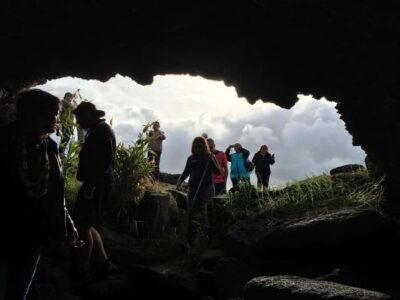
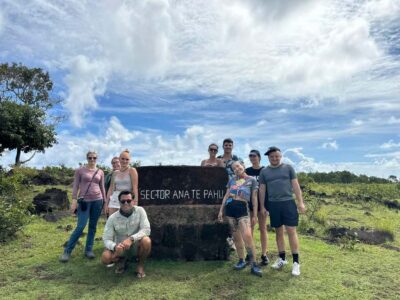
Ana Te Pahu brings you underground. The cave system includes chambers and petroglyphs, and the experience is more active than simply walking up to a platform. Lanterns are provided, which is important because you need light to move through the cave and examine its details.
Wear shoes you are comfortable using on uneven ground. The supplied information confirms lanterns, but it does not promise a fixed route or a specific level of difficulty, so follow the guide’s instructions. Rain can also affect plans. Zoe has been praised for changing the order of stops during wet weather and using caves as shelter when needed.
This is one of the most memorable parts of the tour because it shifts your attention from giant statues to enclosed spaces used by earlier island communities. It also shows the value of having a guide who can respond to conditions instead of following a rigid schedule.
Ahu Akivi
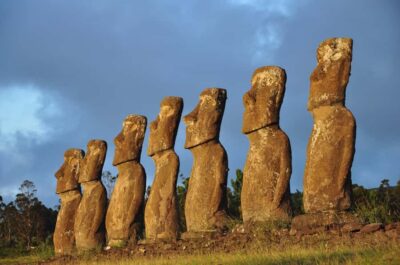
The final major stop is Ahu Akivi, where seven moai face toward the ocean. Their placement differs from the usual inland-facing arrangement found at many other platforms, making the site a useful final comparison.
By this point, you will have seen enough examples to notice contrasts: upright and toppled statues, finished and unfinished figures, large ceremonial platforms, quarries, and caves. Ahu Akivi works best as a closing stop because it encourages you to connect those separate pieces.
Guides, languages, and the pace of the day
The quality of the guide is central to this experience. The strongest part of the tour is not simply getting from site to site. It is hearing an indigenous or locally connected guide explain the island through archaeology, family tradition, and modern life.
Jeremías has received particularly warm praise for clear explanations of moai theories and daily life. Enerike has been appreciated for his pride in the island, while Zoe has been singled out for her flexibility in bad weather and her use of ancestral traditions alongside historical information. Roberto has added local songs and ukulele to the experience. Javier’s Hucke has been noted for patience when translating and answering questions.
Guide assignments can change between days. You may have one guide for day one and another for day two, and the group may include both English and Spanish speakers. If you speak only English, this is the main consideration. Commentary can be repeated in both languages, and some departures have had roughly half the explanation in Spanish. That can make the day feel slower and leave less time at certain stops.
On a bilingual departure, ask at the start how the day will run. It is a simple question, but it helps you set expectations. The guides are generally praised for their warmth and subject knowledge, yet the experience depends partly on group language mix.
Price, food, and what you need to bring
At $170 per person, the tour offers solid value if you want the major sites explained and transported over two days. You are paying for pickup, a minibus, two days of guiding, and a route that would be difficult to organize efficiently on your own.
The price does not include entrance fees. It also does not include lunch. That flexibility is useful if you want to choose your own food, but it means you need to carry cash or make your own lunch plan. Stops can vary, and day two may have no proper meal stop before the tour finishes.
Pack:
- Water and filling snacks
- Hat, sunscreen, and sunglasses
- A rain layer or light waterproof clothing
- Comfortable shoes for the cave visit
- Extra battery power for photographs
Rain capes and personal lanterns are supplied. Drones are not allowed.
Free cancellation up to 24 hours before the tour and a reserve-now, pay-later option make the booking relatively flexible. The tour is wheelchair accessible, though the cave section and site surfaces may still require you to confirm what is practical for your needs before booking.
Who should book this two-day route
I would choose this tour if you are visiting Rapa Nui for the first time and want the main archaeological sites covered without managing roads, directions, and guide rules yourself. It is also a good fit if you care about cultural explanation rather than simply collecting photographs.
You will get the most from it if you can handle long outdoor days, direct sun, changing meal times, and some minibus waiting. Families, couples, solo visitors, and small groups can all fit comfortably into the format, but the bilingual setup may matter to English-only participants.
If you already plan to rent a motorcycle, the two options can work well together. Independent driving gives you freedom and a different feel for the island. This guided route adds the explanations and access that you might otherwise miss.
Should you book it?
Book it if you want a practical overview of Rapa Nui’s major sites and value local storytelling. The first day is especially strong, with Rano Raraku, Tongariki, and Anakena forming a memorable sequence.
Think twice if you dislike fixed schedules, bilingual commentary, or early uncertainty about meals. Bring snacks, protect yourself from the sun, and ask about the day’s plan at pickup. With those small preparations, $170 is a fair price for two days of transport and guidance across an island where context makes the monuments come alive.
FAQ
How long does the tour last?
The experience lasts two days. Starting times vary, so you need to check availability when booking.
What languages are available?
Live guidance is available in English and Spanish. A mixed-language group may receive commentary in both languages.
How many people are in the group?
The tour is limited to 14 participants. Some departures may be smaller.
Is pickup from my accommodation included?
Yes. Pickup directly from your accommodation is included, with transport in a spacious minibus.
Are lunch and entrance fees included?
No. Lunch and entrance fees are not included. You choose and pay for your own meals, and the guide can suggest places to eat.
What equipment is supplied for the caves and rain?
You receive a personal lantern for the cave visit and a rain cape for sudden showers.
Can I cancel or pay later?
You can cancel up to 24 hours in advance for a full refund. You can also reserve your place and pay later.
Newest Hanga Roa trips on the site
- Volcanic Refuges: Excursion to Underground Civilization★ 4.7 · 8 reviews
- Rapa Nui: Polynesian Massage★ 4.8 · 5 reviews
- Rapa Nui Highlights Program: 3 incredible tours to discover!★ 4.8 · 18 reviews
- Rapa Nui: 3 Excursions with Hotel Transfers★ 4.3 · 6 reviews
- Rapa Nui Dreams: Experiencie Pack 3 Days★ 4.7 · 32 reviews
- Ahu Vinapu, Rano Kao and Orongo City Half-Day Tour★ 4.6 · 20 reviews
- Hanga Roa: Full Day Moai and Mistery★ 4.4 · 22 reviews
- Easter Island: Tropical Diving★ 4.8 · 13 reviews
Easter Island Tours, compared.
Two days of Full Day Tour of Rapa Nui + Sunrise in Tongariki
Read our review →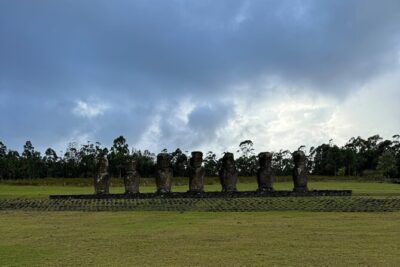
Browse the lists this tour appears in