
Reviewed · STARGAZING TOURS
Rapa Nui Stargazing
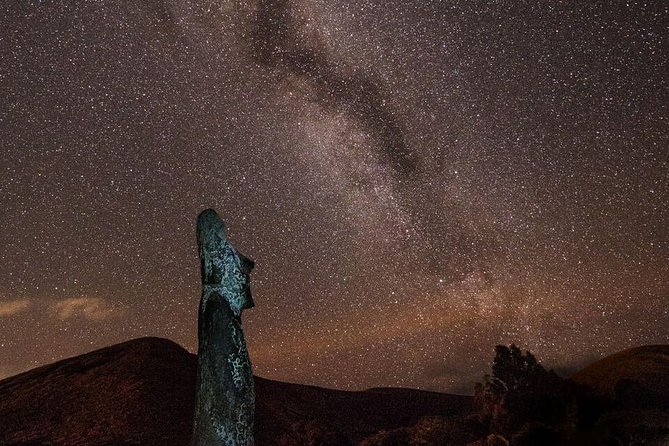
Rapa Nui Stargazing takes you far from Hanga Roa’s lights to watch the southern sky above Anakena Beach, with telescopes aimed at objects such as Jupiter, Saturn, the Moon, star clusters, and the Milky Way. I like the small groups of up to 12 and the unusual chance to pair astronomy with Polynesian navigation and a moai photo session.
I also like the warm drink, local cake, and hotel drop-off after a late night. The catch is important: cloud, wind, full-moon light, and low enrollment can cancel the outing, sometimes close to departure, so book early in your stay and keep a spare evening open.
Key points to know before booking
- Dark skies near Anakena: The telescopes are set up away from Hanga Roa’s lights, where the Milky Way and southern constellations have a fair chance to shine.
- Astronomy with Rapa Nui meaning: Guides explain how Polynesian sailors used stars for navigation, giving the night sky a strong local connection.
- Special Ahu Nau access: The evening finishes at Anakena Beach, with night access near the moai and long-exposure photos available.
- Small, friendly format: The maximum group size is 12, making telescope viewing and questions easier than on a large coach tour.
- Weather rules are strict: Conditions are checked near Anakena, not just in town, and wind can make telescope use impractical.
- Plan for a late return: The full outing lasts about three and a half hours, and one evening ended around 1 a.m.
Why stargazing belongs on your Rapa Nui schedule
Rapa Nui is a good place to look up. The island is remote, the night is dark outside Hanga Roa, and the ocean horizon gives the sky a broad, open frame. This tour uses those conditions well, taking you toward Anakena rather than asking you to stand beneath hotel lights in town.
The best part is the blend of sky science and island culture. You are not simply shown a few bright stars through a telescope. Guides such as Mark explain how Polynesian navigators read the night sky while crossing the Pacific. That connection gives the astronomy a purpose. You begin to see the stars as tools used by people who found islands across a huge ocean, not just as points of light.
The tour has also earned strong praise for its telescope viewing. Depending on the season and the sky, you might see Saturn’s rings, Jupiter, lunar craters, the Pleiades, Sirius, star clusters, or the Milky Way. The exact lineup is never guaranteed, since clouds, moonlight, and the time of year decide what is visible.
I would not book this as a guaranteed planet show. I would book it as a carefully planned night outdoors, with a real chance of excellent views and a clear understanding that nature gets the final say.
More Stargazing Tours in Easter Island:
- Easter Island: Rapa Nui Stargazing Tour
★ 4.8 · 16 reviews - San Pedro de Atacama: Etno-Stargazing Tour with Transfer
★ 4.8 · 629 reviews - San Pedro de Atacama: Stargazing Experience
★ 4.7 · 489 reviews
Meeting at Katipare Library in Hanga Roa
You meet in front of Centro Lector Katipare, also called Katipare Library, rather than being collected at your hotel. Hotel pickup is not included, so allow time to reach the meeting point in Hanga Roa.
The listed start time is 8 p.m., but the seasonal information varies. One schedule gives 8 p.m. in summer and 7:30 p.m. in winter, while another says departures from September through April can fall between 8:30 and 9 p.m. Treat the time on your confirmation as the one that matters, and check messages before leaving your lodging.
This late start makes sense for the sky, but it affects the rest of your day. Avoid booking another evening activity that runs close to departure. You also need to be ready for a late finish, since the drive, telescope session, beach visit, and photo work take roughly three and a half hours.
The outing uses a driver-guide and includes live commentary during the ride. Since this is a small group, you have a better chance to ask questions and follow the explanation than you would on a full-size bus.
The remote telescope stop near Anakena
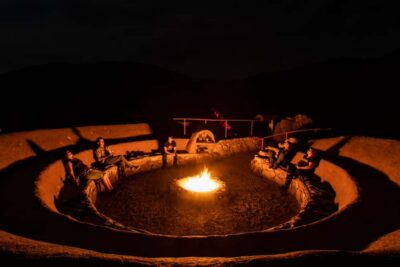
Before reaching the beach, the team sets up telescopes at a remote site. This is the main observing period, and the location is chosen to reduce artificial light. You may also use binoculars, depending on the equipment brought that night.
The guides explain the constellations and point out southern-sky objects. The educational side matters here. A dark sky can be impressive on its own, but it is easy to lose track of what you are looking at. A guide who can connect the stars to Polynesian wayfinding gives the session a clear thread.
Mark has used a laptop, maps, and presentations to explain navigation and the night sky. That can help you understand the larger picture, though the screen may be difficult for everyone to see when the group is spread out. If the guide is showing a map or image, move closer and ask for a better viewing position.
Telescope time may not be evenly spread if the sky is busy or the group is large. With a maximum of 12 people, the wait should be manageable, but you should not expect an observatory-style session with constant access to an instrument.
Clouds can also change the plan. One outing went ahead after rain shortly before meeting time and still produced a rewarding sky, while another had enough cloud for only a partial view. You may see the Milky Way even when the full sky is not clear, but there is no promise of a perfect night.
Hot chocolate, local cake, and a chilly island night
A hot drink and local cake are included during the evening. Hot chocolate prepared by Tuhii has received particular praise, and it is a welcome touch after standing outside in the dark.
Do not dress only for the warm daytime temperature. The night can feel chilly, especially when you are standing still at the telescope or near the beach. Bring at least one long-sleeve layer, and add a jacket if you get cold easily.
You should also bring a flashlight or headlamp. The remote observing site and beach are dark by design, and a phone light is less useful when you need both hands or want to protect your night vision. The tour does not list a flashlight as supplied equipment, so pack your own.
This is a simple comfort detail, but it affects the whole evening. Warm clothing and a light let you focus on the sky instead of worrying about cold fingers or uneven ground.
A few more Easter Island half-days worth a look
- From Hanga Roa: Rapa Nui Culture Sightseeing Tour
★ 4.6 · 307 reviews - From Hanga Roa: Easter Island Highlights 2-Day Tour
★ 4.3 · 205 reviews - From Hanga Roa: Easter Island Sightseeing Full Day Tour
★ 4.5 · 189 reviews - Full day tour – DREAM
★ 5.0 · 86 reviews
Finishing at Anakena Beach and Ahu Nau
Anakena is the final stop, and the setting gives the tour its most memorable visual element. The beach, the dark sky, and the moai create a scene that is very different from daytime sightseeing.
The group has special night access to Ahu Nau. Admission is not listed as an included ticket, so check the exact booking terms if that matters to your budget. The tour does include access arranged as part of the evening, but the ticket line is worth clarifying before you pay.
At the beach, the team takes long-exposure souvenir photos with the moai behind you. These photos are not included in the price and can be purchased separately. The process may take longer than you expect, especially if each person or small party wants a carefully framed image.
One guide has also played guitar and sung during the photo session. That musical touch may appeal to you if you like a relaxed cultural ending, though it can feel slow if you mainly came for telescope time. Decide in advance how important the photograph is to you. It is a special souvenir, but it is not the same thing as additional astronomy.
After Anakena, hotel drop-off is included. That is valuable at this hour, since arranging your own return from a remote beach would be inconvenient.
What the $140 price really buys
At $140 per person, this is not a cheap evening activity. You are paying for transport to a dark location, a local driver-guide, telescope equipment, live interpretation, arranged access near Ahu Nau, refreshments, photos available for purchase, and a ride back to your lodging.
The value depends on your priorities. If you only want to see stars, you may find the price hard to justify, especially on a cloudy night. If you want astronomy tied to Polynesian navigation, a small group, a remote setting, and a carefully arranged night visit to Anakena, the cost is easier to defend.
The small-group limit matters. A group of five to eight gives you more room around the telescope and makes it easier to hear the explanation. The tour can be canceled if too few people sign up, though, so low enrollment is both a benefit and a risk.
I would compare this price with the cost of arranging a private evening drive, a guide, telescope access, and night photography on your own. The tour is simpler and safer logistically, but you give up some control over the exact amount of time spent at each stop.
The biggest issue: weather, moonlight, and late decisions
You need to understand the cancellation policy before booking. The experience requires suitable weather, and the team checks conditions near Anakena. A clear sky in Hanga Roa does not always mean the telescope site will be clear or calm.
Strong wind is a serious problem. It can shake telescopes and make a long outdoor session unpleasant. This explains why the operator may cancel even when the town looks fine. The decision can come close to departure, sometimes about an hour before the meeting time.
Full-moon conditions can also cancel the stargazing. Bright moonlight washes out many stars, so the operator may offer a full-moon hike instead. That hike is a different activity, not an equivalent substitute for telescope viewing. If you would rather receive your money back, you can choose a refund when the stargazing is canceled.
The formal policy allows free cancellation up to 24 hours before the start time. If the operator cancels because of weather or minimum group size, you are offered another date, another experience, or a full refund, depending on the situation. If conditions change during the outing, the team may try to offer another night without charge, subject to space.
Because Easter Island visits are often short, timing matters more than usual. Book this on your first or second night if you can. That gives you a chance to move it later if clouds, wind, moonlight, or enrollment cause trouble. Booking it on your final night leaves you with no practical backup.
Who will enjoy this most
I would choose this for anyone who likes looking at the night sky but does not know much about astronomy. The guides make the session accessible, and the Polynesian navigation story gives you something memorable to carry into the rest of your island visit.
Families can enjoy it, provided children can manage a late night and several periods of standing outdoors. Couples and solo visitors also benefit from the small group, especially if they want the moai photo without arranging a private photographer.
This is less suitable if you need a fixed schedule, dislike waiting for weather decisions, or want a fast succession of telescope targets. It is also not ideal if your only free evening is close to a full moon.
Pack a jacket, a flashlight or headlamp, and patience. If photography matters to you, keep some extra money available for the optional souvenir image. If you are sensitive to cold, bring more clothing than you think you need.
Should you book Rapa Nui Stargazing?
Yes, if you can place it early in your stay and accept that the weather may cancel it. The strongest reasons to go are the dark Anakena setting, the Polynesian navigation lesson, the small group, and the chance to combine stars with moai and long-exposure photography.
I would hesitate only if your schedule has no spare night or if $140 feels too high for an activity with no guaranteed viewing conditions. For most people who want an evening that connects Rapa Nui culture with the southern sky, this is a worthwhile choice. Just treat the forecast as part of the booking, not as a minor detail.
FAQ
Where does Rapa Nui Stargazing begin?
You meet in front of Centro Lector Katipare, also known as Katipare Library, in Hanga Roa. Hotel pickup is not included.
What time does the tour start?
The listed start time is 8 p.m., but seasonal information gives different times, including 7:30 p.m. in winter and 8:30 to 9 p.m. from September through April. Check your booking confirmation for the exact departure time.
How long does the experience last?
The tour lasts approximately three hours and 30 minutes.
How many people can join?
The maximum group size is 12 people. The experience also requires a minimum number of participants and can be canceled if that minimum is not reached.
Is hotel drop-off included?
Yes. Hotel drop-off is included after the tour, but hotel pickup at the beginning is not.
What happens if the weather is poor?
The tour may be canceled if conditions are unsuitable. You will be offered another date or a full refund. If weather changes during the outing, the operator may try to arrange another night without charge, subject to availability.
Can I cancel for a full refund?
Yes. You can cancel up to 24 hours before the local start time for a full refund. Cancellations or changes made less than 24 hours before departure are not accepted under the stated policy.
Newest Easter Island trips on the site
- Volcanic Refuges: Excursion to Underground Civilization★ 4.7 · 8 reviews
- Half Day Tour in Rapa Nui★ 5.0 · 48 reviews
- Ride to the highest point on the island for sunset★ 5.0 · 40 reviews
- Tongariki Sunrise: Half Day Private Tour★ 3.8 · 9 reviews
- Terevaka Horse Excursion: The highest point and 360° view.★ 4.7 · 38 reviews
- Easter Island: Private Full Day History Of The Moai★ 4.6 · 12 reviews
- Rapa Nui: Polynesian Massage★ 4.8 · 5 reviews
- Rapa Nui Highlights Program: 3 incredible tours to discover!★ 4.8 · 18 reviews
Stargazing Tours, compared.
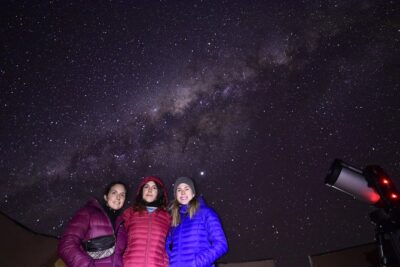
Astronomical Tour with Guide and Pick Up San Pedro de Atacama
Read our review →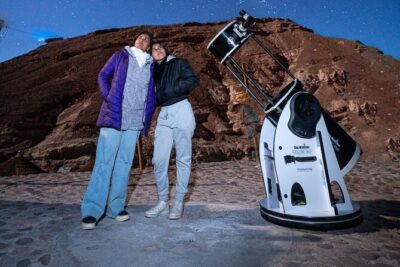
“Astronomical Adventure in San Pedro de Atacama”
Read our review →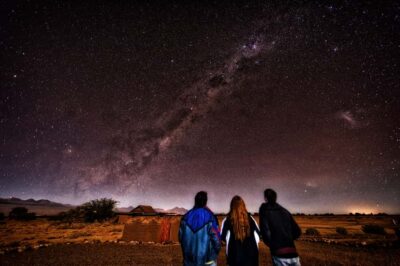
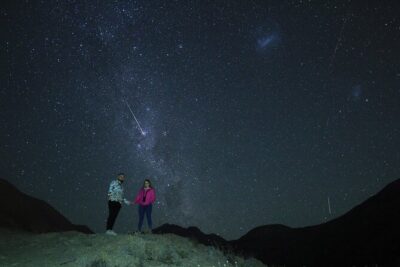
Pisco Elqui: Mountaintop Stargazing and Night Portrait
Read our review →Browse the lists this tour appears in