
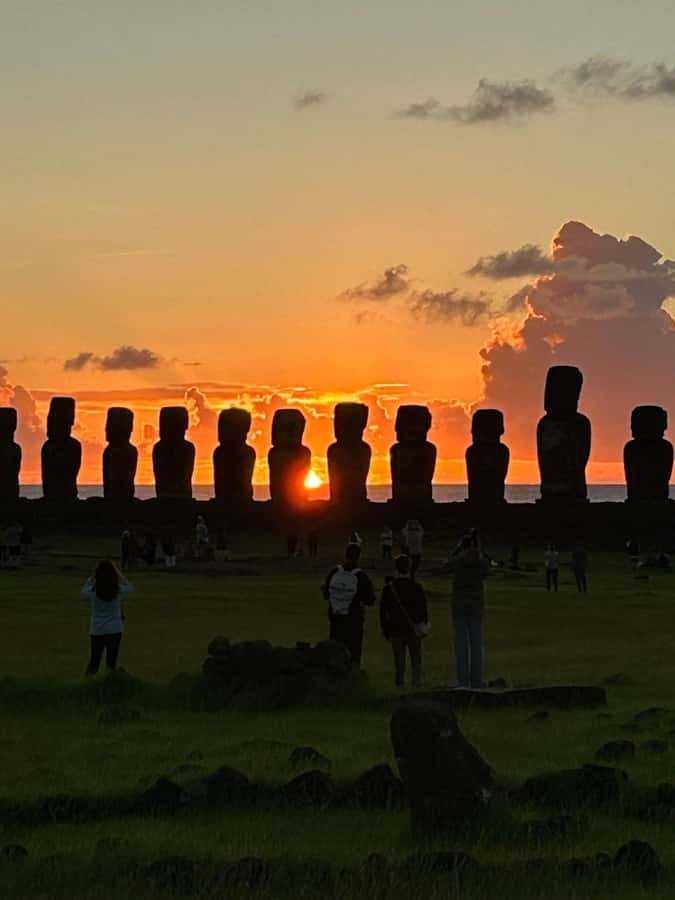
Reviewed · STARGAZING TOURS
Easter Island: Rapa Nui Stargazing Tour
On Rapa Nui, the night sky is part of the island’s story, not just a pretty ceiling. This three-hour outing links Polynesian ocean navigation with astronomy, then takes you to a remote site for telescope viewing and nighttime access near Ahu Nau Nau. I like the small group of no more than 12 and the chance to see southern-hemisphere stars from one of the world’s most isolated islands.
I also like the practical touches: hot chocolate and local cake, a digital photo, and hotel drop-off after the tour. The main drawback is that the experience depends heavily on clear skies, and at $140 per person, it may feel expensive on a night when clouds block much of the sky or there is little to see through the telescope.
Key points before you book
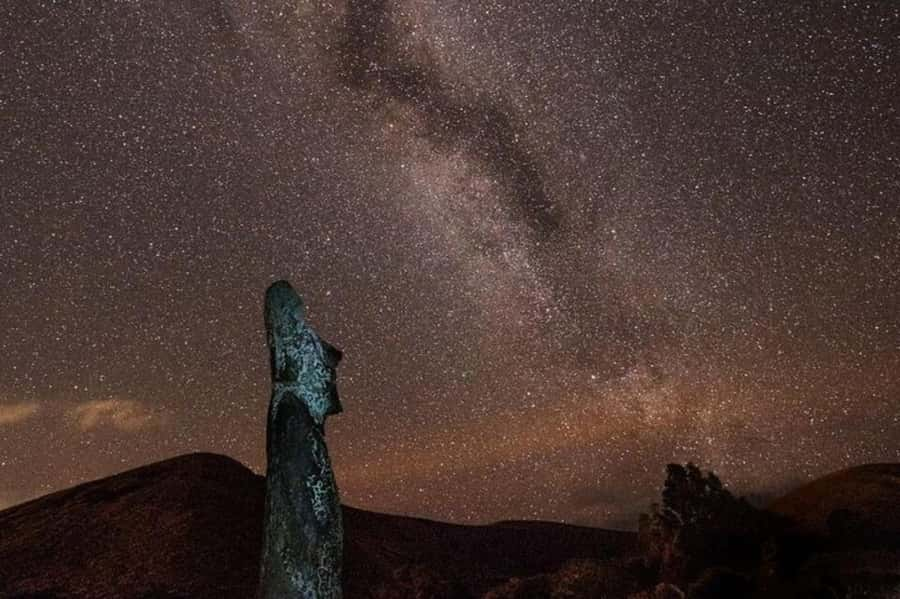
- Polynesian navigation is the heart of the tour: Learn how voyagers used stars, constellations, and the night sky to cross the Pacific.
- A telescope provides the main hands-on activity: You will view stars and planets at a remote observation site rather than only listening to a talk.
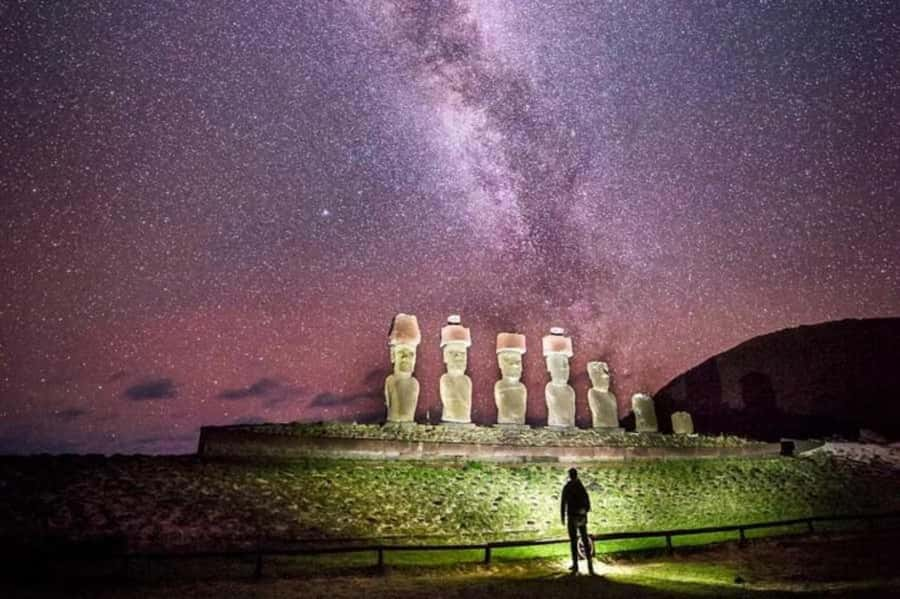
- Night access near Ahu Nau Nau adds atmosphere: You may photograph yourself beside the moai, with a digital photo included.
- Timing changes by season: Meet at Katipare Library at 21:00 in summer or 19:00 in winter.
- The moon matters: The tour does not operate from four days before to two days after the full moon.
- The outing suits a small, mobile group: The ground can be uneven, and the activity is not suitable for wheelchair users.
Why Rapa Nui is such a good place for stargazing
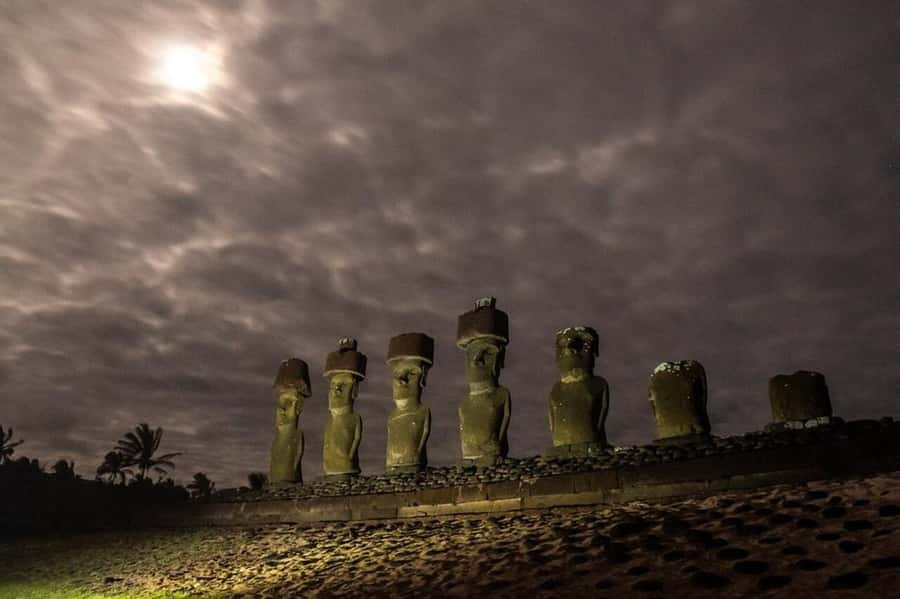
Rapa Nui is far from major cities and bright urban lights. That gives the night sky a force you rarely feel in a large town. The island’s isolation is not just a backdrop here. It is part of the reason the stars matter.
The tour begins with basic astronomy, then connects that subject to Polynesian voyaging and settlement. You learn how people moving across a vast ocean could use the rising and setting positions of stars, familiar constellations, and other signs in the sky to keep direction.
That makes this more than a telescope session. If you only want to point a lens at Saturn or a bright star, you may find astronomy events elsewhere that offer more equipment or a longer viewing period. Here, the value comes from the connection between the sky and Rapa Nui culture.
The Southern Hemisphere also gives you a different view from the one many visitors know at home. Some constellations visible from Rapa Nui cannot be seen, or are difficult to see, from northern latitudes. Your guide explains what is above you and why particular stars mattered to Polynesian navigators.
More Stargazing Tours in Easter Island:
- Rapa Nui Stargazing
★ 4.5 · 62 reviews - San Pedro de Atacama: Etno-Stargazing Tour with Transfer
★ 4.8 · 629 reviews - San Pedro de Atacama: Stargazing Experience
★ 4.7 · 489 reviews
Meeting at Katipare Library in Hanga Roa
You meet in front of Centro Lector Katipare, also called Katipare Library, in Hanga Roa. Hotel pickup is not included, so plan to reach the meeting point yourself.
The start time changes with the season. In summer, the meeting time is 21:00. In winter, it is 19:00. Check the exact departure time when you book, since this is not a fixed year-round schedule.
The later summer start makes sense for darkness, but it also means a late finish. Hotel drop-off is included at the end, which is helpful after three hours outside at night. Since the meeting point is central to the activity, I would arrive a little early and keep the first part of the evening free rather than trying to squeeze in a distant dinner or another scheduled event.
The tour is offered in English and Spanish. The group size is capped at 12, a useful limit for a subject that depends on being able to hear the guide and take turns near the telescope.
The opening lesson: stars, settlement, and ocean travel
The first part sets up the rest of the night. You receive an introduction to basic astronomy, then hear how Polynesian voyagers used the heavens for direction and timing.
This part is especially useful if astronomy is new to you. You do not need to arrive knowing star names or how a telescope works. The guide explains the basic ideas before you move to the observation site.
The cultural side gives the lesson more weight. Rapa Nui was settled by Polynesian people who crossed huge stretches of ocean without modern navigation tools. Looking at the stars through a telescope is interesting, but understanding how people used those same stars for real journeys makes the experience more memorable.
The tour also covers the archeo-astronomy of Rapa Nui. That means looking at how archaeological sites relate to celestial events or directions in the sky. The subject can be abstract, so listen for the practical links between the stones, the horizon, and the position of the stars.
Guide Marc has been praised for making this part personal. He has explained the constellations and their use in navigation, and on one outing he sang a traditional song and even performed a song he had written. That is not a guaranteed part of every departure, but it shows the kind of human touch that can make the night feel less like a standard astronomy lecture.
Remote observation sites and the telescope
After the introduction, you head to traditional observation areas away from the main settlement. The remote setting is important. It reduces artificial light and gives the guide a better chance to point out stars and constellations.
The telescope is the tour’s main hands-on feature. You spend time viewing stars and planets through it, with the guide explaining what you are seeing. Conditions vary from night to night, so the exact objects visible cannot be promised.
That variation is worth keeping in mind. On a clear night, the telescope can give you a closer look at objects you would otherwise see as points of light. On a less active night, the telescope may be the only major activity for a good stretch of time. One person found the evening slow when there was not much to see, even though the telescope session itself lasted a fair while.
This is why the timing around the moon matters. The tour does not operate from four days before to two days after the full moon. A bright moon can wash out fainter stars, so avoiding that period helps protect the dark-sky experience.
Even outside those dates, cloud cover remains a risk. If weather makes the outing impossible, you can receive a different date or a full refund. That policy is reassuring, but it does not change the fact that the best night depends on nature.
A few more Easter Island half-days worth a look
- From Hanga Roa: Rapa Nui Culture Sightseeing Tour
★ 4.6 · 307 reviews - From Hanga Roa: Easter Island Highlights 2-Day Tour
★ 4.3 · 205 reviews - From Hanga Roa: Easter Island Sightseeing Full Day Tour
★ 4.5 · 189 reviews - Full day tour – DREAM
★ 5.0 · 86 reviews
Ahu Nau Nau after dark
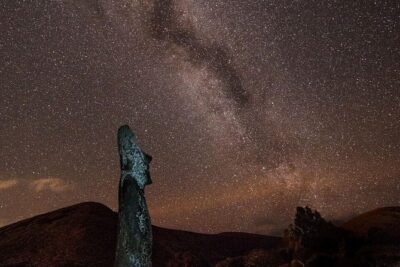
Nighttime access near Ahu Nau Nau adds a strong sense of place. The ahu is a ceremonial platform associated with moai, and seeing the area after dark gives you a very different impression from a daytime visit.
The digital photo included with the tour is taken as part of this setting. You can also take your own pictures. Some outings have included time beside the moai with a tripod or phone, so bring your camera if night photography interests you.
Keep your expectations realistic. A phone will not capture a clear star field easily without careful support and a long exposure. The guide allows personal photographs, but the tour is not presented as a full photography workshop. The included image is a useful souvenir rather than a reason to book the entire outing by itself.
The ground can be uneven. One older participant found the surface difficult to navigate safely and suggested better lighting for walking. Bring sturdy shoes and use your phone light carefully, while remembering not to shine it into the telescope or other people’s cameras. The activity is not suitable for wheelchair users.
Hot chocolate, local cake, and the human side of the evening
A break with hot chocolate and local cake is included. This may sound like a small detail, but it matters when you are standing outdoors late at night. Rapa Nui evenings can feel cool, and a warm drink gives the group a natural pause between explanations and sky watching.
The refreshments also help balance the technical parts of the tour. You are not expected to remain focused on astronomy for three straight hours. There is time to talk, look around, and take in the darkness.
The guide’s personality can shape the evening. Marc has been singled out for his explanations, singing, and ability to add a local cultural element. Because the tour is small, that interaction can feel more direct than a large bus excursion.
Still, this is not a performance every night. The core offering is astronomy, Polynesian navigation, observation sites, refreshments, and a photo. Treat any song or extra storytelling as a welcome addition rather than a promised feature.
What $140 buys you
At $140 per person, this is a premium evening activity. You are paying for more than a telescope. The cost includes the driver and guide, live commentary, transport during the outing, hotel drop-off, telescope access, hot chocolate, local cake, a digital photo, and the cultural interpretation of Rapa Nui’s sky.
The price makes more sense if you value the complete setting: a small group, remote observation points, a guide-led lesson, and nighttime access near moai. It is less attractive if your main goal is simply to see stars through a lens. In that case, a shorter or less specialized stargazing session might offer better value.
Weather is the key financial risk. A clouded night can limit what you see, even if the tour still goes ahead. The cancellation arrangement helps when conditions are poor enough to cancel the activity, but a merely average sky can still leave you feeling that the price was high.
I would see this as a special-event purchase, not an automatic addition to every Rapa Nui itinerary. If you have already paid for a National Park ticket and several cultural sites, consider how much another night activity matters to you. The National Park admission itself is not included, so you need to have that ticket separately.
Who will enjoy this most
I would recommend the tour to you if you like history, astronomy, and cultural interpretation in equal measure. It works especially well for people who want to understand how Polynesian voyaging shaped life on the island rather than simply collect daytime photographs of the moai.
It is also a good choice for couples, families with older children, and small groups who enjoy quiet outdoor activities. The three-hour length gives the evening enough time to develop without taking up an entire day.
You may want to skip it if you dislike late nights, have difficulty walking on uneven ground, or need wheelchair access. It may also disappoint you if you expect a constant stream of telescope targets or a highly technical astronomy session.
Your expectations should be weather-based. A clear night with active viewing can make the tour memorable. A cloudy or quiet night may leave you with a good cultural talk, refreshments, and photographs, but less actual stargazing than you hoped for.
Practical advice for a better night
Wear shoes with good grip. The observation areas may have uneven ground, and darkness makes small changes in the surface harder to see.
Bring a warm layer, even if the afternoon was hot. You will spend time outdoors at night, and the hot chocolate is welcome partly because the air can feel cool.
If you want your own photographs, bring a phone or camera with a tripod if you have one. The tour allows personal photography, but a steady support will help with night shots. Do not count on handheld phone pictures showing many stars.
Check the moon calendar before booking. The tour is unavailable four days before through two days after the full moon, and that restriction is intentional. The darker sky gives the telescope and naked-eye viewing a better chance.
Leave your evening flexible. The tour can be canceled for poor weather or if the minimum number of participants is not reached. You can then be offered another date or a full refund. You can also cancel up to 24 hours ahead for a full refund.
Should you book the Rapa Nui Stargazing Tour?
Book it if you want a thoughtful night built around Polynesian navigation, southern stars, and moai after dark. The telescope is worthwhile, but the strongest reason to go is the way the guide connects astronomy to the people who first crossed the Pacific and settled Rapa Nui.
Skip it if $140 feels too high for an activity that depends on clouds, or if you need guaranteed telescope targets and a highly active schedule. For the right person, the quiet pace, small group, local cake, night photography, and possible traditional song make this a distinctive addition to a Rapa Nui visit. Just choose a moon-free date, wear sensible shoes, and keep your expectations tied to the sky.
FAQ
Where does the Rapa Nui Stargazing Tour meet?
The meeting point is in front of Katipare Library, also called Centro Lector Katipare, in Hanga Roa, Easter Island.
What time does the tour start?
The meeting time is 21:00 in summer and 19:00 in winter. Check availability for the exact date and starting time.
Is hotel pickup included?
No. You must reach Katipare Library yourself. Hotel drop-off is included after the tour.
Is a National Park ticket included?
No. You need to have your own National Park ticket.
Does the tour operate around the full moon?
No. The activity is unavailable from four days before to two days after the full moon.
What happens if the weather is bad?
If poor weather causes the tour to be canceled, you will be offered a different date or a full refund. The same options apply if the minimum number of participants is not reached.
Newest Easter Island trips on the site
- Volcanic Refuges: Excursion to Underground Civilization★ 4.7 · 8 reviews
- Half Day Tour in Rapa Nui★ 5.0 · 48 reviews
- Ride to the highest point on the island for sunset★ 5.0 · 40 reviews
- Tongariki Sunrise: Half Day Private Tour★ 3.8 · 9 reviews
- Terevaka Horse Excursion: The highest point and 360° view.★ 4.7 · 38 reviews
- Easter Island: Private Full Day History Of The Moai★ 4.6 · 12 reviews
- Rapa Nui: Polynesian Massage★ 4.8 · 5 reviews
- Rapa Nui Highlights Program: 3 incredible tours to discover!★ 4.8 · 18 reviews
Stargazing Tours, compared.

Astronomical Tour with Guide and Pick Up San Pedro de Atacama
Read our review →
“Astronomical Adventure in San Pedro de Atacama”
Read our review →
Browse the lists this tour appears in