
Reviewed · MOAI TOURS
Easter Island: Full Day Ancestral Caves and Orongo Village
Orongo is the heart of this outing. Perched beside Rano Kau’s enormous volcanic crater, the ceremonial village connects Easter Island’s cliffs, birdman contests, petroglyphs, and old stone houses in one powerful stop. Later, you enter Ana Te Pahu, one of the island’s notable caves, where rock shelters reveal another side of Rapa Nui life.
I like the private format, which gives you a guide and vehicle for your group rather than placing you in a large shared party. I also like the range: dramatic crater views, four ahu sites, the red-stone quarry at Puna Pau, and a cave visit all fit into six hours. The main consideration is the pace. With six stops and several drives, you get a strong overview, but not a slow, scholarly visit at every site.
Key points to know before booking
- Orongo pairs a crater view with the Birdman ceremony: You see the village linked to the Tangata Manu competition and its petroglyphs.
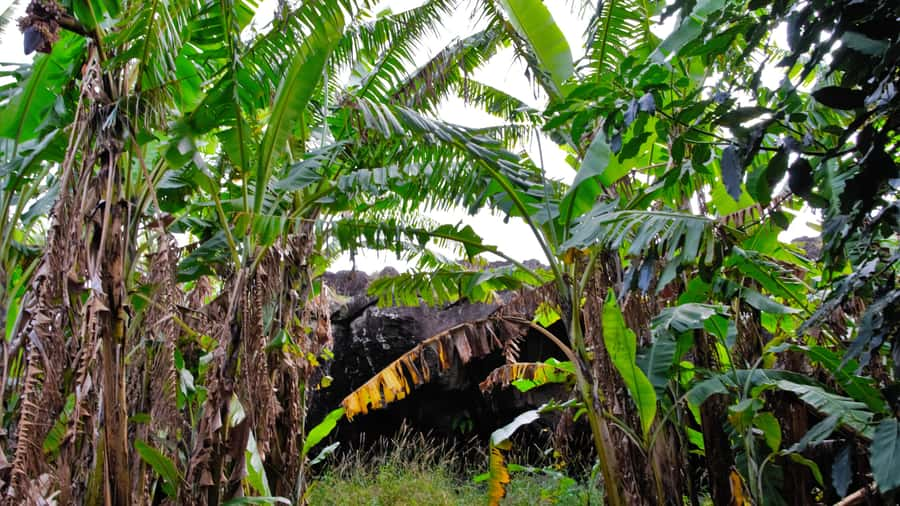
- Ana Te Pahu adds a hands-on sense of island life: You go inside an ancestral cave rather than only viewing stone monuments from outside.
- Ahu Akivi represents the first seven explorers: This stop gives the stone platforms a specific founding story.
- The tour covers six major sites in six hours: Expect an active sightseeing day with frequent short drives.
- Your guide can speak English, French, or Spanish: Guide Melinka is specifically noted for clear, detailed explanations.
- The national park ticket is extra: Buy the Rapa Nui National Ticket before the tour begins.
Why Orongo gives this tour its focus
The trip begins with pickup in Hanga Roa, followed by about 15 minutes in a jeep or SUV to Rano Kau. You spend roughly 20 minutes with the guide there before making the short five-minute drive to Orongo.
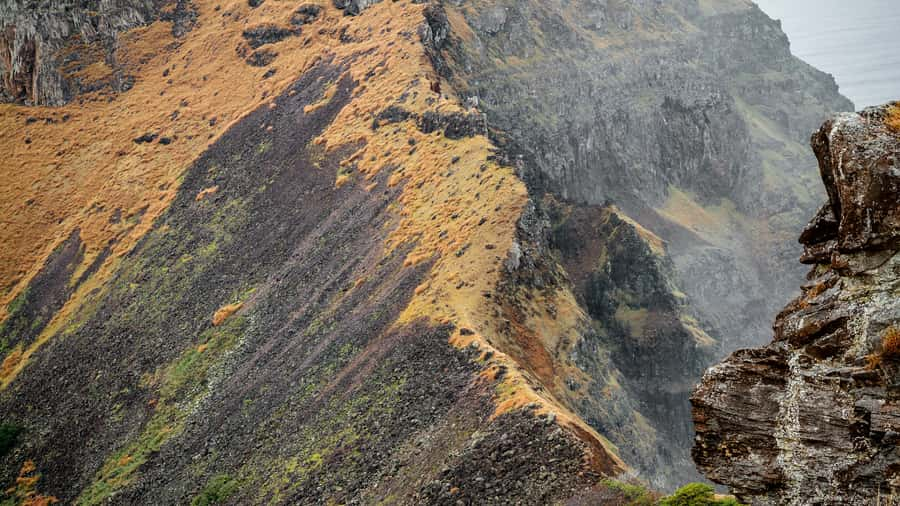
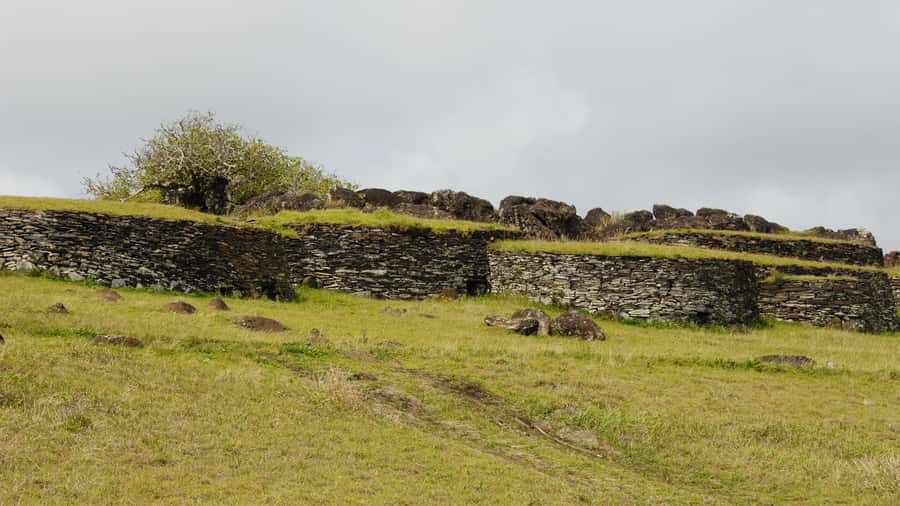
Rano Kau is important because the crater sets up the story of Orongo. The stop is brief, but the view is a major part of the day. You see a large volcanic formation and the surrounding scenery before moving to the ceremonial village above the sea.
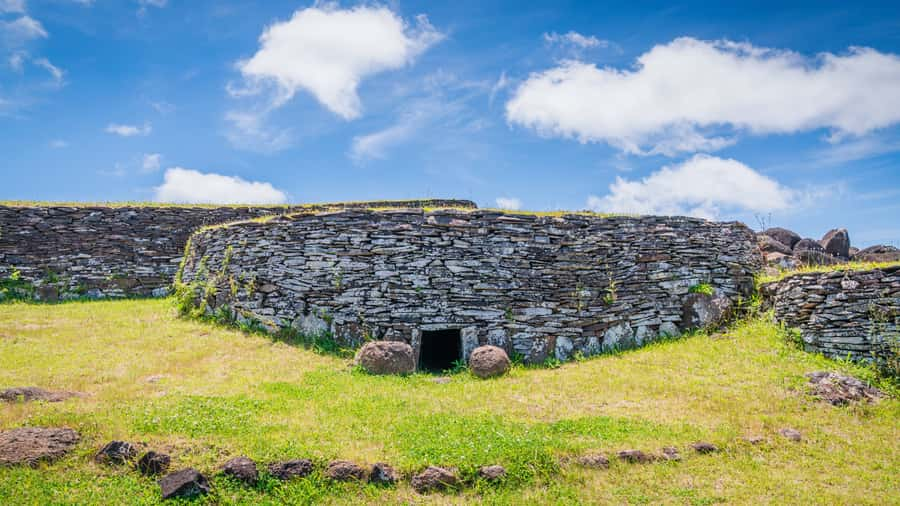
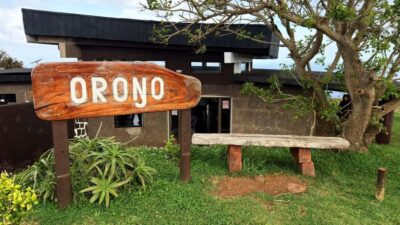
At Orongo, the pace slows to about an hour. This is the centerpiece of the tour, and you should give it your full attention. The village was tied to the Birdman, or Tangata Manu, competition, a major ceremonial tradition in Rapa Nui culture.
You can expect stone structures, ceremonial details, and petroglyphs connected with that tradition. The guide’s role matters here. Without context, Orongo can look like a group of low stone buildings on a dramatic site. With an explanation of the ceremony and symbols, the place becomes much easier to understand.
The views are part of the experience, but they are not the whole point. I would listen closely to the guide before reaching for your camera. You will have time for photographs during the planned photo stop, while the history is harder to recover if you miss the explanation.
Guide Melinka received specific praise for giving detailed and professional information. That is useful at Orongo, where the site has several layers of meaning and a short visit can otherwise feel too quick.
More Full-Day Tours in Easter Island
- From Hanga Roa: Easter Island Sightseeing Full Day Tour
★ 4.5 · 189 reviews - Full day tour – DREAM
★ 5.0 · 86 reviews - Two days of Full Day Tour of Rapa Nui + Sunrise in Tongariki
★ 4.8 · 55 reviews
Ahu Vinapu and the island’s stone platforms
After Orongo, the vehicle takes about 10 minutes to Ahu Vinapu. The stop lasts around 30 minutes and includes a guided visit and time for photographs.
An ahu is a ceremonial platform, and these sites help you see how important stone construction was across Rapa Nui. Ahu Vinapu gives the day a different feel from Orongo. Instead of focusing mainly on a ceremonial village and the Birdman tradition, you look at a platform site and the way monumental stone shaped the island’s religious life.
This is also a good point to compare sites. The tour does not treat every ahu as the same photo stop. Your guide can explain what makes each one worth seeing, and the private setup should make it easier to ask a question when the differences are not obvious.
The 30-minute timing is enough for an introduction, but it is not an extended archaeological visit. If you want long periods at one site, this schedule may feel brisk. If you want to see several important places in one day, the short format works well.
Ahu Akivi and the first seven explorers
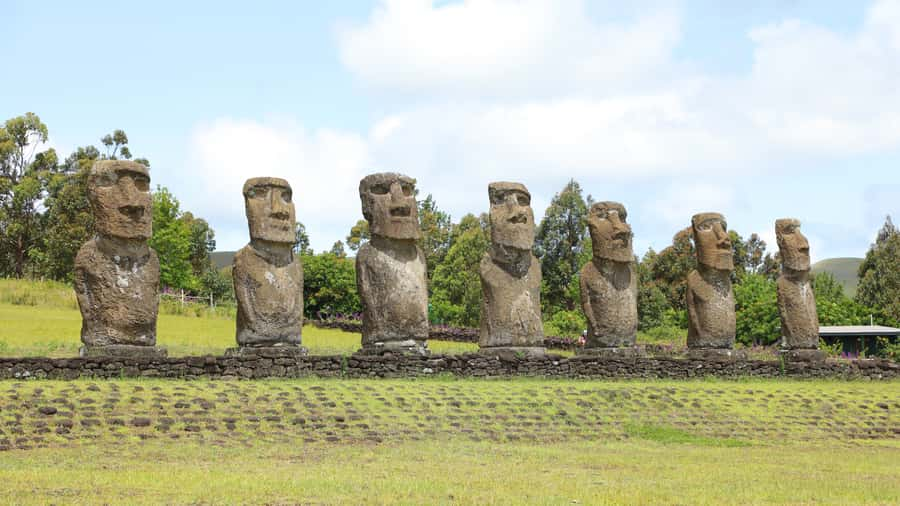
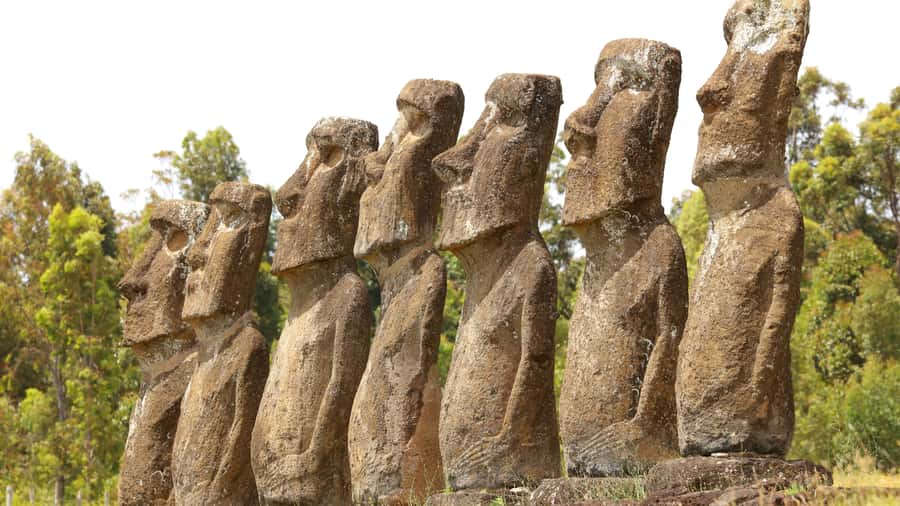
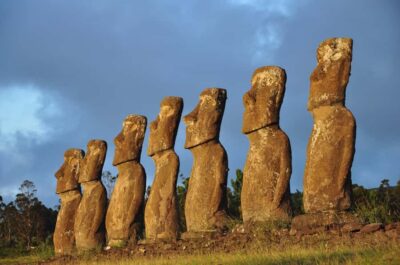
A 20-minute drive brings you to Ahu Akivi, where you spend about 30 minutes. This platform is presented as representing the first seven explorers, giving the stop a direct link to the island’s founding story.
That detail gives Ahu Akivi a clear place in the day. You are not only seeing another line of monumental stones. You are hearing an account connected with the earliest exploration of Rapa Nui and the people who came before later generations.
I like this stop because it broadens the story beyond the famous giant statues. The tour links ceremonial platforms, travel, settlement, and memory. Those ideas are easier to grasp when you see several sites in sequence.
The schedule again combines a guided explanation with photographs. You should expect an overview rather than a long period of quiet observation. The private group format is helpful here because you can ask the guide to clarify the seven-explorer story or the role of the platform.
Puna Pau, where the red stone was shaped
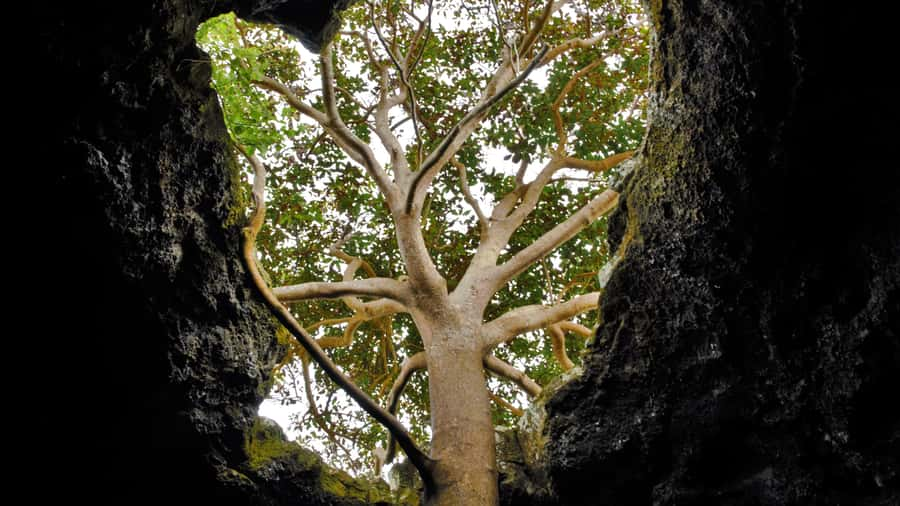
The next drive takes only five minutes, followed by roughly 40 minutes at Puna Pau. This is the shortest transfer of the day and one of the longer site visits.
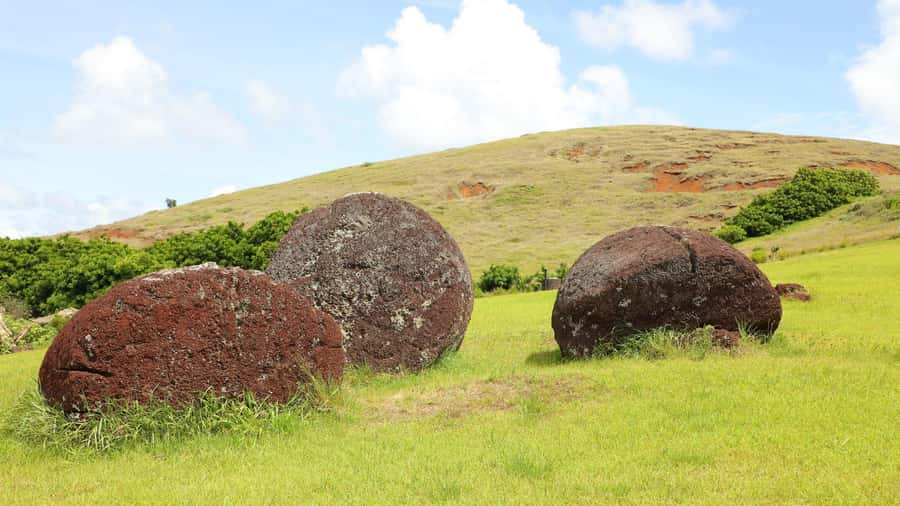
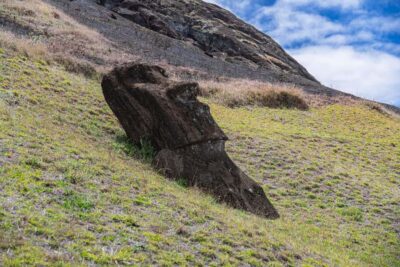
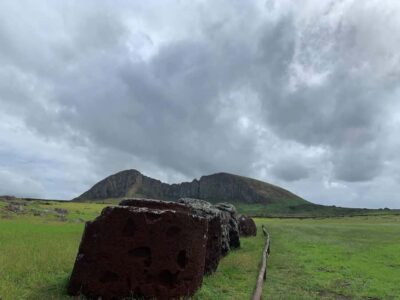
Puna Pau is associated with the red stone used for the top elements placed on some moai. The supplied tour details identify it as a photo stop with a guided visit, so you can expect the guide to explain the site while you see the stone source itself.
This stop adds variety. Orongo gives you a ceremonial village, the ahu sites focus on platforms, and Puna Pau lets you consider the materials behind the monuments. It is a reminder that the island’s stonework depended on particular places and skilled labor, not only on the finished statues seen in photographs.
You will have 40 minutes here, which should feel less rushed than the 30-minute platform visits. Still, the tour is designed as a broad circuit. The value comes from seeing how the sites relate to one another, not from studying every stone in detail.
More moai and Rapa Nui archaeology:
- From Hanga Roa: Journey from Orongo to Ana Te Pahu
★ 4.3 · 75 reviews - Sunrise Tongariki: Sunrise at Tongariki Park Private Tour
★ 4.5 · 47 reviews - Easter Island: Full-Day Tour to Anakena
★ 4.7 · 27 reviews - Hanga Roa: Full Day Moai and Mistery
★ 4.4 · 22 reviews
Ana Te Pahu and the ancestral cave visit
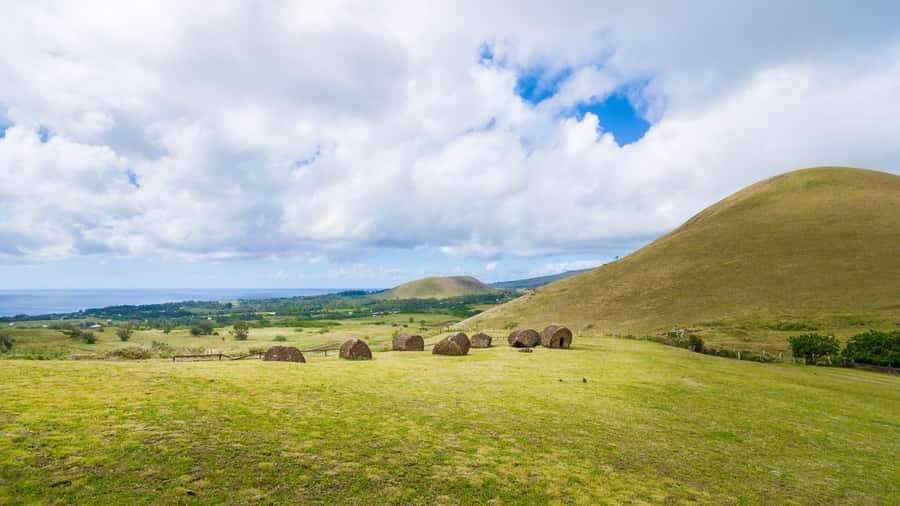
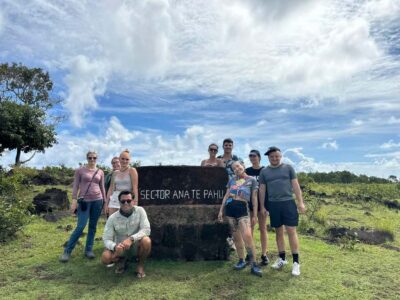
From Puna Pau, the drive takes about 10 minutes to Ana Te Pahu. You spend about an hour here, making it one of the two longest stops, along with Orongo.
Ana Te Pahu is the part of the tour that changes your physical experience of Easter Island. Instead of viewing an open ceremonial site, you enter a cave associated with ancestral life. The tour description also highlights caves, rock art, and engravings, so this is where you should expect the most direct contact with the island’s underground spaces.
The guide explains how native inhabitants used the caves and points out the site’s cultural details. You may find that this stop feels more personal than the monumental platforms because it focuses on shelter and daily life, not only public ceremony.
The cave visit is also a practical reason to wear sensible clothing and shoes, although the tour information does not set out a specific dress code. The operator states that the experience is not suitable for wheelchair users, so anyone with mobility concerns should consider that before booking.
An hour gives the guide time to explain the cave and gives you time to look around without being rushed through in a few minutes. Even so, you should follow the guide’s instructions carefully inside the cave and avoid touching rock art or engravings.
How the six-hour schedule works
The full route lasts six hours and returns you to Hanga Roa. The driving sections are short, ranging from five to 20 minutes, so most of the day is spent at the sites rather than on long road transfers.
The schedule is:
- Pickup in Hanga Roa
- Rano Kau, about 20 minutes
- Orongo, about one hour
- Ahu Vinapu, about 30 minutes
- Ahu Akivi, about 30 minutes
- Puna Pau, about 40 minutes
- Ana Te Pahu, about one hour
- Return to Hanga Roa
The listed site times add up to four hours. The remaining time covers pickup, transfers, and movement between stops. That makes the timing believable and gives you a useful expectation: this is a full half-day circuit, not a short cave trip with one extra viewpoint.
You should be ready to change from open views to archaeological sites and then to a cave. The variety keeps the day interesting, but it also means you will not spend half a day at Orongo alone.
What the private vehicle adds
Transportation is included from Hanga Roa and back, using a jeep or SUV. The private group arrangement is one of the clearest benefits of the $219 per-person price.
A private tour gives you a more personal setting for questions and lets the guide speak directly to your group. It also avoids the uncertainty of being assigned to a large party with different interests. If one person wants more explanation at Ahu Akivi or needs a moment to take photographs, the setup should feel more flexible than a crowded group departure, though the supplied details do not promise changes to the fixed schedule.
The guide is certified by Mauhenua and Sernatur. Tours are offered in English, French, and Spanish. Melinka is one named guide associated with the experience, and the available feedback specifically highlights her detailed and professional explanations.
The transportation is not a luxury feature. You are paying for access to several separated sites, hotel pickup and return, and a guide who ties the locations together. For a private group, that can make $219 per person reasonable. For a solo booker, the cost feels much steeper, since the price is still listed per person and the tour is not described as a shared departure.
The price and what you still need to pay
The listed cost is $219 per person. Transportation, a certified guide, and the private tour are included. The Rapa Nui National Ticket is not included, and you must buy it before the tour.
That extra ticket matters when you compare the total cost with other activities. Do not treat $219 as the complete admission price. The tour bundles several sites, which can save you the work of arranging separate transport and finding explanations at each location, but the park ticket remains your responsibility.
I see the price as easiest to justify for a small private group that wants one organized circuit. The six-hour duration also gives you a solid portion of the day while covering places with very different stories. If your priority is the lowest possible cost, a private tour may not be the best fit. If your priority is a guide-led route with pickup, multiple sites, and no need to coordinate local transport, the value is stronger.
Who should book this experience
I would recommend this tour to someone visiting Easter Island for a limited time and wanting a broad introduction. It covers ceremonial life at Orongo, stone platforms, the first-seven-explorers story, the red stone at Puna Pau, and ancestral caves in one route.
It also suits you if you want a private group and a choice of English, French, or Spanish. The guide’s explanations are central to the experience, especially at Orongo and Ana Te Pahu, so choose the language in which you can follow historical detail comfortably.
This is less suitable if you want a slow day centered on one location. The tour moves often, and the six-hour schedule includes six major stops. It is also not suitable for wheelchair users or people over 95, according to the stated restrictions.
Alcohol and drugs are not allowed. You also need to arrange the national park ticket before setting out. These are simple conditions, but handling them early keeps the day focused on the sites.
Should you book the Orongo and caves tour?
Book it if you want a private, guide-led introduction to several sides of Easter Island in six hours. The strongest reasons are the one-hour visit at Orongo, the chance to enter Ana Te Pahu, and the clear progression from crater and ceremonial village to ahu platforms and stone quarry.
I would be more cautious if you dislike a brisk schedule or want a tour built around extended archaeological study. The $219 price is also easier to defend for a private group than for one person traveling alone, and the national park ticket costs extra.
For many visitors, this is a sensible first full-day route. You get the grand view at Rano Kau, the island’s ceremonial story at Orongo, important ahu sites, Puna Pau, and a cave visit, with a certified guide and transport returning you to Hanga Roa.
FAQ
How long does the Easter Island caves and Orongo tour last?
The tour lasts six hours, including pickup in Hanga Roa, transportation between sites, guided visits, and the return to Hanga Roa.
Where does the tour begin?
Pickup is in Hanga Roa. Transportation back to Hanga Roa is included.
Is the tour private?
Yes. It is offered as a private group experience.
Which languages are available?
The live guide service is available in English, French, and Spanish.
Is transportation included?
Yes. Transportation by jeep or SUV is included, with pickup and return service from Hanga Roa.
Is the Rapa Nui National Ticket included?
No. You must buy the Rapa Nui National Ticket before the tour.
Which sites does the tour visit?
The route includes Rano Kau, Orongo, Ahu Vinapu, Ahu Akivi, Puna Pau, and Ana Te Pahu.
Is the tour suitable for wheelchair users?
No. The experience is listed as unsuitable for wheelchair users.
Can I cancel the booking?
You can cancel up to 24 hours in advance for a full refund. You can also reserve now and pay later, according to the stated booking terms.
Newest Easter Island trips on the site
- Volcanic Refuges: Excursion to Underground Civilization★ 4.7 · 8 reviews
- Half Day Tour in Rapa Nui★ 5.0 · 48 reviews
- Ride to the highest point on the island for sunset★ 5.0 · 40 reviews
- Tongariki Sunrise: Half Day Private Tour★ 3.8 · 9 reviews
- Terevaka Horse Excursion: The highest point and 360° view.★ 4.7 · 38 reviews
- Easter Island: Private Full Day History Of The Moai★ 4.6 · 12 reviews
- Rapa Nui: Polynesian Massage★ 4.8 · 5 reviews
- Rapa Nui Highlights Program: 3 incredible tours to discover!★ 4.8 · 18 reviews
Moai Tours, compared.
Two days of Full Day Tour of Rapa Nui + Sunrise in Tongariki
Read our review →
Sunrise Tongariki: Sunrise at Tongariki Park Private Tour
Read our review →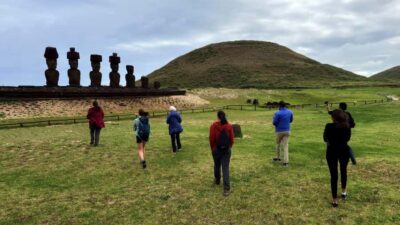
Ahu Vinapu, Rano Kao and Orongo City Half-Day Tour
Read our review →
Private tour: where the history of the Moai was born
Read our review →Browse the lists this tour appears in