
Reviewed · FULL-DAY TOURS IN EASTER ISLAND
From Hanga Roa: Easter Island Sightseeing Full Day Tour
Easter Island’s moai are not museum pieces behind glass. They sit beside old village sites, volcanic quarries, and the Pacific, and this full-day route lets you see how the statues fit into the island’s larger story. I like the way it combines the famous row at Tongariki with less polished places such as Akahanga, where toppled statues and stone foundations make the past feel close.
I also like the small group of up to 14 and the hotel pickup and drop-off. Guides including Hiva, Fernanda, Enzo, Pocho, and Ata have earned especially strong praise for clear English, patience, and lively explanations. The main tradeoff is cost: at $70, you still pay separately for the national park ticket and lunch, and some departures may spend more time at a beach than you expect.
Key points to know before booking
- Rano Raraku is the day’s essential stop: This volcanic quarry is where many moai were carved, and access to the site is limited by park rules.
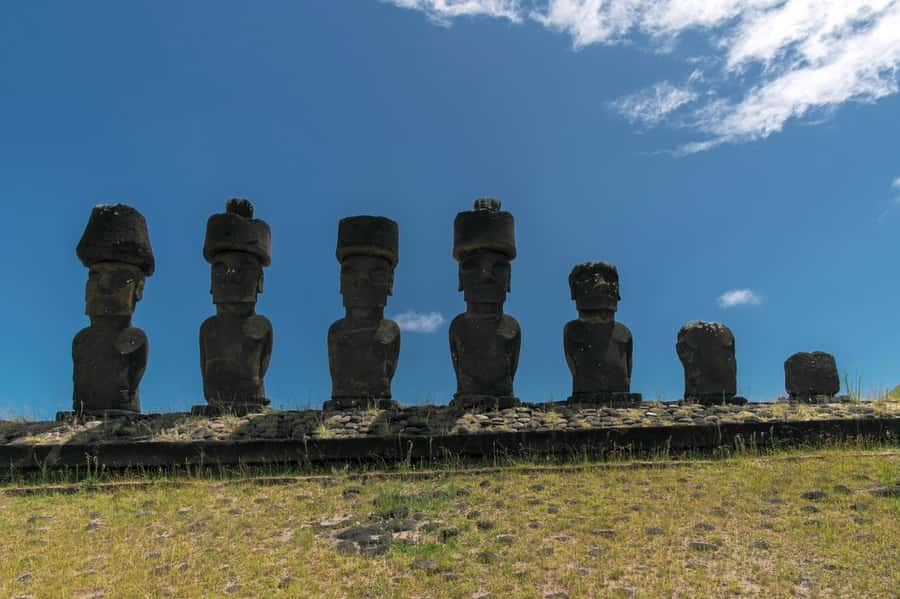
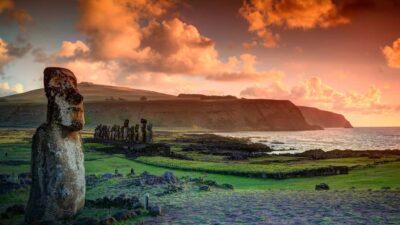
- Tongariki gives you the classic Easter Island view: Fifteen moai face inland with the Pacific behind them, making this one of the best photo stops.
- Guides make the difference: Hiva, Fernanda, Enzo, Pocho, Ata, and others have been praised for clear bilingual talks and thoughtful group management.
- The $70 price is not all-inclusive: Bring extra money for the national park ticket and lunch, which are not part of the tour fee.
- Bring food, water, and sun protection: One detailed account reported no reliable lunch stop or place to buy supplies along the route.
- The schedule may include a beach stop: Some outings have ended at Anakena, giving you the option to swim or stop at a bar, but this can mean waiting if you do not want to join in.
Why this route works for a first day on Easter Island
If you have only one full day for the island’s archaeological sites, this route gives you a strong first look. It covers the quarry, ceremonial platforms, toppled statues, a famous coastal monument, and a site tied to the island’s spiritual geography.
The order is sensible. You begin with sites that show the remains of old communities, then move toward the source of the moai themselves. By the time you reach Tongariki, you have enough background to see the statues as part of a long cultural story rather than simply a row of giant stone figures.
The eight-hour length matters. Easter Island is not large in geographic terms, but the sites are spread out and the roads require time. A guided vehicle saves you from arranging transport between stops, and the guide can explain what you are seeing before you walk off to take pictures.
You should expect a full day, not a relaxed afternoon outing. Most stops involve short walks, with a few steps at some sites. The pace has generally been described as manageable, but a delayed pickup or a long beach stop can affect how much time you have elsewhere.
More Full-Day Tours in Easter Island
- Full day tour – DREAM
★ 5.0 · 86 reviews - Two days of Full Day Tour of Rapa Nui + Sunrise in Tongariki
★ 4.8 · 55 reviews - Easter Island: Full-Day Tour to Anakena
★ 4.7 · 27 reviews
Vaihu: toppled moai beside the bay
Vaihu introduces you to the island’s moai tradition in a quiet setting. You see large stone figures connected with an ancient ceremonial platform, along with evidence of a society that once organized enormous labor around carving, moving, and raising statues.
This is a useful first stop because the moai are not presented as isolated objects. Their setting helps you think about the platform, the surrounding settlement, and the relationship between the statues and the people who made them.
Your guide should explain how the figures were created and what is known about their purpose. The quality of that explanation matters here. Without context, toppled or weathered stones can be hard to read. With a good guide, Vaihu becomes an introduction to the choices and beliefs behind the monuments.
Do not expect the polished photo setup of Tongariki. That is part of the appeal. Vaihu feels more open and less theatrical, with the sea and weathered stones doing much of the work.
Akahanga: a village site with a harder edge
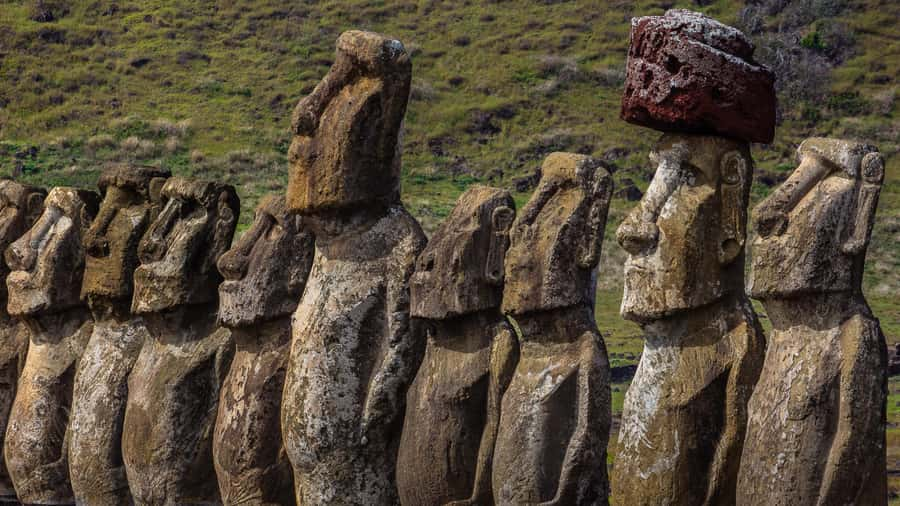
At Akahanga, the focus shifts from individual statues to the remains of a wider community. You see toppled moai and traces of traditional Polynesian village life, giving you a sense of how ceremonial places and daily life once occupied the same area.
The toppled figures can be striking, but the site also demands imagination. Much of what you are looking at is low to the ground, and the meaning is easier to grasp when your guide points out the foundations and explains how the site was organized.
This is one of the places where the tour’s guided format earns its keep. You can walk around and take photographs on your own, but you may miss the details that connect the stones to Rapa Nui society. Guides such as Enzo and others have been praised for answering questions without rushing people along.
Akahanga has also been used as a lunch stop on some outings. Do not assume lunch is included or guaranteed. The published terms exclude lunch, and one detailed account advised carrying food and water because there may be few chances to buy supplies. Pack what you need before leaving your accommodation.
Rano Raraku: the quarry that explains the moai
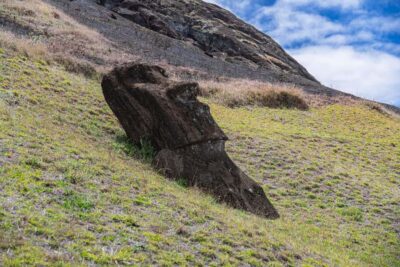
Rano Raraku is the heart of the day. This volcanic slope supplied the stone for most of the island’s famous moai, and the unfinished figures still visible there make the carving process easier to understand.
You can see moai in different stages of completion, including figures that remain partly attached to the rock. That changes the way you look at the finished statues at Tongariki. Instead of imagining them appearing by magic, you can picture the carving, shaping, transport, and raising of each enormous figure.
This stop is also the most important practical reason to check your park ticket. Access to the stone-carving site is restricted, and one account specifically noted that Rano Raraku can be visited only once with the national park ticket. Keep your ticket safe and follow the guide’s instructions.
Allow yourself time to look beyond the biggest figures. The quarry is about process as much as spectacle. Notice the relationship between the rough volcanic rock and the smooth forms of the statues, and listen for the guide’s explanation of how the figures were carved from the slope.
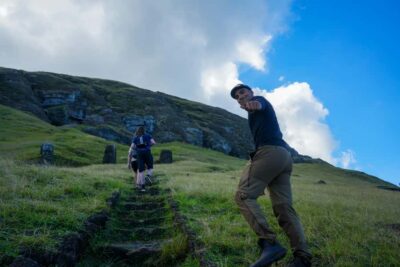
Rano Raraku can be physically more demanding than a simple roadside stop. You will walk over uneven ground, and there may be a few steps. Wear practical shoes, carry water, and bring sun protection. The tour information asks you to bring a passport or identity card, so keep that with your park documents.
Same corner of Chile, a completely different day out:
- From Hanga Roa: Rapa Nui Culture Sightseeing Tour
★ 4.6 · 307 reviews - From Hanga Roa: Easter Island Highlights 2-Day Tour
★ 4.3 · 205 reviews - From Hanga Roa: Journey from Orongo to Ana Te Pahu
★ 4.3 · 75 reviews - Rapa Nui Stargazing
★ 4.5 · 62 reviews
Tongariki: the island’s signature view
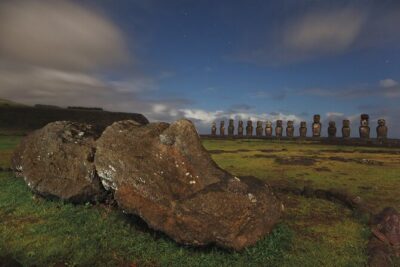
Tongariki is the stop most people picture when they think of Easter Island. A long row of moai faces inland from a ceremonial platform, with the Pacific behind you. The scale is hard to appreciate in a photograph, so use some of your time to step back and take in the full arrangement.
This is the strongest photo stop on the route, but it is not only about pictures. After visiting Rano Raraku, you can connect the statues at Tongariki with the quarry where many were made. The pairing gives the day a clear arc: source, workmanship, and final setting.
Your guide may explain the destruction and later restoration of the platform, but the supplied information does not promise a particular restoration talk. Ask questions if the guide leaves time. Guides are generally expected to speak English and Spanish, and several named guides have been praised for answering questions in both languages.
Tongariki is also a place where group timing matters. Everyone wants photographs, and a small group can still take time to gather. The tour’s guides have been praised for keeping the day moving without making the visits feel hurried. Stay aware of the meeting time so the group does not lose minutes that could be used at another site.
Te Pito Kura and the island’s symbolic center
Te Pito Kura provides a different kind of stop. Along with a moai site, it is associated with an unusual rounded stone often described as the navel of the world. The stone’s magnetic reputation and symbolic meaning give the guide room to explain how natural features became part of Rapa Nui belief and storytelling.
This is a shorter, more unusual stop than Rano Raraku or Tongariki. You are not coming here for the largest collection of statues. You are coming for the connection between geology, ritual, and place.
Listen carefully to how your guide separates established archaeological information from traditional stories. That distinction is useful on Easter Island, where oral tradition and modern explanations often sit side by side. A good guide can make both meaningful without presenting every legend as proven fact.
Guides, language, and the small-group setting
The tour includes a live guide in English or Spanish, and the group is limited to 14 people. That is small enough for questions and easier coordination than a large coach tour, though the actual vehicle may hold around 12 or 13 people on some departures.
The named guides receive particularly strong praise. Hiva is noted for detailed bilingual explanations and careful attention to the group. Fernanda is described as calm, polite, and unhurried. Pocho is praised for making information interesting while watching out for individual needs. Enzo is noted for his energy and ability to manage timing, while Ata is singled out for clear English pronunciation.
These details matter if you are not comfortable with fast or heavily accented English. The tour is bilingual, so some explanations may be repeated in Spanish and English. That can add time, but it also makes the tour workable for mixed-language groups.
Guide quality can vary from one departure to another, as it does on any shared tour. Still, the repeated praise for clear explanations, patience, and organization is a strong reason to choose a guided day rather than simply arranging a vehicle without interpretation.
Transport, pickup, and the reality of a full day
Hotel pickup and drop-off are included, which is helpful in Hanga Roa. You do not need to arrange separate transport to the first site, and you can return directly to your accommodation after a long day outside.
Be ready at the stated pickup point and keep a little flexibility in your morning. One departure arrived later than the quoted pickup time after collecting another passenger, while another account praised the operation for starting on time. In a shared vehicle, the route depends on collecting everyone.
The vehicles are described as mechanically sound, though one account found the interior in need of cleaning. Seating can also affect your view. One person who was collected last ended up in a middle seat and could not take photographs through a window. If the scenery matters to you, be prepared for seating to depend on pickup order.
Road conditions can include potholes and ruts. A careful driver is valuable, and one driver was praised for handling the roads safely. You should still expect a moving vehicle on rough sections rather than a smooth highway ride.
Lunch, beaches, and what the schedule may not tell you
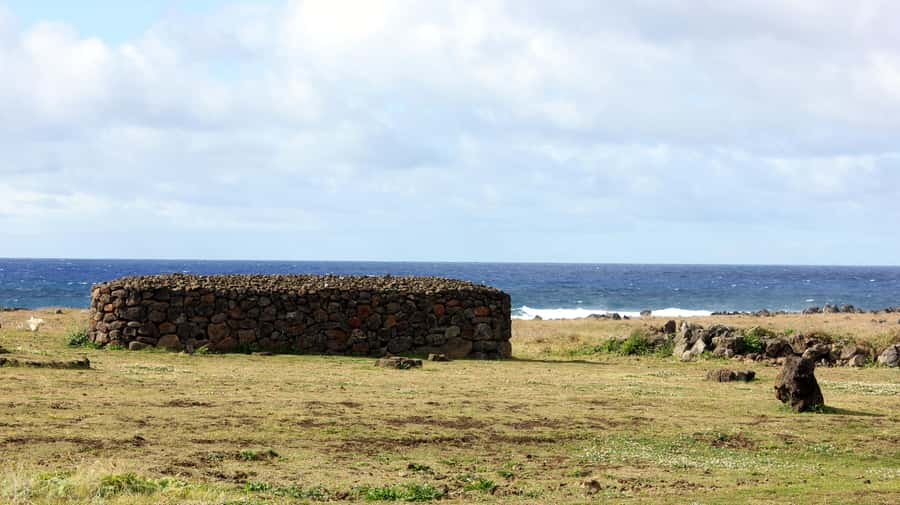
Lunch is not included, and the core activity information does not promise a restaurant stop. Carry water and snacks. This is especially important because there are few bathroom stops and limited chances to buy food along parts of the route.
Some departures have included a lunch stop, and some have ended at Anakena for swimming or a drink. That can be a pleasant finish if you bring a swimsuit and towel. It is less appealing if you want every last minute at the archaeological sites.
One account described waiting for more than an hour at the beach while other people swam or visited bars. Another person praised ending at a beautiful beach. The practical lesson is simple: ask about the day’s final stop when you are picked up, and pack a swimsuit only if you would actually use it. If you prefer ruins to beach time, this possible variation is worth knowing before you book.
The supplied route names Te Pito Kura as the final destination, so do not assume every beach arrangement is part of every departure. The exact flow can depend on the day’s group and operating schedule.
Is $70 good value?
At $70 per person, the tour is not the cheapest way to see Easter Island. It also does not include the national park ticket or lunch, so calculate the full day’s cost before booking.
I still see good value here for a first visit. Transport between scattered sites, hotel pickup, a bilingual guide, and a small group would be difficult to arrange at the same price without spending time coordinating a driver and guide separately. The route also covers the places most people want to see in one day.
The value is strongest if you are short on time. You get the quarry at Rano Raraku, the famous platform at Tongariki, and several sites that add cultural context. It is weaker if you are staying several days, prefer independent pacing, or dislike paying extra for park admission and food.
Some local guides may charge less, and one person specifically felt this option was pricier than local alternatives. The reason to pay the difference is convenience and a more structured day, not luxury.
What to bring for a better day
Pack a passport or identity card, your national park ticket, water, snacks, sunscreen, and comfortable walking shoes. The passport or ID requirement is explicit, and the park ticket is essential for the archaeological sites.
A hat and light layers are sensible because much of the day is outdoors. Bring a camera, but do not count on a window seat in the vehicle. If the tour may finish at Anakena, add a swimsuit and towel.
Keep your belongings close and bring only what you want to carry during short walks. There are limited bathroom opportunities, so use facilities when they are available.
Free cancellation is available up to 24 hours before departure, and you can reserve now and pay later. Those terms help if your island plans are still shifting, though they do not change the need to confirm your park ticket and food arrangements.
Who should book this tour?
I would choose this tour if you have one full day, want the major moai sites explained in English or Spanish, and prefer not to organize transport on your own. It is also a good fit if you value a small group and want hotel pickup and drop-off.
It suits history-minded visitors, first-time guests, and anyone who wants to understand why Rano Raraku and Tongariki matter rather than simply photograph them. The short walks make it approachable, though uneven ground and a full day outdoors still require reasonable mobility.
I would hesitate if your top priority is complete control over every stop. The group schedule, possible late pickup, vehicle seating, and occasional beach finish can limit your freedom. I would also compare prices if you already have a private driver or guide arranged.
For most first-time visitors with limited time, the balance is favorable. The route gives you the essential quarry and platform, adds quieter sites, and lets a local guide put the stones into context. Book it if that mix of structure, explanation, and convenience is worth more to you than saving a little money.
FAQ
How long does the Easter Island sightseeing tour last?
The tour lasts about eight hours.
What sites does the tour visit?
The advertised route includes Vaihu, Akahanga, Rano Raraku, Tongariki, and Te Pito Kura.
Is hotel pickup included?
Yes. Hotel pickup and drop-off in Hanga Roa are included.
What languages does the guide speak?
The live guide speaks English and Spanish.
How large is the group?
The activity is described as a small-group tour limited to 14 participants. Some vehicle descriptions indicate around 12 or 13 passengers on particular departures.
Is the national park ticket included?
No. You must pay separately for the national park ticket.
Is lunch included?
No. Lunch is not included. Bring food and water because there may be few opportunities to buy supplies during the day.
What should I bring?
Bring a passport or identity card. Water, snacks, sunscreen, comfortable shoes, and sun protection are also practical choices. If your outing includes a beach stop, bring a swimsuit and towel.
Can I cancel the tour for a refund?
Yes. You can cancel up to 24 hours in advance for a full refund.
Can I reserve now and pay later?
Yes. The tour allows you to reserve your place and pay later.
Newest Easter Island trips on the site
- Volcanic Refuges: Excursion to Underground Civilization★ 4.7 · 8 reviews
- Half Day Tour in Rapa Nui★ 5.0 · 48 reviews
- Ride to the highest point on the island for sunset★ 5.0 · 40 reviews
- Tongariki Sunrise: Half Day Private Tour★ 3.8 · 9 reviews
- Terevaka Horse Excursion: The highest point and 360° view.★ 4.7 · 38 reviews
- Easter Island: Private Full Day History Of The Moai★ 4.6 · 12 reviews
- Rapa Nui: Polynesian Massage★ 4.8 · 5 reviews
- Rapa Nui Highlights Program: 3 incredible tours to discover!★ 4.8 · 18 reviews
Full-Day Tours in Easter Island, compared.
Two days of Full Day Tour of Rapa Nui + Sunrise in Tongariki
Read our review →
Browse the lists this tour appears in