
Reviewed · EASTER ISLAND TOURS
From Hanga Roa: Rapa Nui Culture Sightseeing Tour
Rapa Nui’s greatest sights are spread across the island, and this full-day route connects the big ones in a single outing. You’ll see unfinished moai at Rano Raraku, the long row at Tongariki, and finish with time at Anakena beach. It is the efficient way to get your bearings when your time is short.
I like the local guide focus, since the best part of these sites is not just seeing stone figures, but understanding why they were made and what they mean to Rapa Nui culture. I also like the balance of archaeology and scenery, from ceremonial platforms to a palm-fringed beach.
The tradeoff is the pace. Six major stops mean plenty of getting on and off the vehicle, and some stops receive less time than the headline sites deserve. Lunch is not included, and one group lost its final stop after a slow restaurant meal, so keep an eye on the clock.
Key points to know before booking
- Rano Raraku is the day’s essential stop: Walk among unfinished moai at the quarry where the statues were carved.
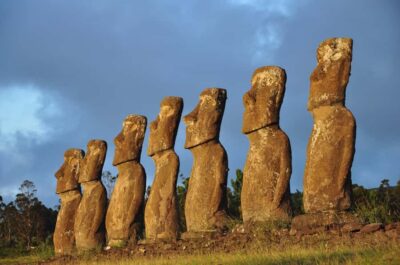
- Tongariki delivers the classic view: Its line of standing moai is the most instantly recognizable scene on the route.
- Anakena gives the day a welcome finish: You get about 90 minutes of free time at Rapa Nui’s best-known beach.
- Native guides add cultural context: Guides including Frank, Javiera, Hivi, Zoe, and Enzo have been praised for clear explanations and local insight.
- The price covers the hard part: At $80 per person, hotel pickup, transport, and a full day around the island make this a practical first tour.
- Bring swimming gear and a towel: Anakena is not just a photo stop, and the schedule allows time to enjoy the beach.
Why this eight-hour Rapa Nui route works
Rapa Nui is small enough to cross by road, but its important sites are scattered around the coast and inland hills. If you rent a vehicle or arrange several separate rides, you must handle navigation, timing, and the rules around archaeological sites yourself.
This tour removes that work. You are picked up at your Hanga Roa hotel, travel with a guide, and follow an east and north loop through the island’s major ceremonial sites. For a first day, I find that useful because you get the broad picture before deciding if you want to return independently to one favorite place.
The experience costs $80 per person. That is a fair price for hotel pickup and drop-off, transportation, and eight hours of guiding, especially if you have only one full day on Rapa Nui. The national park ticket and lunch cost extra, so include both in your budget.
The vehicle ride is part of the rhythm. One published timing allows about 45 minutes for the initial trip, followed by several walks and shorter site visits. Some groups have used a comfortable minivan, and one small party had only four people, but group size and vehicle type can vary.
A few more Hanga Roa half-days worth a look
- From Hanga Roa: Easter Island Highlights 2-Day Tour
★ 4.3 · 205 reviews - From Hanga Roa: Journey from Orongo to Ana Te Pahu
★ 4.3 · 75 reviews - Two days of Full Day Tour of Rapa Nui + Sunrise in Tongariki
★ 4.8 · 55 reviews
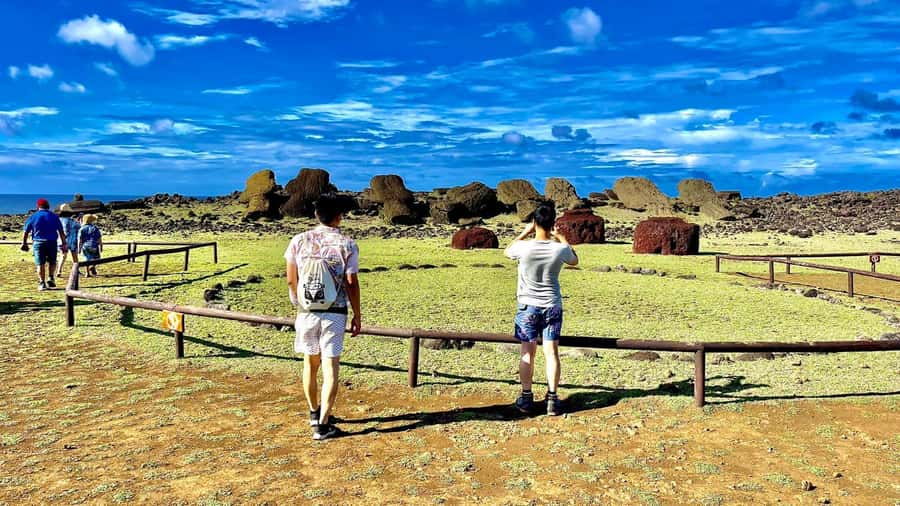
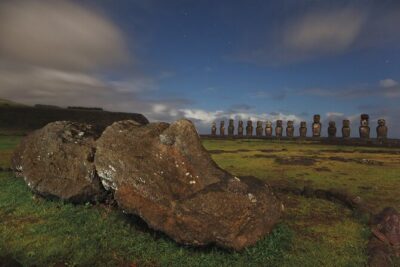
Vaihu begins with fallen moai and open space
The first cultural stop is described as a traditional village, with roughly 45 minutes for a guided walk. The route then continues to Vaihu, where moai lie near an ancient ceremonial platform.
Vaihu is not as polished or immediately dramatic as Tongariki. That is part of its value. Fallen statues show that the island’s archaeological story is not simply a row of intact monuments waiting for photographs. You begin to see the remains as part of a changing society, not as isolated sculptures.
Your guide is especially important here. A good explanation can turn scattered stone into a story about ceremony, community, and the way Rapa Nui people shaped their surroundings. Guides such as Frank, Hivi, and Javiera have been praised for answering questions in a clear, friendly way, but the guide assigned to your group may be different.
The 45-minute stop is enough for an introduction and photographs. If you prefer slow archaeological study, you may wish it lasted longer. The route is designed to show you the whole island, not to give every site a long field study.
Akahanga brings legend into the day
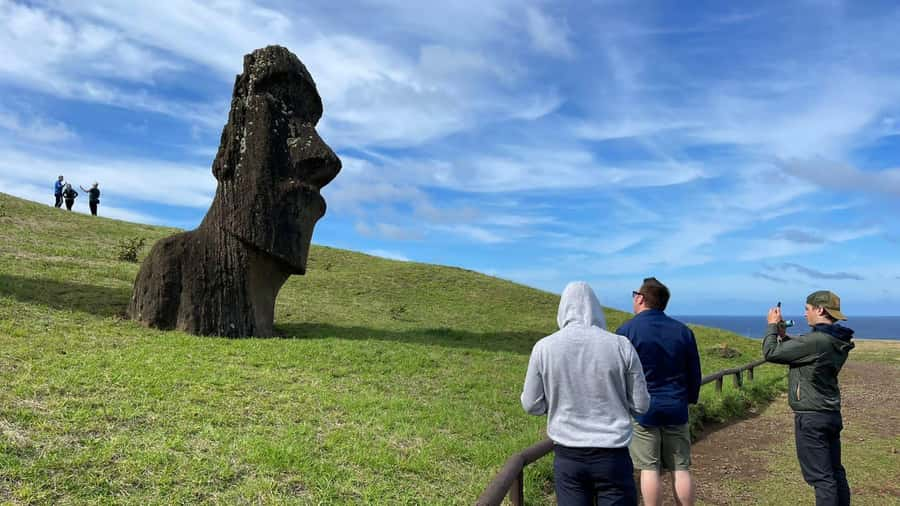
At Ahu Akahanga, you walk among another group of fallen moai and stone remains. The site has a rougher, more atmospheric feel than the restored platforms later in the day.
This is a useful second stop because it gives you a contrast. Vaihu introduces the scale of the island’s ceremonial sites, while Akahanga adds a sense of age and mystery. Your guide can help explain the traditions and stories linked to the site, which makes the stones easier to read.
The scheduled visit lasts about 45 minutes. You should expect walking over uneven ground and standing outdoors, so sturdy shoes and sun protection are sensible. The tour information confirms wheelchair access, but the exact ease of each archaeological path can still vary, so anyone with mobility concerns should ask the operator about the walking surfaces before booking.
Akahanga may be less exciting to you than the quarry or Tongariki. That is a fair reaction. Still, I would keep it on a first full-island route because it helps you understand how varied the archaeological remains can be.
Rano Raraku is the day’s great reveal
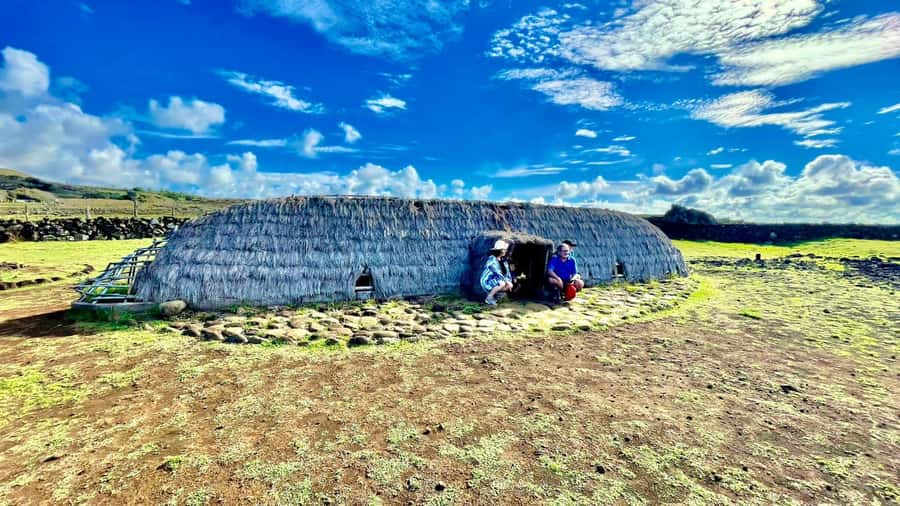
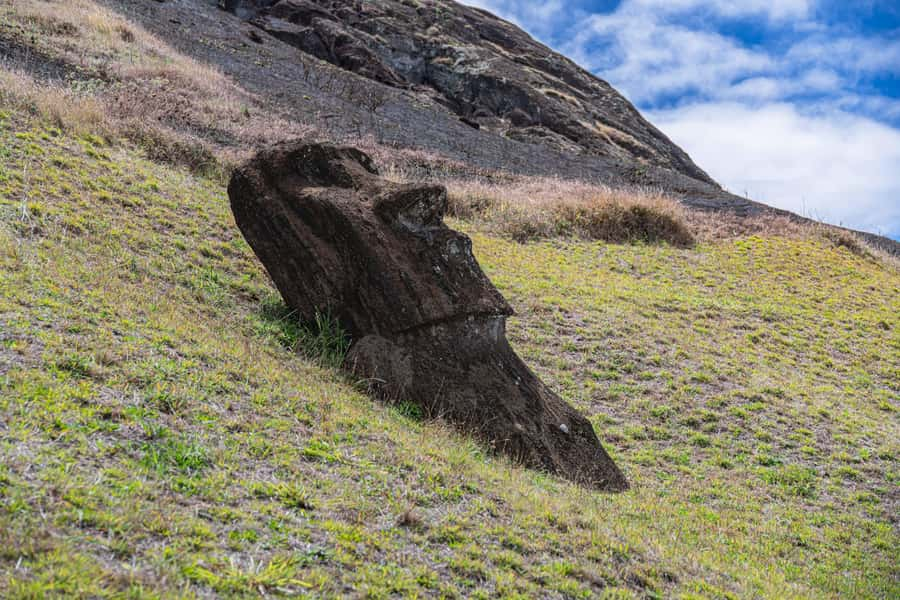
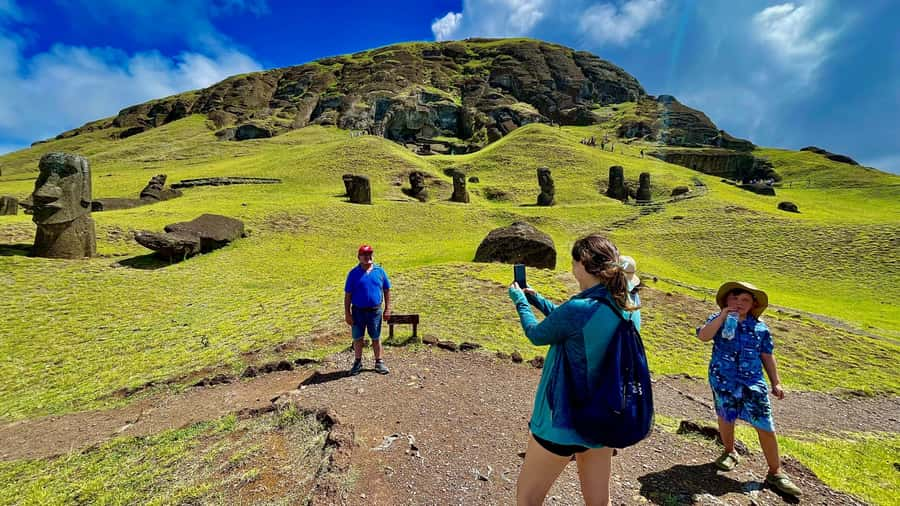
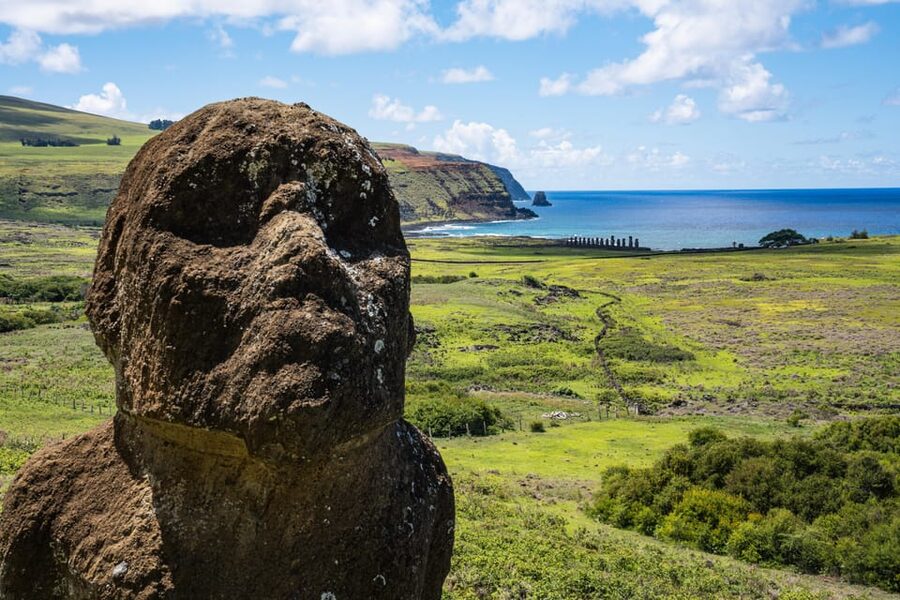
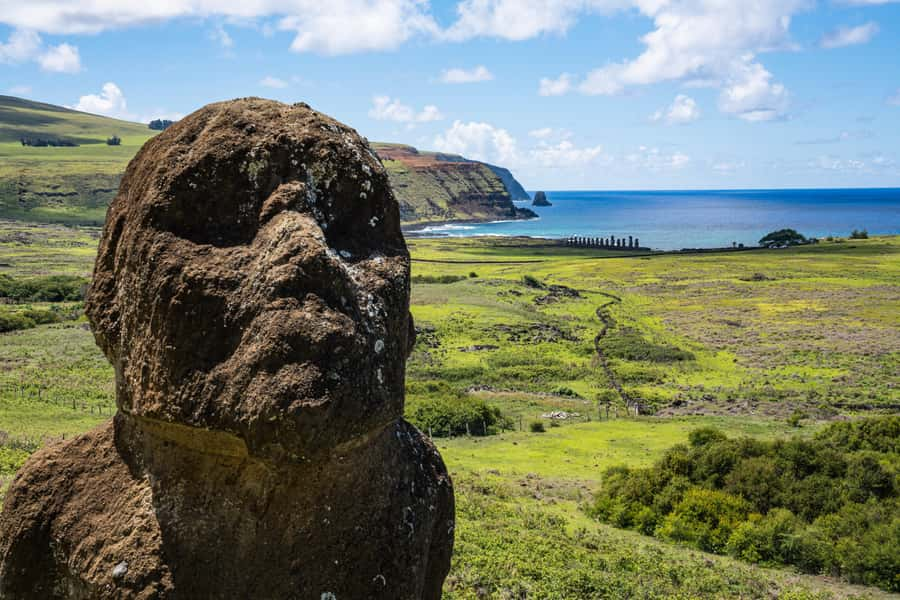
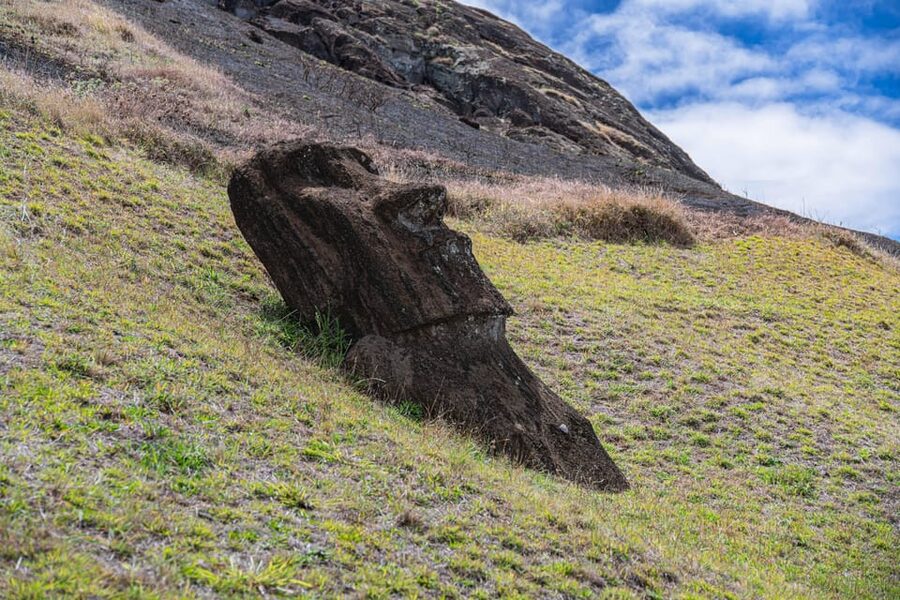
Rano Raraku is where the tour becomes unforgettable. This volcanic quarry supplied the stone for many of the moai, and unfinished figures remain partly cut from the rock or scattered across the slopes.
You walk for about an hour with the guide. That is the longest guided archaeological stop on the route, and it needs the time. The quarry lets you see the statues not as finished icons, but as work in progress. Some appear to emerge from the earth, giving you a direct sense of the enormous labor involved.
This is where a strong guide can make a real difference. You will want more than a list of dates and names. Ask about how the moai were shaped, why some were left unfinished, and how the quarry fits into the wider culture of Rapa Nui. The most praised guides on this route, including Frank, Hivi, Zoe, and Enzo, have been singled out for adding useful context rather than simply pointing out objects.
Wear shoes suitable for walking and allow yourself to look beyond the largest statue. The quarry rewards attention to smaller details, changing views, and the relationship between the figures and the volcanic setting.
If you could choose only one stop for extra time, I would choose Rano Raraku. The one-hour schedule is solid, but serious archaeology fans may still wish for longer.
Same corner of Chile, a completely different day out:
- Sunrise Tongariki: Sunrise at Tongariki Park Private Tour
★ 4.5 · 47 reviews - Rapa Nui Dreams: Experiencie Pack 3 Days
★ 4.7 · 32 reviews - Easter Island: Full-Day Tour to Anakena
★ 4.7 · 27 reviews - Hanga Roa: Full Day Moai and Mistery
★ 4.4 · 22 reviews
Tongariki delivers the postcard view
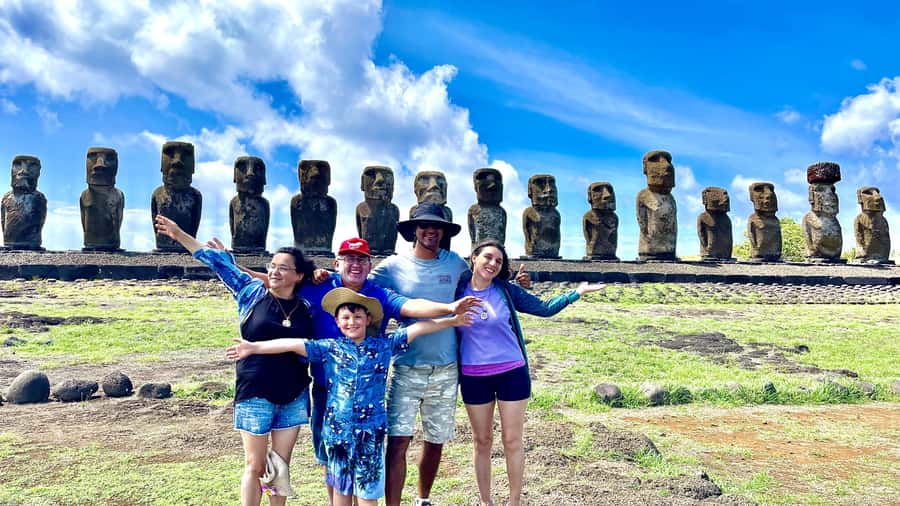
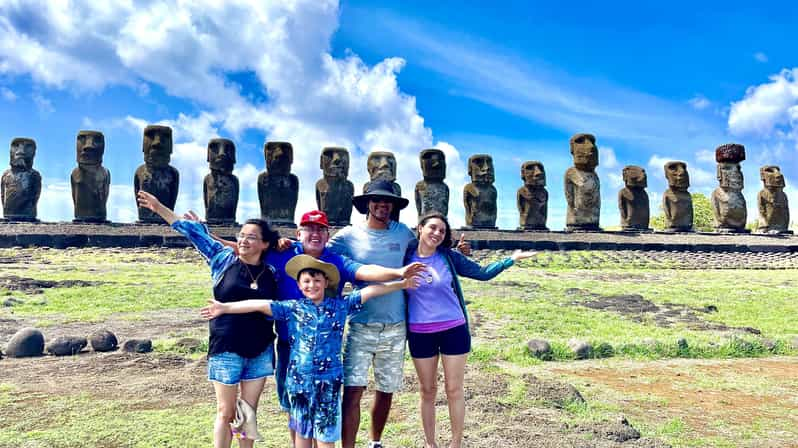
Ahu Tongariki is the tour’s grand visual moment. Its long platform holds the largest group of standing moai on the island, creating the image many people picture before arriving at Rapa Nui.
The scheduled visit lasts about 45 minutes. That gives you time to take in the full line, move around for different angles, and listen to the guide. It is also one of those places where a few quiet minutes matter. Put the camera down briefly and look at the scale of the platform against the open surroundings.
Tongariki can feel more crowded or scheduled than the less restored sites, simply because it is so important and easy to recognize. The short stop means you need to balance photos with the explanation. If your group is eager to move quickly, ask your guide one or two specific questions before leaving.
I like the way Tongariki follows Rano Raraku. After seeing the statues at their quarry, you see the finished result arranged in a formal group. The two stops belong together, and the order helps the day make sense.
Te Pito Kura adds a smaller, stranger stop
The next visit is Ahu Te Pito Kura, where you see a large fallen moai and the stone known as Te Pito Kura. The stone is associated with spiritual and magnetic claims, and it has a different feel from the large ceremonial platforms.
You have about 45 minutes here, including a guided walk. This stop is more about a specific object and its meaning than about a huge lineup of statues. Some people will find it fascinating, while others may prefer more time at Rano Raraku or Tongariki.
That difference is worth knowing before you book. Several people found the minor stops less compelling than the principal moai sites and felt that the schedule could be adjusted. I think Te Pito Kura earns its place because it adds variety, but you should not expect another Tongariki.
Anakena closes the route with sand and sea
The final stop is Anakena, with about 90 minutes of free time. After a full day of stone platforms and archaeological explanations, the beach gives you room to slow down.
Anakena is framed by palm trees and clear blue water. The schedule makes it more than a quick photo stop, and you can use the time to walk, rest, take pictures, or swim. Several people specifically recommended bringing swim shorts and a towel, and I agree. If the weather is good, this can be the most relaxing part of the day.
There is also a cultural reason to pay attention here. Anakena is not merely a convenient beach added to a sightseeing route. It is connected to Rapa Nui tradition and settlement, so listen to the guide before heading to the water.
The timing at Anakena depends on the earlier stops and lunch. One group missed its final stop after a restaurant took too long, and another found lunch as late as 3 p.m. Since lunch is not included, ask early about the plan and do not let the meal consume the time you hoped to spend at the beach.
Local guides are the main strength
The strongest feature of this experience is the guide. A local person can explain the moai as part of living Rapa Nui culture rather than treating them as mysterious props from a vanished civilization.
Guides named in feedback include Frank, Javiera, Hivi, Habi, Zoe, Enzo, and Jose. Frank was praised for speaking English, Spanish, and Rapa Nui, while Javiera and Hivi were described as warm and helpful. Zoe received especially strong praise for making the island’s history understandable.
The tour is offered in English and Spanish. Several English-speaking groups found communication easy, and one guide handled both English- and Spanish-speaking passengers during the same outing. Still, guide quality can vary. One person reported shallow explanations and an inappropriate personal remark from a guide named Gabriel. That appears to be an exception among otherwise strong feedback, but it is fair to acknowledge that a tour depends heavily on the individual leading it.
What to bring and how to pace yourself
You will spend much of the day outdoors, walking between vehicles and archaeological sites. Bring water, sun protection, comfortable shoes, a hat, and clothing suited to changing weather. Rain did not prevent one group from seeing most of the route, but wet conditions can make an outdoor day less comfortable.
Pack swim shorts and a towel for Anakena. Lunch is not included, and meal timing can vary, so carry a snack if you do not want to wait until the scheduled stop. The national park ticket is also separate and should be arranged as part of your visit planning.
Pickup is included from Hanga Roa hotels. You are asked to wait in the lobby 10 minutes before pickup. The tour lasts eight hours, so do not plan another major activity immediately afterward.
Cancellation is flexible: you can cancel up to 24 hours ahead for a full refund, and you can reserve now and pay later. The tour is listed as wheelchair accessible, though the archaeological terrain may not be equally easy at every stop.
Who should book this tour
I would choose this tour if you have one day on Rapa Nui and want to see the main sites without arranging transport yourself. It suits first-time visitors, history fans, photographers, and anyone who wants a guide to explain local traditions as well as the moai.
It is also a good choice if you value convenience. Hotel pickup, a full island route, and a local guide save you from piecing together separate visits. The $80 price is reasonable for that service, though your final cost must include the park ticket and lunch.
I would hesitate if you dislike fixed schedules or want long, quiet periods at each site. The route covers a lot of ground, and some stops feel brief. Independent visitors who already know the island may prefer to spend most of a day at Rano Raraku, Tongariki, or Anakena instead.
Should you book the Rapa Nui Culture Sightseeing Tour?
Book it if this is your first day on Rapa Nui, especially if you have limited time. You will see the main ceremonial sites, the quarry, the famous row of moai, and the island’s best-known beach in one well-planned circuit.
Go in with realistic expectations. This is a fast-moving overview, not a private archaeological expedition. Ask questions, protect your time at lunch, and save your energy for Rano Raraku, Tongariki, and Anakena. With a strong local guide, the tour gives you both the essential sights and a useful introduction to the culture that created them.
FAQ
How long does the Rapa Nui Culture Sightseeing Tour last?
The tour lasts eight hours, including transportation from Hanga Roa and visits to the listed archaeological sites and Anakena beach.
Where does the tour begin?
Pickup is provided from hotels in Hanga Roa. You should wait in the hotel lobby 10 minutes before the scheduled pickup time.
Which sites are included?
The route includes Vaihu, Ahu Akahanga, Rano Raraku, Ahu Tongariki, Ahu Te Pito Kura, and Anakena. It also includes a visit described as a traditional village.
Is lunch included?
No. Lunch is not included in the price. A restaurant stop may be part of the day, but meal timing can vary.
Is the national park ticket included?
No. The national park ticket is an additional cost.
What languages are available?
The tour is offered with a live guide in English or Spanish.
Is hotel transportation included?
Yes. Pickup and drop-off at hotels in Hanga Roa and transportation during the tour are included.
Is there time to swim at Anakena?
The itinerary provides about 90 minutes of free time at Anakena. You can use that time to relax or swim, so bring swim shorts and a towel if you want to enter the water.
Can I cancel the booking?
You can cancel up to 24 hours in advance for a full refund. The activity also allows you to reserve now and pay later.
Newest Hanga Roa trips on the site
- Volcanic Refuges: Excursion to Underground Civilization★ 4.7 · 8 reviews
- Rapa Nui: Polynesian Massage★ 4.8 · 5 reviews
- Rapa Nui Highlights Program: 3 incredible tours to discover!★ 4.8 · 18 reviews
- Rapa Nui: 3 Excursions with Hotel Transfers★ 4.3 · 6 reviews
- Rapa Nui Dreams: Experiencie Pack 3 Days★ 4.7 · 32 reviews
- Ahu Vinapu, Rano Kao and Orongo City Half-Day Tour★ 4.6 · 20 reviews
- Hanga Roa: Full Day Moai and Mistery★ 4.4 · 22 reviews
- Easter Island: Tropical Diving★ 4.8 · 13 reviews
Easter Island Tours, compared.
Two days of Full Day Tour of Rapa Nui + Sunrise in Tongariki
Read our review →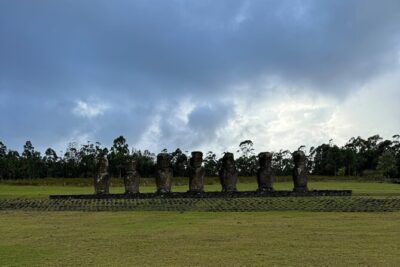
Browse the lists this tour appears in